In
1979, three amateur kickboxers – Maurice Smith, Peter Cunningham, and
Rod Kei – met at a WKA event and collectively predicted their
destinies to become great world champions. While Smith and Cunningham
have since then been
more often remembered by mainstream history, Kei proved himself no
less impressive of an individual.
Arguably the most diversely-talented of the trio, Kei competed in at
least four different styles of martial arts
and won world titles in several of them. His film career was likewise
multifaceted, with Rod
spanning the gambit from background fighter to supporting villain and
even leading man – excelling in all roles
through his standout athletic ability. Today,
Kei teaches boxing, kickboxing, and personal
fitness at the EXF Boxing and Kickboxing Academy and the Sweet Science MMA gym
in California. He also works for American
Airlines.
Styles &
Accomplishments
Kickboxing
– 2-time WKA World Champion, KICK World Champion
Muay
Thai – Ranked 4th in the world by the International Muay Thai
Federation
Savate
– World Cup Champion
Judo
– 3rd Dan, Metro Champion
Taekwondo
– 3rd Dan
Hung
Gar
Sil
Lum
Films
to See Blind
Vengeance (1994)
– lead role L.A.
Task Force (1994)
– lead role Dragon
Fire (1993)
– supporting role Full
Impact (1993)
– featured fight scene
Trivia: Kei
was involved in an infamous 1989 kickboxing match wherein
his opponent – Saekson Janjira – kneed him in the face while the
referee was attempting to separate them. A disqualification victory
for Kei was indicated, after which both fighters’ cornermen began
brawling. The fight turned into a full-scale riot with spectators
throwing chairs into the ring. A
video of the incident can be seen HERE.
“We both want to forget what we do at the
end of the day”
Crooked (AKA Soft Target) is a
film from late in Don Wilson’s prime career – that is, from before his hiatus
around the turn of the decade. Overall, it goes to show that it wasn’t a bad
time for him to take a break, not necessarily because he no longer had the
stuff but because the DTV action circuit seemed to have left him behind. The
movie is weak sauce, for despite its strong supporting cast, it’s lacking in
style and substance. I’ll say it now: this one’s for completionists, only.
The story: Two police detectives – Tyler
(Wilson) and Yordan (Olivier Gruner) – are assigned to protect a witness to an
underworld murder (Diana Kauffman), but their efforts are hampered by internal
corruption.
The film’s primary selling point is its
cast, which also includes Gary Busy, Martin Kove, and Fred Williamson. However,
don’t get your hopes up: while Wilson and Gruner make the most of their team-up,
Williamson and Kove have a combined screentime of maybe five minutes and Busey
doesn’t even get in on the action. Personally, I was expecting this – Martin
Kove has particularly been irritating me for a long time with his reluctance to
do fight scenes – but it could be very disappointing to someone who thinks
they’ve come across a B-movie supergroup. That’s not to take away from the
memorable performances delivered by lead villain Michael Cavalieri and Martin
Morales as a flamboyant pimp, and Gary Busy manages to be memorable, but it’s not
what viewers wanted to see.
Speaking of things unwanted, I’m sorry to
say that the movie is ugly in more ways than one. Production-wise, the movie toes
the line of an indie feature. The way it’s been shot makes me think it had a
very rushed schedule: endless nighttime scenes, shaky camerawork, inharmonious
editing, and a lot of ADR lines. All of this amplifies the sleazy tone of the
story, which really turned me off. Few of the characters are endearing, with
Yordan in particular doing all he can for the viewer not to like him. Violence
against female characters and sexist dialogue is recurrent. As usual, Don
Wison’s character is a paragon of morality, but he’s on in his own in that
regard, amidst all of these other slimy critters. Basically, this isn’t the
kind of film you watch to put you into a good mood.
The same is generally true for the action
content, though it has its redeeming qualities and ends up being the one
passable aspect of the film. There are four shootouts and five full-length fistfights,
and while the former are overlookable, the latter can be decent. Don Wilson and
Olivier Gruner don’t fight each other and that’s pretty disappointing
(especially when the film teases it), but they do fight alongside each other and
that’s pretty cool. A direct comparison favors Gruner: even though both
performers are former pro kickboxers and have been listed among the authentic
“tough guys” of martial arts movies, Wilson plays his fights very safe with
relatively slow choreography and a lot of cuts, whereas Gruner performs a more
dynamic and rougher-looking style of brawl that more accurately conveys his
real-life strength and ability.
Crooked isn’t a film for casual martial arts fans. It *might* pass for a
slow night on cable, but that’s only if you really want to see the two lead
stars and are tolerant about shortcomings.
Crooked(AKA Soft Target) (2006) Directed by Art Camacho (Assassin x) Written by William C. Martell (Virtual Combat) Starring Don Wilson (Out for Blood), Olivier Gruner (Nemesis), Diana Kauffman (The Mailman), Gary Busy (Lethal Weapon) Cool costars: Michael Matsuda (X-Treme Fighter), Jason Yorrick (Transmorphers: Fall of Man), Eric
Perrodin (Street Crimes), Joe Perez (Silicon Towers), McKay Stewart (Vampire Assassin), Glen Levy (Confessions of a Pit Fighter), and Sam
Hargrave (Unlucky Stars) are
real-life martial artists and play various fighters throughout the film. If I
were in a better mood, I’d include Fred Williamson and Martin Kove on here
without a qualifier, but I’m too irritated with them right now. Title refers to: (SPOILER) The
actual title is a reference to Gary Busey’s character, who’s a crooked cop. Its
alternate title presumably refers to Diana Kauffman’s character, who’s an
at-risk target of the villain. Potential triggers: Violence towards
women, sexist dialogue Copyright Soft Target, Inc.
“Well,
I’m sorry to hear about that. Because now, I will snatch every motherfuckin’
birthday.”
On Friday, I finally received my DVD of A Good Man after putting off buying
it for two years. This will probably be the last Steven Seagal movie I purchase
for the foreseeable future, because the man’s politics, conspiracy theories,
and scandals have become intolerable and I no longer want to put money in his
pocket. I’ll still review the films of his that I own as I please, and to that
end, I’m reviewing this one. I initially wrote about A Good Man when it came out in 2014, but my perspective has changed
enough since then to revisit the movie. No analysis here; just plain old
reviewing.
The story: While tracking a dangerous arms
merchant in Romania, ex-Special Ops agent Alexander (Seagal) is caught up in
the perils of a family threatened by a local gangster.
In the “behind the scenes” featurette, the
filmmakers go on about their intention to make this more of a “classic”
Seagal movie, with more in common with his past work than the DTV stuff of the last 12 years. Their statements remind me of those made by Don FauntLeRoy
and Christopher “mink” Morrison while hyping their own Seagal vehicles, and considering
that, I could have told A Good Man’s creators that the effort was in vain. It’s impossible to
turn back the hands of time, and A Good
Man is never going to be mistaken for Seagal’s Warner Bros. adventures.
The story isn’t like anything he’d have done back then, and the film doesn’t
play out like his best work, either. (This isn’t necessarily a bad thing, as I’ve enjoyed
the unpredictable nature of Steven’s non-theatrical work.) This one has some interesting touches,
but it’s not the miraculous return to form we might have hoped for.
One thing that I enjoy is how
Seagal shares the action scenes with a prominent costar. He’d done this before
with Byron Mann, Steve Austin, and Bren Foster, and now, Victor Webster takes up
the role of the workhorse. I hadn’t seen the Mutant
X star before, but I became a fan over the course of the film. He’s the
total package, possibly the best actor in the film, and in some ways, he plays the real hero of the story. The most
important thing that he contributes, though, is a smattering of solid fight
scenes. There are nine full-length ones, and Webster leads five while Seagal takes
four. Some viewers who pine for Seagal’s glory days may not satisfied by the simple insertion of a nimbler sidekick, but I think it’s
great – not just for the general upgrade of fisticuffs but also for the variety
it brings them. Webster has a noticeably different fighting style than
Seagal and thereby brings an alternative tone to the brawls. The Buddhist
Bonecrusher mixes up his game a little by regularly drawing a short sword (“Oni
no hocho – the devil’s butcher knife”), but too many shots still feature a
stunt double. Doubling in non-combat scenes seems rare and Seagal overall is
more involved in second unit shots, but still, the fights could be better.
Beyond its action scenes, the movie is
pretty decent, if conventional. The way that Alexander pursues the arms dealer
– Mr. Chen (Tzi Ma) – is fairly inspired, and the way the movie handles intrigue is one of its best surprises. Less
pleasant is how the screenplay blatantly kills time with two unnecessary police characters
(Ana Perjoiu and Ovidiu Niculescu). There are a lot of European gangsters,
scenes in strip clubs, some kidnapping – all things you can see in plenty of
other Seagal features, so it feels a little more akin to previous films than I’d
have wished for.
Dramatically, the movie is a thing of extremes,
and one of the few films for which Seagal can claim to be one of the best
performers. He can do these tough guy roles in his sleep, and Victor Webster
and Tzi Ma provide solid anchoring performances alongside him. Everyone else,
though, is in serious trouble. I respect actors who have the courage to perform
in a second language, but holy heck, was this script ever not written for them!
Some performers obviously deliver their lines phonetically, but even those who
have a greater grasp of English have a tough time making their dialogue sound
natural. Typical U.S. expressions sound contrived when coming from people who already
have difficulty pronouncing basic English words, and given that the film already
features a good deal of subtitled Romanian dialogue, I would have preferred a
little more of that over what’s there.
In the DVD featurette, at least one of the
filmmakers alludes to the film as a morality tale, but even if it fits that
label, it’s got a pretty mean spirit. I hate it when writers use arbitrary
cruelty as cinematic shorthand for “this is gritty and realistic,” and A Good Man is full of such instances.
The threat posed to Victor Webster’s onscreen sisters (Iulia Verdes and Sofia
Nicolaescu) by the gangsters is a driving factor of the story, but this could
have been conveyed without the former being called “bitch” at every other
opportunity or the latter being sold to a pedophilic businessman (Massimo
Dobrovic) for a little while. These are unnecessary, unimaginative touches that
merely strain the film’s likeability.
A
Good Man remains one of the better-written,
better-produced, and better-treated exploits from Seagal since 2002, and in
that regard, my opinion of the film hasn’t changed much since I first saw it.
However, my opinion’s lessened in regard to the action and my appreciation of
how the characters are handled. This is a movie for established fans, and it’s
a decent one, but it’s not worth the money of a rental for people who either
don’t like the star or are looking for a more creative slice of martial arts.
A Good Man (2014) Directed by Keoni Waxman (The Keeper) Written by Keoini Waxman, Jason
Rainwater (Chick Street Fighter) Starring Steven Seagal, Victor
Webster, Iulia Verdes (The Last Incubus),
Tzi Ma (Rush Hour 1 & 3) Cool costars: Martial arts master
and security specialist Ron Balicki (The
Prodigy) plays one of Mr. Chen’s two main bodyguards. The other is played
by Elias Ferkin, who’s previously appeared in two other Seagal films – Shadow Man and Born to Raise Hell. Title refers to: Alexander, described as “a good man who does bad things to bad people.” Potential triggers: Extreme
violence, child abuse, child murder, violence against women,
sexist dialogue, kidnapping Copyright Lions Gate Entertainment,
Inc.
Steven Seagal will probably never escape the label of a political filmmaker and may always be known best for the
time he took on corporate polluters in On
Deadly Ground. His movies have never been that politically brazen ever again,
but he’s frequently touched on socio-political matters since then. One of his
more overlooked outings of this sort – indeed, his last overt “movie with a
message” as of this writing – is 2004’s Out
of Reach, wherein the Buddhist Bonecrusher takes on a child trafficking circuit
in Poland. Though Seagal’s film addressed a genuine epidemic long before it
became part of mainstream awareness, its direct-to-video status assured that it would be generally overlooked. The fact that it’s not held in high regard even among people who have seen it is thanks to the movie’s production quirks, highlighted by a huge amount of
Seagal’s dialogue being dubbed by a different actor. Interesting as it can be,
this one’s definitely not for everyone.
The movie opens with a juxtaposition of our two main characters: ex-government
agent William Lansing (Seagal) and his teenage pen pal, Irena Morawska. Irena
is an orphan living at a Warsaw orphanage and William lives a secluded life in
North America, helping injured animals he finds in the forest. Through Irena’s
voice-over, we hear that William corresponds with her via the orphanage’s
outreach program and that they’re quite close. When William narrates a letter
he’s sent her, we learn that he encourages her self-esteem and teaches
her about codes and ciphers…but the most noteworthy and immediate thing we realize
is that the voice coming from Lansing isn’t Steven Seagal’s. It sounds nothing
like him, and as it recurs throughout the film, viewers will wonder what in the
world is going on. This wasn’t the first time Seagal’s character has been dubbed,
but it was the first time it’d been done so extensively, and would subsequently
become a much-derided feature of Seagal’s DTV work.
TRIVIA: William Lansing’s status as an
animal healer reflects Steven Seagal’s own history as an animal rights
proponent. However, this reputation was damaged in 2011, when – while breaking
up an Arizona cockfighting ring for his Lawman
reality show – a police squad he was accompanying crushed over 100 roosters
with a tank and shot a puppy to death.
As William is shown nursing an injured hawk
back to health, Irena reveals that she will soon have to leave
the orphanage. We assume via the visual metaphor that Irena is bound for freedom, but this is not so. An ominous group of men arrives at the orphanage,
led by a fellow called Faisal (Matt Schulze) who’s so obviously evil that his
first act is to threaten one of the orphans (Jan Plazalski). Faisal
appears to be ex-military – take note of how he lines up the orphans
to address them – and if it’s not clear by the predatory way in which he speaks,
we find out soon that he’s collecting the girls for sale into sex slavery. The
orphanage is feeding its female children into this circuit, and Irena is among
them. Scenes of the girls’ processing are uncomfortable and
chilling: their belongings are stolen, they’re photographed against their will,
and – seemingly to ensure that the movie toes the line for taste – there’s a
scene where one of Irena’s friends (Aleksandra Hamkalo) attempts to escape and
is apprehended by Faisal; we later learn that she’s murdered.
Luckily, William travels to Poland to search for Irena after receiving
a suspicious letter claiming that she can’t correspond with him anymore. William’s decision is facilitated by a squad of his
ex-coworkers from the government – led by Agents
Shepherd (Shawn Lawrence) and Morton (Robbie Gee) – showing up at his cabin and attempting to tie up “loose ends.” William fights his way free, heads to
Vancouver, and then seemingly up and decides to make the trip to Poland. There,
he visits Irena’s orphanage. The corrupt director (Maria Maj) is of no help, but
with the aid of the orphan who Faisal threatened (“Nikki”) and a cipher left by
Irena on the frame of her bunk, he realizes that something’s wrong. The
feeling’s confirmed when Faisal, having realized that someone’s looking for
Irena, kills the director and sends men after William. Again, William fights
his way out of the situation.
Ambiguity seems to be one of the principles this story has been
built on. We’ve already seen that William is wanted by a mysterious government
agency (the “C.S.A.”) for reasons never sufficiently explained, and
now Faisal inexplicably realizes that William – who he hasn’t even laid eyes on
– is such a threat to his operation that he needs to
eliminate him. Shortly thereafter, we learn through a voice-over that Irena
expects William to save her, even though the movie provides no indication that
she’d even know he’s in Poland. How do the characters make such leaps of
understanding? Knee-jerkers blame it on lazy writing. People who’ve read Seagalogy: A Study of the Ass-Kicking Films
of Steven Seagal blame it on the process of DTV screenwriting, wherein
scripts go through multiple changes during and after production. I lean towards
the latter explanation,
but it’s impossible to guess precisely what details may have gone missing while
the movie was being made. Faisal may have gleaned the extent of William’s
abilities after learning (from Irena’s letters) that he’s good with cyphers, and the
fact that he’s in the city may have been leaked to Irena…but that’s pure guesswork.
Returning to the orphanage to find the
director’s murder investigation in full swing, William is questioned by
the leading detective, Kasia Lato (Agnieszka Wagner). Kasia is suspicious and takes William in to the police station, where he uses an unsupervised
moment to bypass the police database’s security and find out that the
missing girls were all applicants for the same suspicious student program.
William later shows up at another investigation, at the building where the children had been held. Upon realizing that a girl was murdered and discovering a
bracelet he gave Irena, he’s visibly devastated, but regains hope when he’s
shown that Irena has left a message for him on a mirror. Even though he’s lied
to the police and refuses to reveal much about his identity, Kasia is impressed by
his resourcefulness and chooses not only to not arrest him, but to include him
on the case. It pays off: through technical skill and detective work, William
is able to distinguish a connection to Faisal’s broker (Witold Wielinski) and
the dummy corporation used to traffic the girls. There’s a chilling scene
wherein William listens in on the rerouted phone calls of buyers bidding on the
girls.
While a good deal of intrigue and action goes on around
William (including a fight wherein Kasia is shot and
William inexplicably performs surgery instead of taking her to the
hospital), Irena’s ordeal is at least as interesting. Faisal has become
increasingly interested in her ever since he recognized the ciphers in her
letters, and it mounts to an obsession. He presumably keeps her around as a hostage,
but the movie actually builds the two up as rivals in their own right. Irena
keeps her cool, never panicking and leaving messages for
William whenever she can (including on a tray of caviar); her resourcefulness exalts her, whereas Faisal is
denigrated by their relationship. I don’t know whether this was the
filmmakers’ intent – to show a human trafficker eye-to-eye with one of his victims –
but as dangerous as Faisal is, he becomes rather pathetic during
the movie’s second half. There’s a scene wherein Irena and he play chess until the girl
suddenly becomes dizzy and collapses onto the board; he drugged her orange
juice. This man runs a massive trafficking operation, has umpteen subordinates
doing his bidding, and has been shown to be a skilled swordsman, but he thinks a 14-year-old child is too
much for him to handle when she’s conscious. It’s possible that this is
simply meant to show how sadistic he is, but given that he’s about to use
Irena as bait to lure William into the open, I think he actually considers her
a base that needs covering. All things considered, it’s a pretty effective
backhand to such a despicable character.
As it turns out, Faisal is in cahoots with
the agents who attempted to kidnap William at the beginning of the movie (?!) and deploys
them against our hero at an embassy ball where the undercover William almost
succeeds in rescuing Irena. (By the way, the C.S.A. does not seem to be an
actual government organization. It’s possible that the script originally named
the C.I.A. – one of Seagal’s favorite onscreen punching bags – but I think the
filmmakers prudently decided against implying that the U.S. government is
involved in human trafficking.) William escapes, and along with Kasia, he soon thereafter engages
the agents and Faisal’s men in a shootout at a brothel. It’s an odd
place for the film to stage a gunfight in, given that an underlying theme of
the film is the threat of sexual assault. They shoot up the place pretty
good, which may symbolize the destruction of consent and personal responsibility.
Faisal is left alone, but before he can flee with Irena, William arrives at his palace. Faisal and he point guns at each
other, but agree to set the firearms aside and fight “man to man”
– an odd thing for them to come to terms about now, but it’s good for viewers who prefer more intimate fights. Leaving Irena behind,
they head for Faisal’s dueling space, but the crime lord preemptively grabs a rapier
from the wall. William disarms him and fights back, but Faisal escapes from his
choke hold and flees. William grabs a two-handed backsword and heads
outside, where he finds Faisal armed with a saber. As the soundtrack fades to
silence, the two begin to fence. It’s a fairly unique match, played more for
technique than thrills, but I find it enjoyable. Both Steven Seagal and Matt
Schulze are trained swordsmen and it shows, as neither is presented as superior
to the other. It comes down to a standoff, with both characters rushing each
other, and William slays Faisal with a horizontal slash.
Trivia: Faisal’s palace is actually the interior of the Warsaw University of Technology. The Palace of Culture and Science (Pałac Kultury i Nauki) stands in as the embassy.
With the trafficking empire destroyed, William
and Irena leave the bloodstained abode. We don’t know what’s become of the
other girls, but we find out in the epilogue that William has taken both Irena
and Nikki back to North America. Irena is in contact with Kasia by mail, and though
she and her apparent stepbrother seem happy, it’s mildly uncomfortable to hear that
“[William] spends most of his time by himself, wandering the forest, looking
for injured animals. He seems to like it that way” – does that mean no one’s
supervising the children?
Steven Seagal’s DTV career is often characterized
by its shortcomings: overly complicated storylines, numerous stand-ins and
doubles, poor action scenes, and especially the dubbed dialogue. Though most of those features were apparent in movies before this one, Out of Reach is the first film
where they all come together at once and test the resolve of even longtime
fans. There’s not as much doubling as in Seagal’s previous film, Belly of the Beast, but what’s there is
generally for shots that you’d think don’t actually require doubling. The
storyline’s not so convoluted that you’d forget the names of the main characters,
but I had to watch this one several times before the identities of the supporting cast sank in. I think the action is fairly decent, especially the brothel shootout and
swordfight, but when I sat through the credits and realized that the action
choreographer is none other than Hong Kong staple Tak Yuen (Fong Sai Yuk, My Father is a Hero), I got a renewed perspective of how
spectacular the fight scenes actually weren’t. And then there’s the dubbing,
which is every bit as disconcerting as if a boom mic were hanging in the frame.
Whatever plague affected this era of Seagal’s career truly set in during this
film, and would flare up again so often that many fans gave up on the man.
Nevertheless, the film does some things
right, and chief among them is directing attention to a very prominent problem
in the world. Again, the movie’s technical shortcomings have helped ensure that
it won’t be taken seriously by casual viewers, but as was the case
with On Deadly Ground’s stance on the environment, Out of Reach was
ahead of its time in pointing to the proliferation of human trafficking in Europe. Liam Neeson’s Taken would bring
the matter to the mainstream’s attention with a more sober tone,
but Out of Reach does something which
its successors regularly fail to do: it presents a female perspective on the
issue. Human trafficking and sex slavery are ills which predominantly affect
girls and women, but many films concerned with the matter treat it
as merely another catalyst for male heroes to get indignant. Out of Reach does this a little, too,
but featuring two actively-involved females in the main cast makes a world of
difference. Kasia’s role in actively combating the problem is particularly valuable, and Irena’s
prominence reminds us what’s important about the situation: the lives of
victims, not how pissed off the hero gets.
The role of Faisal bothers me. I appreciate
Matt Schulze’s involvement in the film, both for his physical presence and how
comparatively recognizable he is compared to Seagal’s
future adversaries, but the way the screenplay handles Faisal is a little weak.
He’s basically an over-the-top version of Schulze’s role in The Transporter, with no redeeming
features or motives beyond making money, but the feature still treats him with more
respect than he deserves. I appreciate the duel at the end, but the honor involved
in William setting his gun aside and agreeing to duel him is really misplaced,
especially considering how Seagal regularly brutalizes characters for lesser crimes. Indeed, sex slavery is approached mildly, here. I appreciate
that the filmmakers don’t titillate viewers at the expense of female characters,
but there’s not much indignation about what’s happening. The word “pedophile”
is never uttered. I expected the socially-conscious Seagal to take a few verbal
shots at the criminals – maybe even quote Beau Bridges (“You make money off
a little kid, you miserable jerk! You oughta be shot!”) – but the film treats
the premise no differently than a regular kidnapping scenario. It deserves more
gravity than that.
The film has a few prominent themes, but my favorite is the one of ambiguous personal identity. As an orphan, Irena is rootless and metaphorically
bereft of self. The traffickers try to strip her individuality by assigning her
a new name. Her friend Nikki appears to be a voluntary mute, whose absent voice may be
synonymous with suppressed identity. And then there’s William, who cycles
through an endless amount of aliases. (This trend is so pervasive that he’s
referred to as “Billy Ray” by the Region 1 DVD jacket.) His virtual facelessness is illustrated pretty
blatantly when he comes to rescue Irena and she doesn’t know who he is. Seagal’s
characters have often been accused of interchangeability, and the film may be
commenting on that qualm by starring a character who plays fast and loose with his own identity.
Out
of Reach is a lot of things, but it’s not boring.
It’s afflicted by a lot of problems, but with the possible exception of the
dubbing, none of them are so debilitating as to disengage the viewer. Director
Po-Chih Leong seems to be fighting DTV convention (and possibly even the
meddling of producers), and the result is a lot of interesting touches in an
otherwise predictable thriller. Occasionally excellent
cinematography, unexpected twists, and Faisal’s ridiculously cheesy dialogue
are some of the things that shine in what could otherwise have easily been a
dreary picture. Had Seagal done this movie ten years earlier, it may have
become an ironic classic. As is, I don’t quite have the heart to recommend it outright, but if you’re up for an odd adventure and think you’re fine with
the subject matter, you might have an interesting evening with it.
Out of Reach (2004) Directed by Po-Chih Leong (Hong Kong 1941) Written by Trevor Miller (Into the Sun) Starring Steven Seagal, Ida
Nowakowska (Suicide Room), Agnieszka
Wagner (Fala Zbrodni), Matt Schulze Cool costars: Robbie Gee (Underworld) as one of the main
supporting villains. Nick Brimble (Robin
Hood: Prince of Thieves) has a single scene as the “real” villain who
controls Faisal. Martial artist Murat Yilmaz (The Accidental Spy) plays Faisal’s lead henchman. Title refers to: Irena, who William
spends the movie trying to rescue. It could also be a play on words, given that
they met via an “outreach” program. Potential triggers: Child abuse,
implied child murder, violence against women, drugging Conspicuously missing: A title
screen. Seriously, there’s no title shot. I had to get the still from the
trailer. Copyright UK/Polish Co-Production
“Are you here for a reason, or are you just here to play cute?”
Fugitive
Rage is a disappointing little adventure with just
enough of a budget to look professional but not enough talent in the right
places. Its lead star, Alexander Keith (credited as Wendy Schumacher), once
described themselves as wanting to become “the female Van Damme,” but I’m sorry
to say that this movie isn’t even up to JCVD’s standards. It’s an action movie with bad action, and a weak attempt
at a feminist feature by people who definitely aren’t feminists.
The story: Sent to prison for the attempted murder of a mobster (Jay Richardson),
police officer Tara McCormick (Alexander) is offered her freedom by a shady
government agent (Tim Abell) in exchange for renewing her assassination
attempt.
The quality of the action is average, at best. The shootouts are so impersonal that you won’t care about them. There’s a goofy instance
where Tara hood-surfs a car until the vehicle inexplicably
crashes, but this too manages to be boring. This leaves us with the five fight scenes, but
their quality is no better. While Keith is a legitimate martial artist,
the brawls are plagued by a variety of problems: if they’re not poorly blocked
or clumsily edited, they’re painfully slow-moving or just feature bad
choreography. If you want to see Keith’s moves utilized a little more
gracefully, check out the Michael Dudikoff vehicle Counter Measures, but don’t get your hopes up for this one.
Dramatically, all of the performers do a decent job, and there’s even a little chemistry
between Keith and cellmate Shauna O’Brien. The problem is that the
boring screenplay demands so little of these performers that virtually anybody
could have played the characters. Surprises are few and innovation is
nonexistent, unless the clumsy attempts to turn this into a “girl power movie”
can be called clever. Director Fred Olen Ray and producer Jim Wynorski have
gone on record stating their condescending opinions on female representation in B-movies,
and the things they’ve decided to highlight in the movie reflect these. There’s
gratuitous nudity and sex, violence against women, recurrent sexist (and
racist) dialogue, lurid descriptions of violence, and a sadistic lesbian warden.
Aside from the fact that none of this is counterbalanced by simply having a powerful female lead character, such features give the film a mean-spirited
edge that’s too much for it to withstand. Despite its lazy pro-woman overtones, Fugitive Rage disingenuously panders
to the 18-36 male demographic and suffers for it.
I can’t
recommend this one at all. Die-hard B-movie enthusiasts may find mild delight
in its corniness, but even they will wonder whether it was worth
digging out the old VCR for. Leave it be.
Fugitive Rage (1996) Directed by Fred Olen Ray (Dinosaur Island) Written by Dani Michaeli (SpongeBob SquarePants), Sean O’Bannon (Air Rage) Starring Alexander Keith (as Wendy
Schumacher), Shauna O’Brien (Friend of
the Family), Tim Abell (Soldier of
Fortune, Inc.), Jay Richardson (Hollywood
Chainsaw Hookers) Cool costars: Katherine Victor (The Wild World of Batwoman) as Miss
Prince, the primmest gunwoman you’ll ever see. Title refers to: The determination
of the incarcerated heroine to exact revenge on the mob boss. Content warning: Prison violence,
violence against women, group violence, torture, sexist and racist dialogue,
graphic descriptions of domestic violence Copyright Roxie/Rosie Ruby
Productions
Fight scenes are the backbone of any decent
martial arts movie, and often, the promise of a good brawl is the only
thing that draws in viewers to an otherwise obscure film. Here are some nice
ones, all from direct-to-video productions. If you like any of them, please
consider supporting the studios by renting or buying the movies from your
preferred local or online outlet.
1. Breathing Fire (1991) – Jonathan Ke Quan
vs. Eddie Saavedra
2. Die Fighting (2014) – Didier Buson vs.
Xin Sarith Wuku
3. Bounty Tracker (1993) – Lorenzo Lamas
vs. Koichi Sakamoto, Jeff Pruitt, Tsuyoshi Abe, Burton Richardson
4. Death Grip (2012) – Eric Jacobus vs.
Alvin Hsing
5. Bloodmoon (1997) – Gary Daniels vs. Darren Shahlavi
While X-Treme
Fighter isn’t Don Wilson’s last vehicle, I predict it will be
the last film he does with so much fighting in it. Released during the
home video slump, it seems as though the filmmakers were trying to
reignite the martial arts action subgenre by collecting as many legitimate
practitioners as possible and building one of the world’s most fight-filled movies around them. It’s as though they were making the point that “karate films” weren’t
limited to Hong Kong derivatives and the
abortive stuff that Steven Seagal was doing. Disappointingly, the fact that
Scott Adkins and Isaac Florentine are credited with saving U.S. martial arts
movies and not Don Wilson is because
X-Treme Fighter missed its mark. Casual viewers haven’t heard of it, and the
general consensus of the film is very poor. Nevertheless, it’s hard to call
this movie boring, and the upbeat tone and wild nature of the story make it
fun to review at the very least. Can’t say I recommend this to everyone, but I
won’t be surprised if there are a few others who find it as interesting as I
do.
The story opens at a Los Angeles martial
arts gala. Amidst the various demos, announcer Bob Wall reveals one of
the bigger events: a kickboxing exhibition featuring local kung fu instructor
Jack Tanaka (Wilson). It’s a not a competitive fight, but Jack still gets
clocked when he looks into the audience and realizes that someone’s missing.
His father –Dr. James Tanaka (Aki Aleong) – is there, but not his son. As we
find out, James and his boy Brad (Daneya Mayid) have been going through a rough
phase ever since their wife/mother was killed by a mugger, and they haven’t
been getting along. Illustrating this further, Brad skips class at his dad’s kung
fu school and throws a secret birthday party at their home. Jack isn’t happy when he
finds out.
TRIVIA:
Don Wilson “discovered” Daneya Mayid when the 20-year-old approached him at a
martial arts event and asked for his autograph. Wilson liked the look of Mayid
and suggested he audition for the role of his son. Wilson claims that
this is the only time anyone ever secured a film role by asking a star for
an autograph.
Though the film generally struggles with
drama, the relationship between Jack and Brad is handled pretty well. Both
seem at a loss of how to relate to each other, but it’s easy for viewers to relate to them.
In a film as fantastical as this, their relationship is the story’s realistic core. It’s also the catalyst for a decent bit of acting for Wilson: Don is
believable as a father who loves his child but is running out of ideas to curb
his behavior, and I’d go so far as to call him the best performer in the movie.
Even though his party was cut short, Brad’s
about to get at least one more present. You see, Grandpa James happens to be a genius
in virtual reality technology: earlier, we saw that he’s created a photo-realistic fighting
simulator that provides antiterrorism training to government agent Andrew Dean (Lorenzo
Lamas), and he’s adapted this technology into a fighting game for Brad. James
tries to bridge the divide between father and son by urging them to
play together, and Jack grudgingly agrees. Upon “entering” the game
via helmets, a bubbly interface called Veronica (Judy Lee) helps them select
in-game outfits, and things seem to be going well as they’re transported to the
first level and engage their opponent. However, the Karate Master (Chris
Casamassa) is a tough enemy, and Jack is distressed that
his strikes actually hurt. He quits the game and forces Brad to stop playing as well. A potentially fun and therapeutic evening is
ruined.
James dismisses Jack’s claim as overreaction, but remembers that when Andrew engaged the
simulator, he had no such complaints. When James enters the game himself to
run diagnostics, he takes note of the “interesting weather;” this, along with
the Karate Master’s ominous gaze, is one of the first hints that something’s
up. It’s confirmed when Brad, awakening by a nightmare, reenters the game at
night and re-engages the Karate Master, who knocks him out. Not only that, but he zaps Brad with energy that rips the game’s power cord from the wall
and takes the teen’s mind captive. Brad has transitioned from one nightmare to another
– one that runs off a backup power supply. Jack is unable to snap his son out
of the game (he gets shocked when attempting to remove the helmet) and calls
James for help. The doctor determines that to save Brad, Jack must enter the game
as well, defeat all fighters, and make
it to the final level where James can transport them out of the
game. Jack accepts this plan without question, and the stage is set for a promising amount of action.
Within his first few minutes in the game, Jack must fight
three opponents: two combatants dressed in ninja garb and the Karate Master, all of them armed with traditional martial arts weapons. Wilson notes
on the DVD’s commentary track that he’s not very comfortable fighting with
weapons, but while the fights indeed look a little awkward, this also
demonstrates within the story’s context that Jack is still getting the
hang of the game’s world. In defeating the Karate Master, he finds out
that Brad isn’t on the same level anymore, and that in defeating a level’s
master, he can proceed to the next one via a portal.
In a scene that contradicts this
last piece of information, Brad awakens on a new level, only to be confronted
and knocked out again by the Monkey Man (Michael Matsuda). This is followed by
a quick snippet of him appearing in yet another area. Whether it’s
actually possible to transcend levels by losing
fights or whether this reflects the game’s level of corruption
isn’t clear. Another interesting scene follows as Jack happens upon a fight between the benevolent White Dragon (Cynthia Rothrock)
and the malicious Virus (Christine Bannon-Rodrigues). The Virus is the culprit
behind the game’s shenanigans, and surprisingly, an in-game character
is trying to stop her. The Virus flees when Jack enters the fight, and after
laying the barest foundation for a romance with the White Dragon, Jack ascends to the next level – without actually defeating the master, again.
TRIVIA:
Both Cynthia Rothrock and Christine Bannon-Rodrigues hold substantial records
in martial arts competition. Rothrock was the undisputed world champion in
weapons & forms for five years, while Bannon-Rodrigues won three world titles
in her very first tournament – repeating the feat when critics dismissed this accomplishment
as a fluke.
At this point, we’ve encountered almost all
the major themes of the film. There’s the danger of misapplied technology
and the nature of artificial intelligence, but the one that intrigues me most
is the theme of how people react to psychological trauma. In this regard,
there’s a direct parallel between the Tanakas and the characters of Sci-Fighter.
For the Tanakas (Jack and Brad), their mother and wife has died; for
the game characters, the integrity of their world has been compromised.
In both cases, responsibilities and relationships are thrown into disarray:
Jack doesn’t know how to relate to his increasingly delinquent son, while the
characters are fighting each other and neglecting the rules that are supposed
to govern them. Everyone is confused to varying degrees,
with the King of the Cage character (Brad Verret) mistakenly assigning blame to
the Tanakas – not unlike Jack and Brad
villainizing each other on a smaller scale. I’d love to have seen this concept
explored a little more – to see how the characters go about their world when
not interacting with players – but that’d be a different kind of movie
altogether. As is, the parallel makes the characters feel like a family – a
family which, by proxy, the Tanakas eventually end up joining.
As he progresses, Jack defeats the Double Threat duo (Simon and James Kim), the Monkey Man from before, and the Street
Fighter (Maurice Smith). He even comes across a “residual image” of Andrew Dean’s
training, and there’s a short moment of Don Wilson and Lorenzo Lamas
fighting together. Jack and Andrew apparently know each other, but
Jack is too weirded out to make anything of the situation.
He goes on to defeat the Weapons Master (Eric Lee) and the Scorpion (Rebekah
Chaney), then appears on a beach where he’s rendered unconscious from a kiss by
the disguised Virus – leading to what I can only conclude is an in-game dream
sequence wherein he returns to the White Dragon’s level to bid for her heart.
He comes to (still in the game), and must defeat the Grappler (Gokor Chivichyan).
TRIVIA:
Like many Don Wilson movies, X-Treme Fighter
includes onscreen opponents who Wilson fought during his kickboxing career. He
defeated Maurice Smith in 1983 for the WKA World Championship and defeated
Dewey Cooper in 2000 for the ISKA North American title.
Jack finally locates Brad, who’s been going
through various challenges of his own, including the Virus impersonating his
father. (Her ability to do this, coupled with the Karate Master’s strange
behavior from before, makes me think that she either impersonated or took
control of him to initiate this whole thing.) It’s a joyous reunion; the Virus’ attempt to keep the Tanakas separated has resulted in
them growing closer. Eventually, the two end up at the final level, and even
though Jack bids Brad to stay back as he approaches his opponent, the location abruptly
changes and both of them are transported to a prison setting. While Brad
defends himself against a couple of thugs, Jack takes on the King of the Cage and eventually
defeats him via sleeper hold.
With the final boss defeated, Brad walks through
the last portal and reawakens at home, but before Jack can go, he’s accosted by
the Virus and transported to a skyscraper setting. As she gains the upper hand
in the resulting fight, the Virus reveals that she intends to destroy both the game’s world and Jack’s. These are incredibly ambitious plans and warrant
examination. Overall, I don’t think they’re realistic. Aside from
presumably corrupted boundaries of the game, I see no signs of
destruction in Sci-Fighter, with some of the characters even fighting the Virus
when they realize what she’s trying to do. What’s more, I can’t imagine how she
could destroy the world outside of the game. This calls the nature of the Virus
into question, for it’s not actually clear whether she’s a genuine computer virus or an established character. Her headshot appears in the
game’s title imagery, making me think that at least her in-game model is an established
element of Sci-Fighter… So, is she an infected character
or simply a disenchanted rogue? Given the strong capacity for
personality among the characters, the latter seems possible, but I personally
lean towards the former, given her somewhat unique ability to traverse the
levels. As such, perhaps her power could eventually allow her to
travel between actual worlds, not unlike the Tanakas. If she were able to do
this, her destructive nature would probably make destroying the Earth a
priority…but I still don’t know how she’d manage it.
When the King of the Cage regains consciousness
and realizes that he was mistaken about the cause of his world’s problems, he buys
Jack some recovery time by attacking (and getting defeated by) the Virus. In
the real world, the game’s backup power supply fails and Jack is presumed lost,
but Brad’s desperate words of love and encouragement permeate the game and
imbue Jack with the power to defeat the Virus. He’s still trapped, but the
White Dragon appears and sacrifices herself for him; she becomes a portal,
and Jack is able to awaken in the real world. To his amazement, he awakens to
the White Dragon’s face! The character was based on James’
assistant Sally, who’d been aiding the professor in trying to free the
Tanakas.
TRIVIA:
Brad Verret, who was a major part of the King of the Cage promotion, died in
early 2016 – reportedly of lung disease. While not active in competitive
fighting, he was a professional bodybuilder who’d won first place at the 1983
Los Angeles Championships.
In the epilogue, we see that things have improved for
the Tanakas. As Jack gives a speech to his students about how life’s greatest
obstacles are often only in our minds, Brad arrives to take his place in class.
At a subsequent martial arts event, Jack and James – along with Sally, who
appears to be dating Jack – watch Brad win a forms competition. However, back in James’ lab, the Virus
inexplicably appears on a computer screen and ominously asks “Does anybody else
want to play?” Clearly, she is not just in the game, but in the main
program as well.
When I first watched X-Treme Fighter, I wasn’t impressed. I wasn’t a fan of Don Wilson,
but I was a fan of Cynthia Rothrock and several other cast members, and
upon seeing the questionable quality of the fight scenes, I publicly proclaimed
it one of the worst martial arts films ever. Nevertheless, I never got rid
of my DVD copy, because the movie’s spunk is amusing and the premise unique
enough to warrant revisiting. Since then, the ambitiousness of the production
and the ambiguity of the storyline have made it a minor favorite of mine, but
I’m realistic about the limited appeal it may have to others.
Much of this has to do with the direction
of Art Camacho. Camacho was an integral contributor to the 90s
action scene and actually directed one of the very best low-budget thrillers I’ve ever seen (1998’s Recoil) but I’ve never much
liked his work with Don Wilson. Also, the quality of Camacho’s output seems strongly
correlated with how much money he has, so that both the production values and screenplay
of X-Treme Fighter – made during the home
video market’s low point – are weaker than any other film of his I’ve seen. Finally, Camacho doesn’t get many good dramatic performances out of his
stars, here. Every single character displays some thematic shakiness, with
Cynthia Rothrock and Aki Aleong being the worst offenders – even though Rothrock
had just come off a strong performance in Outside
the Law and Aleong is usually the one performer in these movies who can act.
But let’s look on the bright side. At first
glance, the fight scenes stink, but closer examination presents some general
improvements over Wilson’s action standard. There are 23 full-length brawls, and while most of them could have been shot better,
the variety of fighters and fighting styles is welcome. Despite some incontestable low points (e.g. the Monkey Man’s encounters are some of the
noisiest, most do-nothing brawls ever filmed), a handful of fights
are respectable, particularly those featuring Chris Casamassa. Daneya Mayid is
an infinitely more dynamic fighter than his onscreen father, but even Wilson
raises his standard by engaging in more evenly-matched encounters than we’re
used to. His showdown with the Virus is possibly the only back-and-forth brawl the
conservative Wilson has with a female opponent.
Speaking of unconventionality, the film does
several other things that I’m a fan of. While there is some sexualization of
women and pandering to stereotypes (is it coincidence that the biggest things
in the Tanakas’ lives are martial arts and computer technology?), the film
centers around a non-nuclear Asian-American family and features a cast whose main performers are almost
exclusively women and men who aren’t Caucasian. Also, X-Treme Fighter is valuable for being a rare
family-oriented martial arts movie from the 2000s; despite its PG-13 rating,
parents who already let their kids watch Power
Rangers shouldn’t have a problem with it. Of course, all of this may not cut it for adult viewers who just
want to watch a good fight flick, so regardless of whether you’re a Don Wilson
fan, beware of the film’s low points and know yourself before
purchasing.
X-Treme Fighter [AKA Sci-Fighter]
(2014) Directed by Art Camacho Written by Thomas Callicoat (The Legend of Sasquatch) Starring Don Wilson (Bloodfist series), Daneya Mayid (Kickboxer: Vengeance), Aki Aleong (Farewell to the King), Cynthia Rothrock Cool costars: Christine
Bannon-Rodrigues (WMAC Masters),
Lorenzo Lamas (Renegade), Chris
Casamassa (Mortal Kombat), Brad
Verret, Michael Matsuda (Crooked),
Rebekah Chaney (Slumber Party Slaughter),
Gokor Chivichyan (Streets of Rage),
Simon and James Kim (Mortal Conquest),
Eric Lee (Talons of the Eagle),
Maurice Smith (Fist of Glory), Bob
Wall (Enter the Dragon), Dewey Cooper
(The Martial Arts Kid). Additional
combatants include Joe Perez (Half Past
Dead 2), Eric Perrodin (Street Crimes),
and professional fighter Ray Wizard. Title refers to: It might be an
alternate title for the game. Otherwise, it could apply to any player or
character. Potential triggers: Mugging, violence towards women Copyright Sci-Fighter Films, Inc.
I often read the opinion “[90s martial
arts star X] should have been bigger,” which I take to mean that the
performer the writer refers to should have had a mainstream career. While
I can usually point out why this wasn’t the case (martial arts action has
always been a niche genre and Hollywood already had Seagal and Van
Damme) and typically voice opposition to the notion (I prefer the creative
freedom that comes with the low-budget realm), the one person I make an
exception for is Jeff Wincott. Already an acclaimed actor by the time he
started doing karate films, Wincott was a better dramatic performer than his
more famous peers and at least as good of an onscreen fighter. His knack for
landing nice-looking productions allowed him to simulate what a big-budget feature
for him might look like, and Martial Law
II: Undercover is arguably the best example of this. It’s the kind of movie that could only have been made when it
was, when the home video market was ravenous for action and indie studios still
had the means of making movies that looked as good as their mainstream
counterparts. It’s a personal favorite and I’m excited to promote it.
The first of several stylistic differences
between the original Martial Law and
its sequel is apparent in the opening shots: whereas the original took place at night with shadowy lighting, Undercover
opens on a bright, sunny day. It’s a park scene, and two gangs have chosen the
adjoining street to carry out an arms deal. This is a police bust
waiting to happen, given that Officer Billie Blake (Cynthia Rothrock)
is selling hotdogs from a nearby wagon… but who’s the drunken vagrant stumbling
upon the van where the gang leaders (John Vidor and Nicholas Hill) are
conducting business? This is actually the returning Officer Sean Thompson, with
Jeff Wincott replacing Chad McQueen, and we get our first hint of his identity when
he grabs one of the baddies and throws him bodily from the vehicle. Other
policemen are on hand, but as Billie enters to fracas, the captain (Max Thayer) orders the rest to let the two supercops
take care of the attackers. Not only are they equal to the task, but they make
a pretty fun fight scene out of it.
Following some curious opening titles that I’ll talk about later, the story
commences with Sean being promoted and transferring to the
Northwest Division to begin a martial arts program. He’s disappointed that Billie
won’t be accompanying him, but personally, I think splitting the team is
part of a positive revamp of Sean and Billie’s relationship. You see, they
were an item in the previous film, but the romance ended up marginalizing
Billie as a character and limiting Cynthia Rothrock’s utilization. Here, they
don’t seem to be romantic anymore, and in addition to Billie having more
opportunity to shine, the lack of deference on her part makes for a more equal partnership. She’s still willing to do big favors for Sean, but the respect
between them is a lot more apparent.
At his new workplace, Sean meets Captain
Krantz (Billy Drago), his new superior, and also his old academy buddy Danny
Borelli (uncredited). Danny’s happy to have his pal around but becomes
noticeably depressed when the instantly-suspicious Detective Dobbs (Charles Taylor)
walks onto the scene. Danny’s subsequently so preoccupied that he breaks off Sean’s tour
of the premises and goes off to pursuits unknown. Unknown, that is, until we
see him tailing Dobbs in his car after hours. It turns out that the guy is off to an illicit meeting with
business prodigy / gangster Spencer Hamilton (Paul Johansson). Hamilton
presents a legitimate image to the public – earlier, a news team was filming a report detailing his accomplishments – but he turns out to have his hands in prostitution
and illegal gambling. To make things easier for himself, he buys off police
officers.
For bodyguards, Spencer has surrounded himself with martial
artists – a fact which Danny must learn the hard way when he’s caught taking
photographs of the meeting. Held at gunpoint, Danny tries to fight his way free
but is thoroughly beaten by Spencer’s lieutenants: Tanner (Evan Lurie), Bree
(Sherrie Rose), Han (Leo Lee), and two unnamed characters; one is played by
Koichi Sakamoto, the other I have no idea. Drugged with liquor before having his
neck broken, Danny is sent down a hill in his car to make his death look like a
DUI accident.
We’ve now seen the depths to which the
villains are willing to sink. While Dobbs comes across as a greedy jerk willing
to screw over his comrades for money, Spencer is more of a study. On one hand,
it’d seem as though a prodigy like him would have no need for illegal action,
but on the other, it’s possible that his success is entirely built on crime. Whatever
the case, Spencer is a psychopath who enjoys exerting force and penetrating secure
institutions. The title sequence I mentioned before features a shadowy man in a
gi throwing kicks and punches in Sean’s dojo, and while I can’t be certain who
this silhouetted figure is, the ponytail makes me think it’s Spencer. His
mysterious presence here may symbolize that not only is he a physical match for
our heroes, but he’s already infiltrated Sean’s domain long before Sean even arrived. He’s a bad guy, for certain, but I’d go so far as to call Spencer a
Satanic archetype: he’s a manipulator, a seducer, a deceiver, someone who loves
making deals, and he commands a legion of minions from the underworld. In
short, he’s just plain evil.
TRIVIA:
The dojo in the film is actually the Jun Chong Tae Kwon Do Center of Los
Angeles, California. At least four members of the film’s cast have trained in
tae kwon do: Jeff Wincott, Cynthia Rothrock, Evan Lurie, and James Lew.
Sean arrives at the scene of the
“accident” and doesn’t accept the police verdict. Even though Danny had a
history of alcoholism and an autopsy reveals his intoxication, Danny had
mentioned that he’d been sober for months. What’s more, Sean finds a
matchbook in the vehicle from Syntax – the nightclub owned by Spencer. He
visits, but his conspicuous questions to the bartender (Pat Asanti) arouse the suspicion
of Tanner. A fight ensues, and Sean is effectively barred from pursuing the
matter: not only do the people at the club now know his face, but Captain Krantz
is irate and demands he stop. I like to think that Sean isn’t usually this
ham-fisted in his detective work, but perhaps the loss of his friend has affected his tactfulness. Whatever the case, he at least has the
wherewithal to come up with an alternative plan: have Billie investigate the
place in his stead. It proves to be a good idea, and a nice opportunity for
Cynthia Rothrock to do some genuine acting. There’s a fun scene where she applies for a job at the bar under a pseudonym, and the bartender quizzes her
on cocktails. (Billie’s recipe for the Cookie Monster: “Crème de cacao, crème
de menthe, vodka, lit on fire, run like hell.”)
We find out that Danny had been investigating
Dobbs for his interference in a solicitation arrest. The arrestee was Tiffany Michaels
(Deborah Driggs), one of Spencer’s employees whose primary job is to intimately
uncover secrets from his associates and business partners. She and Billie
develop a friendship after Billie beats up some aggressive men who
follow them from the bar, and it ends up being one of my favorite aspects of
the movie. While Martial Law II
doesn’t pass the Bechdel test, the scenes of Billie and Tiffany building a
rapport are rare instances female characters having scenes to themselves in
this subgenre, and they lend a more nuanced tone to an otherwise male-centric
action film. Also, Tiffany is arguably the most interesting character of the
movie, personifying the full gambit of Spencer’s nefariousness. Spencer’s
molded her into a femme fatale while keeping her dependent on his financial
assistance. Their relationship seems to be the result of a long history of
seduction and deceit, indicated in a scene where Tiffany coldly remarks on
Spencer drawing a college student (Kimber Sissons) into his service; she’s probably reminded of her own beginnings with the crime lord. Deborah Driggs
is a fine actress – equal parts Maria Ford and Jillian McWhirter – and
perfectly portrays Tiffany as a world-weary individual holding out for one
final possibility of changing her life.
Tiffany’s services are in demand: Spencer
uses her connection to a drug dealer (Matthew Powers) to facilitate a drug
bust so he can steal $10 million in drug money and purchase the business of a
wealthy sports promoter (Conroy Gedeon). To carry this out, he’ll need the
cooperation of someone more highly-placed than Dobbs, and it’s a surprise to
find out that Spencer even has his claws in Chief Krantz. Spencer tips off
Krantz about the upcoming drug deal and demands that he receive the spoils, but
the police chief is reluctant. He says that he “won’t cross the line,” but such
a declaration means nothing to Spencer. See, Krantz is involved with Tiffany,
and while it’s mostly mutual and Tiffany actually hopes that the chief will be
her ticket to a better life, she’s still indebted to Spencer and agrees to drug
Krantz during their next date. When Spencer and Tanner show up and take the unconscious
captain’s gun, she frets that they plan to kill him…but then Spencer turns
the weapon on her. Krantz comes to, and finds his lover dead and Tanner taking
incriminating photos. Spencer now officially has the chief under his thumb.
Meanwhile, Sean’s been putting up with multiple
attempts on his life because Spencer considers him a threat. First, Dobbs pays
a biker gang to attack him, and when that fails, Spencer
sends Han, Koichi Sakamoto’s character, and a new enforcer (James Lew) to his
dojo. Sean beats the odds here, too, and Spencer decides to have both Sean and
the ineffectual Dobbs eliminated in the aftermath of the drug bust. The plan is
partially successful: following the raid, the partnered Sean and Dobbs are
accosted by a group of thugs led by Han, but while Dobbs is executed, Sean counterattacks
and succeeds in capturing Han.
Sean has Han lead him to a factory occupied
by Spencer’s forces, where his boss is awaiting the money. The climax is quick
to follow, but there’s a segment preceding it that intrigues me. Sean
holds a shotgun on Han, demanding that Spencer and his forces give themselves
up, but Spencer refuses and even encourages him to kill his henchman. Han gives Spencer
a look, then drops to one knee and pulls a knife from his sock; Sean promptly
blows his head off. This is such an odd, futile move on Han’s part that it
deserves examination. At first, we’re wont to think that Han is making a
last-ditch effort to attack Sean, or maybe even sacrificing himself so the
others can attack, but considering that his action comes right
after Spencer declares his life worthless to him, it’s possible that this is an
act of indignant defiance. Han likely considers himself a part of Spencer’s inner circle, higher-placed than the bought policemen, but it’s just hit him
that the devotion he feels towards his boss is entirely one-sided. In other
words, he realizes that he’s no different than Tiffany, who did everything
asked of her and was still killed. It would have been interesting to see who
Han turned his knife on – Sean or Spencer.
A quick shootout follows (with a clump of
Han’s hair still clinging to the barrel of Sean’s shotgun), but it turns into a
series of hand-to-hand showdowns. Billie, who had recently been promoted to
Spencer’s personal team, has a disappointing fight with Bree, but the
four brawls that follow are all very nice. Our heroes are victorious: Tanner
ends up hanging from his neck by a chain while Spencer’s remaining lieutenants
are thrown from a catwalk. While Spencer puts up a much better offense
than I expected from a slimy rich guy, he ends up impaled on a makeshift
sword.
Sean had found out after the bust that his
captain was complicit in Spencer’s schemes, and he and Billie immediately go to
Krantz’s residence. Krantz sees them approaching and puts a gun to his head.
Aggrieved by his involvement in organized crime, the selling out of his
officers, and the murder of his girlfriend, he shoots himself. The sound of his
gunshot ushers in the end credits.
It’s an abrupt and unfulfilling ending, but
that’s the worst thing I have to say about this movie. Martial Law II is one of my go-to examples of a low-budget action
film that looks exactly as good as its high-end counterparts. Strong
direction coupled with an intimate style of choreography makes this virtually as
powerful of a vehicle as Seagal’s and Van Damme’s offerings of the same year. (I suspect that competition from independent studios played a part in those guys
moving up to bigger-budgeted, effects-driven blockbusters.) The excellent
casting and great distribution of resources, along with the clear storytelling,
qualifies this as study material for any director looking to make a
contemporary martial arts vehicle.
A good deal of credit goes to Jeff Wincott.
While he benefits immensely from a cool collection of costars, the great
choreography of Jeff Pruitt, and having no less of a talent than Cynthia Rothrock
as his onscreen partner, the guy does not
look like this is his first time headlining a kick flick. Wincott easily slips
into the action hero persona and takes to the fight scenes like a duck to
water. He’s the complete package, and arguably better-rounded than most of his
low-budget contemporaries, so it’s lamentable that his action career began
petering out well before the turn of the century.
From a social standpoint, the film could definitely
be stronger. Every non-white performer plays a villain of some stripe, and few of their roles fall
outside of stereotypes. Also, despite the presence of strong female characters,
women in general don’t fare well here, whether it’s Bree falling to her death
or Tiffany being murdered in cold blood. Nevertheless, we do have a significant
bright spot in the form of Sean and Billie’s relationship, because I can’t
understate how rare it is in these movies to see a friendly coexistence between
a man and woman without any romance involved. Billie and Sean are virtually
equal characters, with comparable prominence in the storyline and almost the
same number of fights. More importantly, they treat each other as equals, and
show fondness and concern for each other without needing to justify it with sex
or smooches. The fact that Billie isn’t stripped of her femininity to accomplish
this makes it all the more significant, and in this regard, the movie stands
out.
One minor nitpick is that Billy Drago isn’t
utilized to his full potential. I don’t mind that he didn’t get in on the
actual action, but when the most that he can brings to the film is an abortive
love scene, something’s awry. Nothing against Paul Johansson, but I’d have
loved to see this same movie with Drago in his role. But this, along with the
other shortcomings, isn’t reason enough to avoid the picture. Martial Law II excels on so many levels
and is such a gem of its subgenre that martial arts fans do themselves a
disservice in not plugging in their old VCRs for a viewing. Check it out!
Martial Law II: Undercover (1991) Directed by Kurt Anderson (Martial Outlaw) Written by Pierre David (story),
Jiles Fitzgerald (screenplay), Richard Brandes (screenplay) Starring Jeff Wincott (Mission of Justice), Cynthia Rothrock,
Paul Johansson (Highlander: The Raven),
Deborah Driggs (Total Exposure) Cool costars: Evan Lurie (Hologram Man), Sherrie Rose (Me & Will), Billy Drago (Death Ring), Leo Lee (The Perfect Weapon), Koichi Sakamoto (Bounty Tracker), James Lew (Balance of Power), Oscar Dillon (Deadly Bet), Nicholas Hill (Death Match), Max Thayer (The Retrievers). Though only credited as
a “featured part,” world kickboxing icon Peter Cunningham appears as part of a
gang that attacks Billie. Title refers to: Sean and Billie,
respectively. Sean’s nickname is “Martial Law,” but it’s Billie who infiltrates Spencer’s inner circle. Potential triggers: Domestic abuse,
group violence, violence against women
Copyright M.L. II Partnership
When it comes to cult movies, the original Bloodsport
has its own shelf in the annals of nostalgia. Though I’m not the biggest fan of
that one, I recognize its significance and respect it for helping to reignite interest
in martial arts cinema in the post-Bruce Lee world. Given such status, it’s
inevitable that unfavorable comparisons would dog its lesser-known sequel,
especially since Jean-Claude Van Damme is nowhere to be seen here. Personally, I give
the movie more credit than just being a follow-up. Bloodsport II: The Next Kumite isn’t a perfect film, but it is an absolute opus of onscreen karate. This is as good as it gets for martial arts tournament
flicks, and I’d match it against any picture of the same description.
The generic titles and the opening scene of kids in a dojo don’t
exactly imbue the movie with promise, but luckily,
here comes James Hong – one of my favorite actors – to play the role of Master
Sun. He calms the children by beginning a lengthy story about Alex Cardo
(Daniel Bernhardt), a professional thief whose tale begins with crashing the party of a wealthy businessman in Thailand (Pat Morita). Cardo
describes himself as a speaker of multiple languages, a specialist in Chinese
antiquities, and as being “quite good with [his] hands” – in other hands, he’s
as cocky as they come. Luckily, his arrogance doesn’t last long:
he’s come to steal an antique sword, and even though he
succeeds and beats up three guards in the process, his nefarious partner John (Philip Tan) double-crosses him and Alex is arrested. In
the words of Master Sun, “His greed had led him to a very dark place.”
The impression that Daniel Bernhardt makes on viewers during these opening
scenes is the impression of the film thus far, and I can empathize with
people who don’t take to it right away. The fact that Bernhardt uncannily looks,
sounds, and kicks like Van Damme almost makes me wonder why the filmmakers
didn’t just have him carry on the Frank Dux character from the original…but then again, even a good imitation is merely an imitation. Daniel
Bernhardt can’t help the way he looks, but perhaps the film would have been
better served with a more unique persona. The knockoff factor is high.
TRIVIA: The Bernhardt-Van Damme
connection encompasses more than just physical similarities. The two of them had
previously appeared together in a commercial for Versace Jeans, and
producer Mark DiSalle takes credit for having “discovered” both of them.
Alex is sent to prison. This seems to bring out his better side, as his
first act is to defend a fellow newbie being assaulted by the inmates. He subsequently makes the acquaintance of two other main characters: the sadistic prison guard Demon (Hans Ong) and the imprisoned Sun, who advises
Alex against fighting the guards. Sun is a lifer, imprisoned for the murder of
a rapist, and the bleakness of his situation is illustrated by that
his primary occupation seems to be sweeping a prison yard that’s
entirely made of sand. However, he has more interesting talents than that: Alex’s second
meeting with the bullying thugs doesn’t go well, and Sun demonstrates some
impressive tai chi to decimate the attackers. This sparks a mentor-pupil
relationship between the two, with Sun agreeing to teach Alex his secret – the
Iron Hand system.
Also called Iron Palm, Iron Hand is not actually a martial arts style but a system
of conditioning techniques meant to increase striking power and bolster the
durability of the fingers and palms. Sun’s variation includes
fancy kicks and extinguishing candles with a punch, and this makes for a reasonably
fun training montage. I set no store by Sun’s concept
of chi and I think his armchair diagnosis of Alex’s psychological state is
silly, but he does make mention of something we’ve been waiting for since the beginning: the Kumite tournament, which he claims to have competed in. Alex is intrigued,
but Sun informs him that he will first have to earn an invitation – foreshadowing the trial Alex will have to go through after their chat. An attempt is made on Alex’s life by
the same thugs as before, and when he successfully defends himself, the
complicit Demon has Alex placed in a sweatbox.
Alex survives his presumably lengthy punishment by maintaining a spiritual connection
with Sun, with both of them striking hard surfaces to simulate their synchronized heartbeat. Mythically, this is Alex’s belly of the whale, and he emerges
prepared to undergo a heroic metamorphosis. He begins to excel in his training
– now able to extinguish candles with both fists and feet – and demonstrates a
newfound ability to get along with fellow inmates by playing checkers with them. You get the impression that he’s learned all he can here, so it’s
fortunate when he’s mysteriously freed. On his way out,
Alex makes two promises to Sun: that he will free him as well, and that he will
“make the Kumite a spiritual event again” – in response to the
sadistic Demon having been invited to compete.
When Alex finds out that his
liberator is none other than the businessman whose sword he stole – David
Leung – he makes one more promise: to retrieve the sword from his villainous
ex-partner and return it to Leung. The sword, you see, is the grand prize of
the Kumite, and Leung needs Alex’s help to get it back.
TRIVIA: All inmates in the prison wear
conspicuous pink outfits. This costume design wasn’t planned, but was decided
on when director Alan Mehrez got a good deal on the fabric.
Alex arrives at the Kumite, and I think these initial scenes divide viewers
by how they deconstruct the tournament. For starters, the involvement of David Leung throws back the aura of secrecy from the first film. (How secret can a tournament be if a public businessman is supplying the prize?) Also, Alex is able to show up there
even though he hasn’t received an invitation, whereas the original film required the hero to pass through checkpoints. And perhaps more surprising than anything, we see that the
returning Ray “I ain’t your pal, dickface” Jackson (Donald Gibb) is now
involved in the tournie’s organization. It’s not explained how he went from being
a competitor to an associate, and given that he’s still the loudmouthed brawler he was in the past, you can’t help but wonder who the heck thought he was
supervisory material.
Much to Alex’s benefit, Ray has an odd way of doing his job. See, when
the head judge (Hee Il Cho) refuses Alex entry because he doesn’t have an invitation, Ray sets up an opportunity for Alex to win the invite of a fighter he’d just expelled (Jeff Wolfe). (It’s sort of a jerk move, given that Ray’s sole reason for tossing him out is that he
didn’t think he was good enough.) He does this for unexplained reasons, and after Alex wins a one-sided fight and the right to compete, the two of them become buddies. Weird.
We’re introduced to a handful of fighters with just enough screen time to count as characters. Cliff (Ron Hall) was the one who suggested
Alex consult Ray for help. Sergio (Nicholas Hill) is a self-proclaimed street
fighter and another of Alex’s impromptu friends. And Kim (Lisa McCullogh) is…well, not a
man. Admittedly, all of these characters have equally little substance, but how the film handles Kim is particularly irritating.
The screenplay *cannot* get over the fact that she’s a woman. She’s introduced
as the first female fighter to compete in the Kumite, and her reception in entering into an exclusively male domain is kinda harrowing. Her peers
hit on her, treat fights with her as a mockery, and go out of their way to try to
humiliate her. There are sexual jokes, and Ray feels compelled to protect her
more than he would any other fighter. At one point, she’s kissed against her
will. To be fair, the spotlight shines on her a little more than the other
fighters, but it’s disappointing what the filmmakers chose to
focus on.
Once the Kumite commences, I ascend to martial arts heaven. While it’s boring in the sense that the story all but stops, it’s
exciting in that I’ve rarely come across a collection of fight scenes that
consistently maintains such a high standard. While it lacks the original movie’s
theatrical touch, it nevertheless surpasses its predecessor in substance by presenting all
fights in their entirety. Nothing against montages, but give me any number of
consecutive brawls over a collection of snippets any day. There’s a lot of
back-and-forth action and long, uninterrupted shots – the foundations of any
great fight scene. The only real disappointment here is Demon, who – like Alex
– is very obviously modeled after his counterpart in the first film. Demon is arrogant,
plays to the crowd and flexes his muscles a lot, but the performance has a forced
look and can’t touch Bolo Yeung as Chong Li. A reenactment
of the judges turning their backs on the villain after he kills a competitor feels particularly desperate.
As he advances through the tournament, Alex also has to worry about retrieving
the sword. Despite having been offered David Leung’s vast resources, Alex is determined to carry out the recovery by himself.
It’s not clear why, but his plan bears fruit: he tricks
John into appearing for a faux transaction, then has the police show up to
arrest him – but not before a quick fight.
Ray and Sergio are searching for Alex at the same time, and in coming upon the
scene, Sergio is shot in the leg by John’s bodyguard. They don’t make a huge
deal about this, but I’m a little indignant. After all, Sergio had a real
shot of winning the tournament by now, and his injury could have been avoided if Alex hadn’t been all lone
wolf about this.
TRIVIA: Eight months after the film’s release, Nicholas Hill competed in the World Vale Tudo Championships under the ring name
Niccolaus. Though Hill was a legitimate martial artist who owned a dojo, he hadn’t competed before and lost to his opponent, future UFC star Pedro Rizzo. While the promoters viewed this as a one-off adventure and publicity stunt, Hill was in fact eager to compete and thus embarked on a six-year career as a pro MMA fighter.
With the sword retrieved, Alex has an excellent match against another
semifinalist (Chad Stahelski) en route to meeting Demon in the finals. Things start out bad for Alex: he goes down following a few hard strikes, exclaiming that “[Demon’s] arms are like
cement.” Demon nearly eliminates
Alex by targeting his leg, but the protagonist rallies upon receiving help
from an unexpected source. Unbeknownst to him, David has already freed Sun, who
is present at the match and is able to remind Alex of his training. By
channeling his inner strength, Alex is able to defeat Demon’s ‘cement arms’
with his Iron Palm. Upon victory, Alex is awarded the sword, but later presents
it to Sun in gratitude.
The film ends with a thoroughly unearned kiss between Alex and Janine (Lori
Lynn Dickerson). She’s technically been his love interest throughout the movie,
but has been so underutilized that I haven’t bothered mentioning her.
I have to admit, the storyline seems a little less sound than when I first saw
the movie. The narrative hops around a
little and, with the exception of Alex and Sun, it doesn’t do a great job of
building character relationships. Nevertheless, the film
largely succeeds in recapturing the first film’s ambience. No mention is made of the
original’s protagonist, Frank Dux, but it feels like this is the same world he
inhabits. My favorite aspect of this is the extensive assortment of fighters,
which measures up well to the first movie’s. It’s the same kind of cattle call
for martial artists, and the varied personalities that show up are impressive.
Nicholas Hill, Philip Tan, and grappler Gokor Chivichyan are (or would be) champions in
their respective disciplines; judge Hee Il Cho and fighter Jerry Piddington
give the roster some clout as legitimate masters; Ron Hall is hands-down one of
the most exciting performers in America. It’s a great ensemble,
unmatched in size and skill in all but a few movies.
On the surface, Bloodsport II seems
like a pretty straightforward film with an unambitious story. However, given that
the script supposedly underwent considerable rewrites, it’s worth looking at a
little more closely for signs of intrigue. Sure enough, there seem to
be traces of a deeper story here. The mention of Alex’s past as the unhappy son
of missionaries, Sun’s backstory as an immigrant in Thailand, and the
hints of a more established relationship between Alex, Cliff, and Sergio
provide some fodder for headcanon. However, the part that got me thinking more than
anything is an almost overlookable snippet in the film’s first half. When Alex is
thrown into the sweatbox, he experiences a series of
hallucinations; many of these are just replayed footage of past events, but
there’s also a momentary shot of him placing a damp cloth on a prone Sun’s
head. This scene never occurs elsewhere in the movie, and it’s actually the reverse
of what happens when Sun nurses Alex back to health. This may simply be
salvaged footage from a deleted scene, but I interpret it as Alex’s realization
of his transformation. The relationship between him and Sun had almost
exclusively been to his benefit until then, but soon after, Alex makes his commitment
to free his teacher. Alex seems to have been endowed with a sense of purpose during the
sweatbox torture and comes to see himself as Sun’s savior. Such extraordinary conviction
may explain his confidence in handling a life & death situation later (i.e.
the bust on John), and it even justifies the seemingly empty spiritual talk
throughout the movie. Basically, I think Alex received a supernatural
premonition in the hotbox. After all, heat exhaustion is often used as a
catalyst in trances.
In an interview on The Voice Versus
TV show, the real-life Frank Dux claimed that the reason Bloodsport II “never went anywhere” was because he wasn’t involved
in its production and it lacked his style of fight choreography. It seems more likely that the film’s obscurity is
due to that it was a low-budgeted limited release produced by
filmmakers who specialized in DTV work and didn’t star Van Damme. Daniel
Bernhardt has since played supporting villains in major pictures, but I don’t
think there are too many casual viewers looking up his past work. As such, Bloodsport II doesn’t stand on accolades
or cult fame; it stands solely on its merits, and in that regard, I’d argue
that it definitely does go places. It has a good cast, excellent fight scenes, and it’s colorful and fun to look at. It’s
a smooth, exhilarating adventure whose faults don’t come close to dragging it
down. I’d even say that as far as pure DTV martial arts flicks go, this is one
of the very best. Check it out!
TRIVIA: The movie features 28 full-length
fight scenes – seven more than its predecessor. This officially makes it one of the
most fight-crammed U.S. productions ever released.
Bloodsport
II: The Next Kumite (1996) Directed by Alan Mehrez (Bloodsport III) Written by Jeff Schechter (creator
of the TV show Stitchers) Starring Daniel Bernhardt (True Vengeance), James Hong (Big Trouble in Little China), Donald
Gibb, Pat Morita (The Karate Kid series) Cool costars: Hans Ong (Dragon: The Bruce Lee Story), Philip Tan
(Martial Law), Ron Hall (Triple Impact), Nicholas Hill (Fists of Iron), Hee Il Cho (Best of the Best), Jeff Wolfe (Once Upon a Time in China and America),
Nils Allen Stewart (Mercenary), Earl
White (Heatseeker), Gokor Chivichyan
(Streets of Rage). Lisa McCullogh was
one of Uma Thurman’s stunt doubles in Kill
Bill Vol. 1. Chad Stahelski has since become one of the top Hollywood fight
choreographers. Fighters Jerry Piddington and Ken Harte don’t have many other
credits but are respected as masters in the martial arts community. The
credits claim that good ol’ Eric Lee is in here, playing a character called
Seng, but I haven’t been able to identify him. Title refers to: The tournament. Whether it’s actually the next Kumite – i.e. the one following the original film’s – isn’t clear. Content warning: Prison violence and abuse, group violence, torture, sexual harassment and assault Copyright FM Entertainment
International N.V.
A while ago, I posted a primer about what
direct-to-video martial arts films a newcomer to the subgenre might want to
watch first. I’ve since realized that those recommendations don’t really imbue
the reader with any means of making informed decisions beyond the list, so now,
I’ve come up with a set of tips regarding the subgenre in general. While many
of these suggestions are not without ample exceptions, I have done my best to
ensure that they match general perceptions and are not too biased.
To
choose a quality DTV martial arts flick, consider the following:
The time of release is important
Beware of films released during the home video slump – approximately 1999 thru 2006.
During this time, the smaller studios responsible for the action boom had
either gone out of business or been bought up by larger distributors. Studios
like Sony and Columbia TriStar were new to the low-budget game and tended to
focus on style over substance. Additionally, many of video’s stars had either
left the genre by this time (e.g. Jeff Wincott) or were stepping down from solo
careers to focus on supporting roles (e.g. Cynthia Rothrock).
Different studios make different movies Not all studios that release DTV martial arts flicks specialize in them, but
there have been several that do. Knowing what to expect from such studios can
be helpful, so here’s a handful of the more prolific ones.
PM Entertainment – Better-than-average
stories and production values, mixed with good (and occasionally great) action.
Shapiro-Glickenhaus Entertainment – Strong
production values and so-so fight scenes.
Cine Excel Entertainment – Cheap-o productions,
often with dubbed audio. Tons of fight scenes of poor quality.
Voltage Pictures – Increasingly decent
productions starring current or ex- A-listers. Its founder publicly stated it
only produces B-movies to finance larger pictures.
Nu Image – Its 1992-1997 output ranged
from good to decent. 1998-2005 was very questionable. From then ‘til now, Isaac
Florentine’s productions have set the standard.
Millennium Films – A subsidiary of Nu
Image; see above.
Some guys are lovers There are a few performers in the DTV market who are identified as “karate guys”
– usually because of past work – but don’t actually feature that much
hand-to-hand fighting in their movies. Primary offenders include Wesley Snipes
and Dolph Lundgren, along with post-2005 Lorenzo Lamas. Michael Dudikoff,
Olivier Gruner, and Steven Seagal have also had some pretty bare stretches.
Eastern Europe = blah Low-budget filmmakers apparently find favorable
production conditions and a ready stunt community in nations like Bulgaria, but
this is also the place where many productions were shot during the dreaded
video slump. Filmmakers have had a much better time of it since the late 2000s,
but in addition to their unsatisfying action content, these colorless films are
depressing to look at.
MMA-themed movies suck Again, filmmakers seem to be getting the hang of this nowadays, but mixed
martial arts have ironically fared much better in mainstream cinema than on DTV.
I blame a lot on this on the films of Hector Echavarria, a kickboxer-turned-filmmaker
who cornered the market with movies saturated by bad fight scenes and overhyped
cameos of professional fighters.
Ignore the reviews Or rather, know to gauge others’ opinions. DTV fare
tends to generate reviews from two kinds of people: cult fans and casual
viewers who rarely watch non-mainstream pictures. This leads to a polarized set
of opinions, and it’s hard to know which to trust in any given case.
Personally, I used to ignore reviews completely, though the consequence has
been sitting through a lot of sludge. As far as reviewing hubs go, Rotten
Tomatoes tends to mirror popular consent, Amazon is where people go to write
positive reviews, and IMDb is the most nuanced of the three.
Yeah, I’m aware of the irony of that last
one, seeing as I write reviews, too. But keep in mind that we’re talking about
a subgenre that is still fairly marginalized. Whereas finding out what movies
you like in the mainstream is relatively easy, finding good low-budget martial
arts movies – some of them 30 years old by now – is like trying to find
treasure using an incomplete map. To that end, I hope this list is helpful.


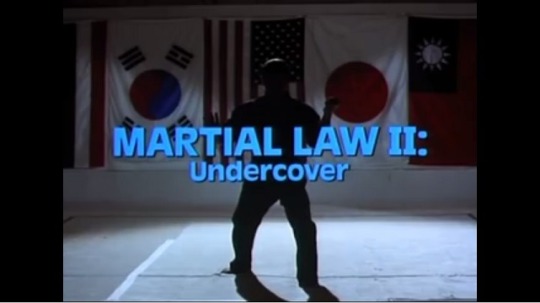



 B-Movie Dragons