This
review is based on the unrated version of the film.
SPOILERS
AHEAD
The
Man with the Iron Fists had its
moments, but I don’t think it did nearly enough with its resources.
I wasn’t a fan, so my hopes weren’t high when its lower-budgeted
sequel was released.
As
a matter of fact, I didn’t bother checking it out at all. However,
having finally
seen it now, I realize it
wasn’t necessary for me to avoid
it. The Man with
the Iron Fists 2 is bereft
of most features
that defined its predecessor – a supergroup cast, the
wuxia influence, and a
general over-the-top style
– but this is actually what
makes it for me. More sober-minded and focused
on its characters,
this is a surprisingly worthwhile
adventure and
definitely the best action feature I’ve yet seen from director Roel
Reine.
The
story: En route to Wu Chi Temple to cleanse his soul, the blacksmith
Thaddeus (RZA) is embroiled in a
treacherous conflict
between a small mining village and the oppressive Beetle Clan.
The
most obvious way the film deviates from the original is the lack of
major names. With the
exception of the lead star, no one here’s been anywhere near top
billing for a major release in years. Nevertheless,
this one’s cast isn’t without cult charm, and they’re
all clearly acting their
butts off. Dustin Nguyen is the real star as the de facto leader of
the village, and Carl
Ng makes a surprisingly strong impression as the despicable villain.
Cary Tagawa is solid as the
wheelchair-driving mayor, while Eugenia Na does good work as an
archer and Nguyen’s onscreen wife. Action hero-in-the-making
Charlie Ruedpokanon enjoys the best role of his young career as
Nguyen’s brother, while action regulars Kazu Tang and Ocean Hou are
memorable enforcers.
Grace Huang and Andrew Lin reprise their roles as the Gemini Twins
for a flashback scene. RZA easily
slips back into his character
but reduces
his impact by not having much
to do with the first half of the movie.
While this
cast ultimately appeals
less to people used to
theatrical fare, I
love how the lack of name
emphasis requires the actors to focus on their characters all the
more. No award-winning
performances, but there are
some good exchanges that
elevate the otherwise humdrum plot.
Aesthetically,
I declare the film a complete triumph. Director/DP
Reine and production designer Lek
Chaiyan (Anna and the King)
create
an absolutely beautiful flick composed of exotic
on-location shots and
intricate costumes. At the
risk of comparing the film to its predecessor too often,
this one eschews the
original’s lavish style
and focuses on a more
realistic and detailed look, smoothly incorporates the local
countryside
for a sense of scope.
This organic style carries
over to the action content, which is considerably scaled back from
the predecessor’s wirework bonanza. The fighting is almost entirely
grounded and less reliant on special effects, and
this works well for the performers and the Thai stunt crew. Of
course, the results aren’t
perfect: over-editing works its way into more and more of the brawls,
and the mass battle scenes are one thing that the original film did
better. I was excited when Cary Tagawa unexpectedly became
a combatant in the 11th
hour, but he’s stunt doubled to within an inch of his life.
Nevertheless, we get some
good matches in the Charlie Ruedpokanon/Ocean Hou and Dustin
Nguyen/Carl Ng encounters, so
the adrenaline department
gets an overall passing grade.
I’m
disappointed that the animal motifs are downplayed this time: RZA
mentions in the DVD’s special features that he sought to explore
insect themes, and while we get the Beetle Clan, everything else is
downplayed to the point that appears
incidental. (E.g. the miners as ants.) The overabundance
of gore ensures that executive producer Eli Roth got to eat for
another day, but the over-the-top violence isn’t very creative.
Again, die-hards of the
original won’t be happy about
these things, but
I find the faults forgivable.
With fewer resources at its
disposal, the sequel finds a harmonious balance much easier than its
richer
predecessor. It’s still a take-it-or-leave-it feature for casual
viewers, but it’s hard to
deny the effort and skill
that went into this. The Man with the Iron Fists 2
is utterly watchable on its
own merits, and if you’re like me and enjoy seeing small
productions succeed against all expectations, you’ll definitely
have fun. Rent it.
The
Man with the Iron Fists 2
(2015) Directed
by
Roel Reine (Hard
Target 2) Written
by
RZA, John Jarrell (Romeo
Must Die) Starring
RZA, Dustin Nguyen (Once
Upon a Time in Vietnam),
Carl
Ng (Point
of Entry),
Cary-Hiroyuki Tagawa Cool
costars:
Grace Huang, Andrew Lin, Charlie Ruedpokanon (Ninja:
Shadow of a Tear),
Ocean Hou (The
Blood Bond),
Kazu Patrick Tang (Dragonwolf),
Eugenia Yuan (Jasmine).
Seigi Ozeki, who seems to have dropped from the leading man spectrum
following Muay
Thai Warriors, plays a vengeful member of the Lion Clan. Sahajak
Boonthanakit (Zero
Tolerance)
is one of Thailand’s rising dramatic stars and plays one of the
featured minors. Simon Yin (Birth
of the Dragon)
is likewise memorable. Content
warning:
Extreme
violence, group violence, lynching, childbirth, racist
dialogue Copyright Universal
Pictures Home Entertainment
It’s a shame that
the phenomenon of supergroup casting has grown old long before all of
its possibilities have been exhausted. The sad reality of filmmakers
regularly not making the most of all the names they can get under one
title is evident in Mark Dacascos’ freshman effort as a director,
which further depresses me by not making a strong case for
yesterday’s action heroes becoming filmmakers. Possibly the
greatest coming together of stars since the original Expendables films, Showdown in Manila nevertheless
feels like a forgettable
action-thriller featuring a bunch of nobodies.
The
story: Private investigators Nick Peyton (Alexander Nevsky) and
Charlie Benz (Casper Van Dien) track an assassination to an
international terrorist group. Eventually, they call in some comrades
to help capture its deadly leader (Cary-Hiroyuki Tagawa).
How
good the
movie is depends largely on
how well its big-name stars are utilized. Here’s my take on ‘em:
Alexander
Nevsky – This
huge bodybuilder seems to be more of a star in Russia than North
America,
and thus I question having
him lead
a movie filled
with more recognizable action guys.
Judged on his merits, he’s not terrible
–
he makes more of his physical
size
than Dolph Lundgren and does well enough in
action scenes –
but
he’s in
desperate
need of charisma. For all his good looks, Nevsky remains a virtual
stranger to me even after the credits
rolled.
I
wouldn’t mind seeing him improve, but I don’t predict many U.S.
producers will line
up to put him in another starring role.
Casper
Van Dien –
As probably the cheapest ex-
A-lister on the market right now, it doesn’t
surprise me
that
ol’ Casper’s present,
but it
sure irritates
me.
He’s
playing yet another womanizing jerk, albeit with more chagrin and
humility
than expected.
It
breaks my heart to admit it,
but
he’s
actually one of the best things about th4
film. He’s not the only cast member with genuine charisma and
acting ability, but he is
the one with the most scenes. For
better or worse, he keeps the film from sinking until the other big
names show up.
Cary-Hiroyuki
Tagawa – One
of the genre’s quintessential villain actors is well-placed
as the
bad guy, but he’s the first cast
member whose
presence is over-hyped. The number of scenes he’s in can be counted
on one hand, and while you can count on his considerable screen
presence whenever he’s on camera, he barely gets in on any of the
action. Also, for what could’ve
been a monumental B-movie, his character’s pretty weak and
comes to kind of a disappointing end.
Tia
Carrere – As
Carrere hasn’t
had much to do as an action hero since Relic
Hunter,
I
wasn’t expecting much of her and thus was delighted when she
briefly partakes in a quick fight scene! Honestly, though, there’s
no reason to get excited. Despite
being an important character, she
largely drops out of the film after the early scenes and is wasted as
a draw.
Mark
Dacascos –
Already
taking on the role of
director, it may have been wiser
for Mark to remain behind the camera entirely
and
not tease us with an early appearance. He has a single scene, and
while he manages to fit a brawl
in there, I
can’t help but miss him throughout the remaining runtime. His
character is the linchpin of the story but I would’ve preferred a
lesser-known actor in the role, as I wouldn’t have spent the rest
of the movie thinking about how much better it would
be if he were
still in it.
Matthias
Hues –
Hues
plays pretty much the same blonde enforcer he
always
has
but with a lot less screen time. Ironically, he has more lines in his
handful of scenes than he’s had in entire
vehicles.
He’s also in
the
only
dream match-up this film offers,
as he engages Casper Van Dien in a short and one-sided fistfight.
Afterwards,
Nevsky
takes him out with one punch.
Don
Wilson, Cythnia Rothrock, and Olivier Gruner –
I list these three as a unit because they arrive and leave the film
at the same time and share the same scenes. They comprise the group
that Nevsky calls in to storm Tagawa’s base (along with Dmitriy
Dyuzhev, an
acclaimed Russian actor who’s nevertheless unknown in the west) and
bring with them the majority of the action content. It’s what I’ve
come for, but the characters
feel tacked-on, as
though
they’re
indulging
a last-minute favor from Dacascos to appear in his movie. While
their segments remain the best in the picture, they
aren’t in
top form:
Gruner’s acting is somehow worse than usual, and weapons
specialist
Cynthia Rothrock inexplicably
looks like a complete amateur when handling a pair of batons.
With the utilization of this ultimate gathering of B-movie dragons
falling way short of hopes, do any other parts of the movie stack up?
Well, I’ve seen worse first-time directors than Dacascos, who
proves he can at least craft a professional-looking feature. The
problem is that his run-of-the-mill style works against a picture
whose adrenaline spikes never reach higher than “meh.” I would’ve
been more entertained by a big disasterpiece with an unpredictable
storyline and actors imploding under crazy direction. As is, Showdown
in Manila and its paint-by-the-numbers plot have nothing wrong
with them other than the disappointment they generate. I’d rather
have seen director Dacascos drop all his plates in spectacular
fashion than realize that, even with all he had going for him, the
best he could do was something I’ll have forgotten about in a week.
With literally nothing going for it other than the opportunity of
seeing some of its stars in the same action scene, I can’t
recommend this film with any kind of enthusiasm. As always, fans of
the stars might want to pick it up to complete their libraries, but
everyone else can treat it mildly.
Showdown in
Manila
(2016) Directed
by
Mark Dacascos Written
by
Craig Hamann (Boogie
Boy),
Alexander Nevsky (story), Mark Dacascos (story) Starring
Alexander Nevsky (Moscow
Heat),
Casper Van Dien (Starship
Troopers),
Cary-Hiroyuki Tagawa (Mortal
Kombat),
Tia Carrere Cool
costars:
Mark Dacascos, Matthias Hues (No
Retreat, No Surrender 2: Raging Thunder),
Don Wilson (Bloodfist
series), Cynthia Rothrock (China
O’Brien series),
Olivier Gruner (Angel
Town),
Dmitriy Dyuzhev (The
Island).
World champion martial artist Emanuel Bettencourt (Kebab
Connection)
plays one of the lead villain’s bodyguards, as does Filipino action
star and Olympic taekwondoka Monsour Del Rosario (Bloodfist
II).
There’s
also a surprising amount of critically-acclaimed
Filipino stars in various supporting roles, including Iza Calzado
(Bliss),
Mon Confiado (Heneral
Luna),
and Jake Macapagal (Metro
Manila). Content
warning:
Human trafficking, violence towards women Copyright
Hollywood Storm / ITN Distribution
Wesley Snipes
vehicles have become a rarity, but I hadn’t realized that we’ve
reached the point where even movies advertised as such aren’t
actually so. This is the case with Armed Response,
which is more of an
ensemble effort that
doesn’t even feature Wesley as its top guy. The movie’s
advertising is all about subverting expectations like
that, as
it presents the picture as an action flick despite
being a horror movie.
Its
poor reception
makes me think that I wasn’t the only one unpleasantly surprised by
this, and while I had some
fun with it,
I need to add my general disapproval to the cacophony. Though better
produced than expected and bearing
a decent premise, it’s ultimately toothless and doesn’t take its
ideas nearly far enough.
The
story: A team of military operatives is sent to investigate radio
silence at a high-tech, AI-supported interrogation facility called
the Temple. When the Temple inexplicably traps them inside, they’re
subjected to mind-bending phenomena and mortal danger by a mysterious
entity.
The
studios involved in the production include Saban Films, WWE Films and
Erebus Pictures – Gene Simmons’ new company. I expected something
over-the-top and bombastic from this alliance, and in a way, I got
it. The story is determined to break the rules we expect for such a
horror film, with the result that a lot of its details come as a
surprise. (Even if the plot itself is predictable.) Director John
Stockwell somehow manages to keep me from falling asleep despite
filling his movie with endless scenes of characters stalking down
corridors. I was never bored while watching this…but I did get
irritated. At some point, for its own convenience, the film just
stops trying to make sense. The facility is pretty miraculous to
begin with but stretches things to head-shaking levels by physically
conjuring a ghostly figure to knock off the cast. Eventually it just
grows hands out of the walls to rip a character’s limbs off. The
movie’s selling itself as a combination of The Cube and any
number of rogue A.I. stories but then pulls Nightmare on Elm
Street-style tricks without precedent.
The
cast is okay, even though they’re not made the most of. Again,
Wesley Snipes shouldn’t have top billing – at least not ahead of
Dave Annable, who plays the real protagonist. Snipes’ presence
isn’t even essential: with only a single fight scene to justify his
casting, anybody could’ve played his role. WWE wrestler Colby Lopez
(AKA Seth Rollins) is used to greater effect, but neither of his two
fights are against Snipes. Anne Heche spends most of the movie being
a plain supporting character before suddenly ascending to main player
status. Gene Simmons is practically unrecognizable in his cameo and
doesn’t leave any impression.
My
biggest complaint is the lack of thought behind the movie’s premise
and themes. There’s no real discussion or acknowledgment of the
dark reputation that interrogation facilities have earned since the
Bush years, which is disappointing given where the plot goes. While
the story’s “twist” is that the sentient Temple is choosing to
punish the operatives for war crimes, its morality is disappointingly
mainstream. It kills the most direct perpetrators but inexplicably
gives a pass to the Heche character – choosing to ignore (1) her
complicity in the atrocities and (2) her willing participation in an
immoral war. Additionally, there’s at least one character on the
team who’s legitimately innocent (Morgan Roberts), but the Temple
does nothing to protect him from murder. I can’t help but imagine
what the movie would be like if its sense of right and wrong was more
nuanced…
Armed Response
will make for a tolerable evening
when it finds its way onto the SyFy channel, but there’s no need to
spend money on it unless you’re an absolute Wesley Snipes
completionist.
Starring
Dave Annable (Brothers
& Sisters),
Wesley Snipes (Blade
trilogy), Anne Heche (Six
Days Seven Nights),
Colby Lopez [AKA Seth Rollins]
Cool
costars:
Most of the supporting cast
has credits
in major action flicks, but I haven’t seen enough of those to know
whether the actors are sufficiently cool; they definitely aren’t in
here. Gene Simmons would be included if he weren’t such an asshole.
Content
warning:
Extreme violence,
military brutality, violence
against women, child murder, drowning
While X-Treme
Fighter isn’t Don Wilson’s last vehicle, I predict it will be
the last film he does with so much fighting in it. Released during the
home video slump, it seems as though the filmmakers were trying to
reignite the martial arts action subgenre by collecting as many legitimate
practitioners as possible and building one of the world’s most fight-filled movies around them. It’s as though they were making the point that “karate films” weren’t
limited to Hong Kong derivatives and the
abortive stuff that Steven Seagal was doing. Disappointingly, the fact that
Scott Adkins and Isaac Florentine are credited with saving U.S. martial arts
movies and not Don Wilson is because
X-Treme Fighter missed its mark. Casual viewers haven’t heard of it, and the
general consensus of the film is very poor. Nevertheless, it’s hard to call
this movie boring, and the upbeat tone and wild nature of the story make it
fun to review at the very least. Can’t say I recommend this to everyone, but I
won’t be surprised if there are a few others who find it as interesting as I
do.
The story opens at a Los Angeles martial
arts gala. Amidst the various demos, announcer Bob Wall reveals one of
the bigger events: a kickboxing exhibition featuring local kung fu instructor
Jack Tanaka (Wilson). It’s a not a competitive fight, but Jack still gets
clocked when he looks into the audience and realizes that someone’s missing.
His father –Dr. James Tanaka (Aki Aleong) – is there, but not his son. As we
find out, James and his boy Brad (Daneya Mayid) have been going through a rough
phase ever since their wife/mother was killed by a mugger, and they haven’t
been getting along. Illustrating this further, Brad skips class at his dad’s kung
fu school and throws a secret birthday party at their home. Jack isn’t happy when he
finds out.
TRIVIA:
Don Wilson “discovered” Daneya Mayid when the 20-year-old approached him at a
martial arts event and asked for his autograph. Wilson liked the look of Mayid
and suggested he audition for the role of his son. Wilson claims that
this is the only time anyone ever secured a film role by asking a star for
an autograph.
Though the film generally struggles with
drama, the relationship between Jack and Brad is handled pretty well. Both
seem at a loss of how to relate to each other, but it’s easy for viewers to relate to them.
In a film as fantastical as this, their relationship is the story’s realistic core. It’s also the catalyst for a decent bit of acting for Wilson: Don is
believable as a father who loves his child but is running out of ideas to curb
his behavior, and I’d go so far as to call him the best performer in the movie.
Even though his party was cut short, Brad’s
about to get at least one more present. You see, Grandpa James happens to be a genius
in virtual reality technology: earlier, we saw that he’s created a photo-realistic fighting
simulator that provides antiterrorism training to government agent Andrew Dean (Lorenzo
Lamas), and he’s adapted this technology into a fighting game for Brad. James
tries to bridge the divide between father and son by urging them to
play together, and Jack grudgingly agrees. Upon “entering” the game
via helmets, a bubbly interface called Veronica (Judy Lee) helps them select
in-game outfits, and things seem to be going well as they’re transported to the
first level and engage their opponent. However, the Karate Master (Chris
Casamassa) is a tough enemy, and Jack is distressed that
his strikes actually hurt. He quits the game and forces Brad to stop playing as well. A potentially fun and therapeutic evening is
ruined.
James dismisses Jack’s claim as overreaction, but remembers that when Andrew engaged the
simulator, he had no such complaints. When James enters the game himself to
run diagnostics, he takes note of the “interesting weather;” this, along with
the Karate Master’s ominous gaze, is one of the first hints that something’s
up. It’s confirmed when Brad, awakening by a nightmare, reenters the game at
night and re-engages the Karate Master, who knocks him out. Not only that, but he zaps Brad with energy that rips the game’s power cord from the wall
and takes the teen’s mind captive. Brad has transitioned from one nightmare to another
– one that runs off a backup power supply. Jack is unable to snap his son out
of the game (he gets shocked when attempting to remove the helmet) and calls
James for help. The doctor determines that to save Brad, Jack must enter the game
as well, defeat all fighters, and make
it to the final level where James can transport them out of the
game. Jack accepts this plan without question, and the stage is set for a promising amount of action.
Within his first few minutes in the game, Jack must fight
three opponents: two combatants dressed in ninja garb and the Karate Master, all of them armed with traditional martial arts weapons. Wilson notes
on the DVD’s commentary track that he’s not very comfortable fighting with
weapons, but while the fights indeed look a little awkward, this also
demonstrates within the story’s context that Jack is still getting the
hang of the game’s world. In defeating the Karate Master, he finds out
that Brad isn’t on the same level anymore, and that in defeating a level’s
master, he can proceed to the next one via a portal.
In a scene that contradicts this
last piece of information, Brad awakens on a new level, only to be confronted
and knocked out again by the Monkey Man (Michael Matsuda). This is followed by
a quick snippet of him appearing in yet another area. Whether it’s
actually possible to transcend levels by losing
fights or whether this reflects the game’s level of corruption
isn’t clear. Another interesting scene follows as Jack happens upon a fight between the benevolent White Dragon (Cynthia Rothrock)
and the malicious Virus (Christine Bannon-Rodrigues). The Virus is the culprit
behind the game’s shenanigans, and surprisingly, an in-game character
is trying to stop her. The Virus flees when Jack enters the fight, and after
laying the barest foundation for a romance with the White Dragon, Jack ascends to the next level – without actually defeating the master, again.
TRIVIA:
Both Cynthia Rothrock and Christine Bannon-Rodrigues hold substantial records
in martial arts competition. Rothrock was the undisputed world champion in
weapons & forms for five years, while Bannon-Rodrigues won three world titles
in her very first tournament – repeating the feat when critics dismissed this accomplishment
as a fluke.
At this point, we’ve encountered almost all
the major themes of the film. There’s the danger of misapplied technology
and the nature of artificial intelligence, but the one that intrigues me most
is the theme of how people react to psychological trauma. In this regard,
there’s a direct parallel between the Tanakas and the characters of Sci-Fighter.
For the Tanakas (Jack and Brad), their mother and wife has died; for
the game characters, the integrity of their world has been compromised.
In both cases, responsibilities and relationships are thrown into disarray:
Jack doesn’t know how to relate to his increasingly delinquent son, while the
characters are fighting each other and neglecting the rules that are supposed
to govern them. Everyone is confused to varying degrees,
with the King of the Cage character (Brad Verret) mistakenly assigning blame to
the Tanakas – not unlike Jack and Brad
villainizing each other on a smaller scale. I’d love to have seen this concept
explored a little more – to see how the characters go about their world when
not interacting with players – but that’d be a different kind of movie
altogether. As is, the parallel makes the characters feel like a family – a
family which, by proxy, the Tanakas eventually end up joining.
As he progresses, Jack defeats the Double Threat duo (Simon and James Kim), the Monkey Man from before, and the Street
Fighter (Maurice Smith). He even comes across a “residual image” of Andrew Dean’s
training, and there’s a short moment of Don Wilson and Lorenzo Lamas
fighting together. Jack and Andrew apparently know each other, but
Jack is too weirded out to make anything of the situation.
He goes on to defeat the Weapons Master (Eric Lee) and the Scorpion (Rebekah
Chaney), then appears on a beach where he’s rendered unconscious from a kiss by
the disguised Virus – leading to what I can only conclude is an in-game dream
sequence wherein he returns to the White Dragon’s level to bid for her heart.
He comes to (still in the game), and must defeat the Grappler (Gokor Chivichyan).
TRIVIA:
Like many Don Wilson movies, X-Treme Fighter
includes onscreen opponents who Wilson fought during his kickboxing career. He
defeated Maurice Smith in 1983 for the WKA World Championship and defeated
Dewey Cooper in 2000 for the ISKA North American title.
Jack finally locates Brad, who’s been going
through various challenges of his own, including the Virus impersonating his
father. (Her ability to do this, coupled with the Karate Master’s strange
behavior from before, makes me think that she either impersonated or took
control of him to initiate this whole thing.) It’s a joyous reunion; the Virus’ attempt to keep the Tanakas separated has resulted in
them growing closer. Eventually, the two end up at the final level, and even
though Jack bids Brad to stay back as he approaches his opponent, the location abruptly
changes and both of them are transported to a prison setting. While Brad
defends himself against a couple of thugs, Jack takes on the King of the Cage and eventually
defeats him via sleeper hold.
With the final boss defeated, Brad walks through
the last portal and reawakens at home, but before Jack can go, he’s accosted by
the Virus and transported to a skyscraper setting. As she gains the upper hand
in the resulting fight, the Virus reveals that she intends to destroy both the game’s world and Jack’s. These are incredibly ambitious plans and warrant
examination. Overall, I don’t think they’re realistic. Aside from
presumably corrupted boundaries of the game, I see no signs of
destruction in Sci-Fighter, with some of the characters even fighting the Virus
when they realize what she’s trying to do. What’s more, I can’t imagine how she
could destroy the world outside of the game. This calls the nature of the Virus
into question, for it’s not actually clear whether she’s a genuine computer virus or an established character. Her headshot appears in the
game’s title imagery, making me think that at least her in-game model is an established
element of Sci-Fighter… So, is she an infected character
or simply a disenchanted rogue? Given the strong capacity for
personality among the characters, the latter seems possible, but I personally
lean towards the former, given her somewhat unique ability to traverse the
levels. As such, perhaps her power could eventually allow her to
travel between actual worlds, not unlike the Tanakas. If she were able to do
this, her destructive nature would probably make destroying the Earth a
priority…but I still don’t know how she’d manage it.
When the King of the Cage regains consciousness
and realizes that he was mistaken about the cause of his world’s problems, he buys
Jack some recovery time by attacking (and getting defeated by) the Virus. In
the real world, the game’s backup power supply fails and Jack is presumed lost,
but Brad’s desperate words of love and encouragement permeate the game and
imbue Jack with the power to defeat the Virus. He’s still trapped, but the
White Dragon appears and sacrifices herself for him; she becomes a portal,
and Jack is able to awaken in the real world. To his amazement, he awakens to
the White Dragon’s face! The character was based on James’
assistant Sally, who’d been aiding the professor in trying to free the
Tanakas.
TRIVIA:
Brad Verret, who was a major part of the King of the Cage promotion, died in
early 2016 – reportedly of lung disease. While not active in competitive
fighting, he was a professional bodybuilder who’d won first place at the 1983
Los Angeles Championships.
In the epilogue, we see that things have improved for
the Tanakas. As Jack gives a speech to his students about how life’s greatest
obstacles are often only in our minds, Brad arrives to take his place in class.
At a subsequent martial arts event, Jack and James – along with Sally, who
appears to be dating Jack – watch Brad win a forms competition. However, back in James’ lab, the Virus
inexplicably appears on a computer screen and ominously asks “Does anybody else
want to play?” Clearly, she is not just in the game, but in the main
program as well.
When I first watched X-Treme Fighter, I wasn’t impressed. I wasn’t a fan of Don Wilson,
but I was a fan of Cynthia Rothrock and several other cast members, and
upon seeing the questionable quality of the fight scenes, I publicly proclaimed
it one of the worst martial arts films ever. Nevertheless, I never got rid
of my DVD copy, because the movie’s spunk is amusing and the premise unique
enough to warrant revisiting. Since then, the ambitiousness of the production
and the ambiguity of the storyline have made it a minor favorite of mine, but
I’m realistic about the limited appeal it may have to others.
Much of this has to do with the direction
of Art Camacho. Camacho was an integral contributor to the 90s
action scene and actually directed one of the very best low-budget thrillers I’ve ever seen (1998’s Recoil) but I’ve never much
liked his work with Don Wilson. Also, the quality of Camacho’s output seems strongly
correlated with how much money he has, so that both the production values and screenplay
of X-Treme Fighter – made during the home
video market’s low point – are weaker than any other film of his I’ve seen. Finally, Camacho doesn’t get many good dramatic performances out of his
stars, here. Every single character displays some thematic shakiness, with
Cynthia Rothrock and Aki Aleong being the worst offenders – even though Rothrock
had just come off a strong performance in Outside
the Law and Aleong is usually the one performer in these movies who can act.
But let’s look on the bright side. At first
glance, the fight scenes stink, but closer examination presents some general
improvements over Wilson’s action standard. There are 23 full-length brawls, and while most of them could have been shot better,
the variety of fighters and fighting styles is welcome. Despite some incontestable low points (e.g. the Monkey Man’s encounters are some of the
noisiest, most do-nothing brawls ever filmed), a handful of fights
are respectable, particularly those featuring Chris Casamassa. Daneya Mayid is
an infinitely more dynamic fighter than his onscreen father, but even Wilson
raises his standard by engaging in more evenly-matched encounters than we’re
used to. His showdown with the Virus is possibly the only back-and-forth brawl the
conservative Wilson has with a female opponent.
Speaking of unconventionality, the film does
several other things that I’m a fan of. While there is some sexualization of
women and pandering to stereotypes (is it coincidence that the biggest things
in the Tanakas’ lives are martial arts and computer technology?), the film
centers around a non-nuclear Asian-American family and features a cast whose main performers are almost
exclusively women and men who aren’t Caucasian. Also, X-Treme Fighter is valuable for being a rare
family-oriented martial arts movie from the 2000s; despite its PG-13 rating,
parents who already let their kids watch Power
Rangers shouldn’t have a problem with it. Of course, all of this may not cut it for adult viewers who just
want to watch a good fight flick, so regardless of whether you’re a Don Wilson
fan, beware of the film’s low points and know yourself before
purchasing.
X-Treme Fighter [AKA Sci-Fighter]
(2014) Directed by Art Camacho Written by Thomas Callicoat (The Legend of Sasquatch) Starring Don Wilson (Bloodfist series), Daneya Mayid (Kickboxer: Vengeance), Aki Aleong (Farewell to the King), Cynthia Rothrock Cool costars: Christine
Bannon-Rodrigues (WMAC Masters),
Lorenzo Lamas (Renegade), Chris
Casamassa (Mortal Kombat), Brad
Verret, Michael Matsuda (Crooked),
Rebekah Chaney (Slumber Party Slaughter),
Gokor Chivichyan (Streets of Rage),
Simon and James Kim (Mortal Conquest),
Eric Lee (Talons of the Eagle),
Maurice Smith (Fist of Glory), Bob
Wall (Enter the Dragon), Dewey Cooper
(The Martial Arts Kid). Additional
combatants include Joe Perez (Half Past
Dead 2), Eric Perrodin (Street Crimes),
and professional fighter Ray Wizard. Title refers to: It might be an
alternate title for the game. Otherwise, it could apply to any player or
character. Potential triggers: Mugging, violence towards women Copyright Sci-Fighter Films, Inc.
I often read the opinion “[90s martial
arts star X] should have been bigger,” which I take to mean that the
performer the writer refers to should have had a mainstream career. While
I can usually point out why this wasn’t the case (martial arts action has
always been a niche genre and Hollywood already had Seagal and Van
Damme) and typically voice opposition to the notion (I prefer the creative
freedom that comes with the low-budget realm), the one person I make an
exception for is Jeff Wincott. Already an acclaimed actor by the time he
started doing karate films, Wincott was a better dramatic performer than his
more famous peers and at least as good of an onscreen fighter. His knack for
landing nice-looking productions allowed him to simulate what a big-budget feature
for him might look like, and Martial Law
II: Undercover is arguably the best example of this. It’s the kind of movie that could only have been made when it
was, when the home video market was ravenous for action and indie studios still
had the means of making movies that looked as good as their mainstream
counterparts. It’s a personal favorite and I’m excited to promote it.
The first of several stylistic differences
between the original Martial Law and
its sequel is apparent in the opening shots: whereas the original took place at night with shadowy lighting, Undercover
opens on a bright, sunny day. It’s a park scene, and two gangs have chosen the
adjoining street to carry out an arms deal. This is a police bust
waiting to happen, given that Officer Billie Blake (Cynthia Rothrock)
is selling hotdogs from a nearby wagon… but who’s the drunken vagrant stumbling
upon the van where the gang leaders (John Vidor and Nicholas Hill) are
conducting business? This is actually the returning Officer Sean Thompson, with
Jeff Wincott replacing Chad McQueen, and we get our first hint of his identity when
he grabs one of the baddies and throws him bodily from the vehicle. Other
policemen are on hand, but as Billie enters to fracas, the captain (Max Thayer) orders the rest to let the two supercops
take care of the attackers. Not only are they equal to the task, but they make
a pretty fun fight scene out of it.
Following some curious opening titles that I’ll talk about later, the story
commences with Sean being promoted and transferring to the
Northwest Division to begin a martial arts program. He’s disappointed that Billie
won’t be accompanying him, but personally, I think splitting the team is
part of a positive revamp of Sean and Billie’s relationship. You see, they
were an item in the previous film, but the romance ended up marginalizing
Billie as a character and limiting Cynthia Rothrock’s utilization. Here, they
don’t seem to be romantic anymore, and in addition to Billie having more
opportunity to shine, the lack of deference on her part makes for a more equal partnership. She’s still willing to do big favors for Sean, but the respect
between them is a lot more apparent.
At his new workplace, Sean meets Captain
Krantz (Billy Drago), his new superior, and also his old academy buddy Danny
Borelli (uncredited). Danny’s happy to have his pal around but becomes
noticeably depressed when the instantly-suspicious Detective Dobbs (Charles Taylor)
walks onto the scene. Danny’s subsequently so preoccupied that he breaks off Sean’s tour
of the premises and goes off to pursuits unknown. Unknown, that is, until we
see him tailing Dobbs in his car after hours. It turns out that the guy is off to an illicit meeting with
business prodigy / gangster Spencer Hamilton (Paul Johansson). Hamilton
presents a legitimate image to the public – earlier, a news team was filming a report detailing his accomplishments – but he turns out to have his hands in prostitution
and illegal gambling. To make things easier for himself, he buys off police
officers.
For bodyguards, Spencer has surrounded himself with martial
artists – a fact which Danny must learn the hard way when he’s caught taking
photographs of the meeting. Held at gunpoint, Danny tries to fight his way free
but is thoroughly beaten by Spencer’s lieutenants: Tanner (Evan Lurie), Bree
(Sherrie Rose), Han (Leo Lee), and two unnamed characters; one is played by
Koichi Sakamoto, the other I have no idea. Drugged with liquor before having his
neck broken, Danny is sent down a hill in his car to make his death look like a
DUI accident.
We’ve now seen the depths to which the
villains are willing to sink. While Dobbs comes across as a greedy jerk willing
to screw over his comrades for money, Spencer is more of a study. On one hand,
it’d seem as though a prodigy like him would have no need for illegal action,
but on the other, it’s possible that his success is entirely built on crime. Whatever
the case, Spencer is a psychopath who enjoys exerting force and penetrating secure
institutions. The title sequence I mentioned before features a shadowy man in a
gi throwing kicks and punches in Sean’s dojo, and while I can’t be certain who
this silhouetted figure is, the ponytail makes me think it’s Spencer. His
mysterious presence here may symbolize that not only is he a physical match for
our heroes, but he’s already infiltrated Sean’s domain long before Sean even arrived. He’s a bad guy, for certain, but I’d go so far as to call Spencer a
Satanic archetype: he’s a manipulator, a seducer, a deceiver, someone who loves
making deals, and he commands a legion of minions from the underworld. In
short, he’s just plain evil.
TRIVIA:
The dojo in the film is actually the Jun Chong Tae Kwon Do Center of Los
Angeles, California. At least four members of the film’s cast have trained in
tae kwon do: Jeff Wincott, Cynthia Rothrock, Evan Lurie, and James Lew.
Sean arrives at the scene of the
“accident” and doesn’t accept the police verdict. Even though Danny had a
history of alcoholism and an autopsy reveals his intoxication, Danny had
mentioned that he’d been sober for months. What’s more, Sean finds a
matchbook in the vehicle from Syntax – the nightclub owned by Spencer. He
visits, but his conspicuous questions to the bartender (Pat Asanti) arouse the suspicion
of Tanner. A fight ensues, and Sean is effectively barred from pursuing the
matter: not only do the people at the club now know his face, but Captain Krantz
is irate and demands he stop. I like to think that Sean isn’t usually this
ham-fisted in his detective work, but perhaps the loss of his friend has affected his tactfulness. Whatever the case, he at least has the
wherewithal to come up with an alternative plan: have Billie investigate the
place in his stead. It proves to be a good idea, and a nice opportunity for
Cynthia Rothrock to do some genuine acting. There’s a fun scene where she applies for a job at the bar under a pseudonym, and the bartender quizzes her
on cocktails. (Billie’s recipe for the Cookie Monster: “Crème de cacao, crème
de menthe, vodka, lit on fire, run like hell.”)
We find out that Danny had been investigating
Dobbs for his interference in a solicitation arrest. The arrestee was Tiffany Michaels
(Deborah Driggs), one of Spencer’s employees whose primary job is to intimately
uncover secrets from his associates and business partners. She and Billie
develop a friendship after Billie beats up some aggressive men who
follow them from the bar, and it ends up being one of my favorite aspects of
the movie. While Martial Law II
doesn’t pass the Bechdel test, the scenes of Billie and Tiffany building a
rapport are rare instances female characters having scenes to themselves in
this subgenre, and they lend a more nuanced tone to an otherwise male-centric
action film. Also, Tiffany is arguably the most interesting character of the
movie, personifying the full gambit of Spencer’s nefariousness. Spencer’s
molded her into a femme fatale while keeping her dependent on his financial
assistance. Their relationship seems to be the result of a long history of
seduction and deceit, indicated in a scene where Tiffany coldly remarks on
Spencer drawing a college student (Kimber Sissons) into his service; she’s probably reminded of her own beginnings with the crime lord. Deborah Driggs
is a fine actress – equal parts Maria Ford and Jillian McWhirter – and
perfectly portrays Tiffany as a world-weary individual holding out for one
final possibility of changing her life.
Tiffany’s services are in demand: Spencer
uses her connection to a drug dealer (Matthew Powers) to facilitate a drug
bust so he can steal $10 million in drug money and purchase the business of a
wealthy sports promoter (Conroy Gedeon). To carry this out, he’ll need the
cooperation of someone more highly-placed than Dobbs, and it’s a surprise to
find out that Spencer even has his claws in Chief Krantz. Spencer tips off
Krantz about the upcoming drug deal and demands that he receive the spoils, but
the police chief is reluctant. He says that he “won’t cross the line,” but such
a declaration means nothing to Spencer. See, Krantz is involved with Tiffany,
and while it’s mostly mutual and Tiffany actually hopes that the chief will be
her ticket to a better life, she’s still indebted to Spencer and agrees to drug
Krantz during their next date. When Spencer and Tanner show up and take the unconscious
captain’s gun, she frets that they plan to kill him…but then Spencer turns
the weapon on her. Krantz comes to, and finds his lover dead and Tanner taking
incriminating photos. Spencer now officially has the chief under his thumb.
Meanwhile, Sean’s been putting up with multiple
attempts on his life because Spencer considers him a threat. First, Dobbs pays
a biker gang to attack him, and when that fails, Spencer
sends Han, Koichi Sakamoto’s character, and a new enforcer (James Lew) to his
dojo. Sean beats the odds here, too, and Spencer decides to have both Sean and
the ineffectual Dobbs eliminated in the aftermath of the drug bust. The plan is
partially successful: following the raid, the partnered Sean and Dobbs are
accosted by a group of thugs led by Han, but while Dobbs is executed, Sean counterattacks
and succeeds in capturing Han.
Sean has Han lead him to a factory occupied
by Spencer’s forces, where his boss is awaiting the money. The climax is quick
to follow, but there’s a segment preceding it that intrigues me. Sean
holds a shotgun on Han, demanding that Spencer and his forces give themselves
up, but Spencer refuses and even encourages him to kill his henchman. Han gives Spencer
a look, then drops to one knee and pulls a knife from his sock; Sean promptly
blows his head off. This is such an odd, futile move on Han’s part that it
deserves examination. At first, we’re wont to think that Han is making a
last-ditch effort to attack Sean, or maybe even sacrificing himself so the
others can attack, but considering that his action comes right
after Spencer declares his life worthless to him, it’s possible that this is an
act of indignant defiance. Han likely considers himself a part of Spencer’s inner circle, higher-placed than the bought policemen, but it’s just hit him
that the devotion he feels towards his boss is entirely one-sided. In other
words, he realizes that he’s no different than Tiffany, who did everything
asked of her and was still killed. It would have been interesting to see who
Han turned his knife on – Sean or Spencer.
A quick shootout follows (with a clump of
Han’s hair still clinging to the barrel of Sean’s shotgun), but it turns into a
series of hand-to-hand showdowns. Billie, who had recently been promoted to
Spencer’s personal team, has a disappointing fight with Bree, but the
four brawls that follow are all very nice. Our heroes are victorious: Tanner
ends up hanging from his neck by a chain while Spencer’s remaining lieutenants
are thrown from a catwalk. While Spencer puts up a much better offense
than I expected from a slimy rich guy, he ends up impaled on a makeshift
sword.
Sean had found out after the bust that his
captain was complicit in Spencer’s schemes, and he and Billie immediately go to
Krantz’s residence. Krantz sees them approaching and puts a gun to his head.
Aggrieved by his involvement in organized crime, the selling out of his
officers, and the murder of his girlfriend, he shoots himself. The sound of his
gunshot ushers in the end credits.
It’s an abrupt and unfulfilling ending, but
that’s the worst thing I have to say about this movie. Martial Law II is one of my go-to examples of a low-budget action
film that looks exactly as good as its high-end counterparts. Strong
direction coupled with an intimate style of choreography makes this virtually as
powerful of a vehicle as Seagal’s and Van Damme’s offerings of the same year. (I suspect that competition from independent studios played a part in those guys
moving up to bigger-budgeted, effects-driven blockbusters.) The excellent
casting and great distribution of resources, along with the clear storytelling,
qualifies this as study material for any director looking to make a
contemporary martial arts vehicle.
A good deal of credit goes to Jeff Wincott.
While he benefits immensely from a cool collection of costars, the great
choreography of Jeff Pruitt, and having no less of a talent than Cynthia Rothrock
as his onscreen partner, the guy does not
look like this is his first time headlining a kick flick. Wincott easily slips
into the action hero persona and takes to the fight scenes like a duck to
water. He’s the complete package, and arguably better-rounded than most of his
low-budget contemporaries, so it’s lamentable that his action career began
petering out well before the turn of the century.
From a social standpoint, the film could definitely
be stronger. Every non-white performer plays a villain of some stripe, and few of their roles fall
outside of stereotypes. Also, despite the presence of strong female characters,
women in general don’t fare well here, whether it’s Bree falling to her death
or Tiffany being murdered in cold blood. Nevertheless, we do have a significant
bright spot in the form of Sean and Billie’s relationship, because I can’t
understate how rare it is in these movies to see a friendly coexistence between
a man and woman without any romance involved. Billie and Sean are virtually
equal characters, with comparable prominence in the storyline and almost the
same number of fights. More importantly, they treat each other as equals, and
show fondness and concern for each other without needing to justify it with sex
or smooches. The fact that Billie isn’t stripped of her femininity to accomplish
this makes it all the more significant, and in this regard, the movie stands
out.
One minor nitpick is that Billy Drago isn’t
utilized to his full potential. I don’t mind that he didn’t get in on the
actual action, but when the most that he can brings to the film is an abortive
love scene, something’s awry. Nothing against Paul Johansson, but I’d have
loved to see this same movie with Drago in his role. But this, along with the
other shortcomings, isn’t reason enough to avoid the picture. Martial Law II excels on so many levels
and is such a gem of its subgenre that martial arts fans do themselves a
disservice in not plugging in their old VCRs for a viewing. Check it out!
Martial Law II: Undercover (1991) Directed by Kurt Anderson (Martial Outlaw) Written by Pierre David (story),
Jiles Fitzgerald (screenplay), Richard Brandes (screenplay) Starring Jeff Wincott (Mission of Justice), Cynthia Rothrock,
Paul Johansson (Highlander: The Raven),
Deborah Driggs (Total Exposure) Cool costars: Evan Lurie (Hologram Man), Sherrie Rose (Me & Will), Billy Drago (Death Ring), Leo Lee (The Perfect Weapon), Koichi Sakamoto (Bounty Tracker), James Lew (Balance of Power), Oscar Dillon (Deadly Bet), Nicholas Hill (Death Match), Max Thayer (The Retrievers). Though only credited as
a “featured part,” world kickboxing icon Peter Cunningham appears as part of a
gang that attacks Billie. Title refers to: Sean and Billie,
respectively. Sean’s nickname is “Martial Law,” but it’s Billie who infiltrates Spencer’s inner circle. Potential triggers: Domestic abuse,
group violence, violence against women
Copyright M.L. II Partnership
When it comes to cult movies, the original Bloodsport
has its own shelf in the annals of nostalgia. Though I’m not the biggest fan of
that one, I recognize its significance and respect it for helping to reignite interest
in martial arts cinema in the post-Bruce Lee world. Given such status, it’s
inevitable that unfavorable comparisons would dog its lesser-known sequel,
especially since Jean-Claude Van Damme is nowhere to be seen here. Personally, I give
the movie more credit than just being a follow-up. Bloodsport II: The Next Kumite isn’t a perfect film, but it is an absolute opus of onscreen karate. This is as good as it gets for martial arts tournament
flicks, and I’d match it against any picture of the same description.
The generic titles and the opening scene of kids in a dojo don’t
exactly imbue the movie with promise, but luckily,
here comes James Hong – one of my favorite actors – to play the role of Master
Sun. He calms the children by beginning a lengthy story about Alex Cardo
(Daniel Bernhardt), a professional thief whose tale begins with crashing the party of a wealthy businessman in Thailand (Pat Morita). Cardo
describes himself as a speaker of multiple languages, a specialist in Chinese
antiquities, and as being “quite good with [his] hands” – in other hands, he’s
as cocky as they come. Luckily, his arrogance doesn’t last long:
he’s come to steal an antique sword, and even though he
succeeds and beats up three guards in the process, his nefarious partner John (Philip Tan) double-crosses him and Alex is arrested. In
the words of Master Sun, “His greed had led him to a very dark place.”
The impression that Daniel Bernhardt makes on viewers during these opening
scenes is the impression of the film thus far, and I can empathize with
people who don’t take to it right away. The fact that Bernhardt uncannily looks,
sounds, and kicks like Van Damme almost makes me wonder why the filmmakers
didn’t just have him carry on the Frank Dux character from the original…but then again, even a good imitation is merely an imitation. Daniel
Bernhardt can’t help the way he looks, but perhaps the film would have been
better served with a more unique persona. The knockoff factor is high.
TRIVIA: The Bernhardt-Van Damme
connection encompasses more than just physical similarities. The two of them had
previously appeared together in a commercial for Versace Jeans, and
producer Mark DiSalle takes credit for having “discovered” both of them.
Alex is sent to prison. This seems to bring out his better side, as his
first act is to defend a fellow newbie being assaulted by the inmates. He subsequently makes the acquaintance of two other main characters: the sadistic prison guard Demon (Hans Ong) and the imprisoned Sun, who advises
Alex against fighting the guards. Sun is a lifer, imprisoned for the murder of
a rapist, and the bleakness of his situation is illustrated by that
his primary occupation seems to be sweeping a prison yard that’s
entirely made of sand. However, he has more interesting talents than that: Alex’s second
meeting with the bullying thugs doesn’t go well, and Sun demonstrates some
impressive tai chi to decimate the attackers. This sparks a mentor-pupil
relationship between the two, with Sun agreeing to teach Alex his secret – the
Iron Hand system.
Also called Iron Palm, Iron Hand is not actually a martial arts style but a system
of conditioning techniques meant to increase striking power and bolster the
durability of the fingers and palms. Sun’s variation includes
fancy kicks and extinguishing candles with a punch, and this makes for a reasonably
fun training montage. I set no store by Sun’s concept
of chi and I think his armchair diagnosis of Alex’s psychological state is
silly, but he does make mention of something we’ve been waiting for since the beginning: the Kumite tournament, which he claims to have competed in. Alex is intrigued,
but Sun informs him that he will first have to earn an invitation – foreshadowing the trial Alex will have to go through after their chat. An attempt is made on Alex’s life by
the same thugs as before, and when he successfully defends himself, the
complicit Demon has Alex placed in a sweatbox.
Alex survives his presumably lengthy punishment by maintaining a spiritual connection
with Sun, with both of them striking hard surfaces to simulate their synchronized heartbeat. Mythically, this is Alex’s belly of the whale, and he emerges
prepared to undergo a heroic metamorphosis. He begins to excel in his training
– now able to extinguish candles with both fists and feet – and demonstrates a
newfound ability to get along with fellow inmates by playing checkers with them. You get the impression that he’s learned all he can here, so it’s
fortunate when he’s mysteriously freed. On his way out,
Alex makes two promises to Sun: that he will free him as well, and that he will
“make the Kumite a spiritual event again” – in response to the
sadistic Demon having been invited to compete.
When Alex finds out that his
liberator is none other than the businessman whose sword he stole – David
Leung – he makes one more promise: to retrieve the sword from his villainous
ex-partner and return it to Leung. The sword, you see, is the grand prize of
the Kumite, and Leung needs Alex’s help to get it back.
TRIVIA: All inmates in the prison wear
conspicuous pink outfits. This costume design wasn’t planned, but was decided
on when director Alan Mehrez got a good deal on the fabric.
Alex arrives at the Kumite, and I think these initial scenes divide viewers
by how they deconstruct the tournament. For starters, the involvement of David Leung throws back the aura of secrecy from the first film. (How secret can a tournament be if a public businessman is supplying the prize?) Also, Alex is able to show up there
even though he hasn’t received an invitation, whereas the original film required the hero to pass through checkpoints. And perhaps more surprising than anything, we see that the
returning Ray “I ain’t your pal, dickface” Jackson (Donald Gibb) is now
involved in the tournie’s organization. It’s not explained how he went from being
a competitor to an associate, and given that he’s still the loudmouthed brawler he was in the past, you can’t help but wonder who the heck thought he was
supervisory material.
Much to Alex’s benefit, Ray has an odd way of doing his job. See, when
the head judge (Hee Il Cho) refuses Alex entry because he doesn’t have an invitation, Ray sets up an opportunity for Alex to win the invite of a fighter he’d just expelled (Jeff Wolfe). (It’s sort of a jerk move, given that Ray’s sole reason for tossing him out is that he
didn’t think he was good enough.) He does this for unexplained reasons, and after Alex wins a one-sided fight and the right to compete, the two of them become buddies. Weird.
We’re introduced to a handful of fighters with just enough screen time to count as characters. Cliff (Ron Hall) was the one who suggested
Alex consult Ray for help. Sergio (Nicholas Hill) is a self-proclaimed street
fighter and another of Alex’s impromptu friends. And Kim (Lisa McCullogh) is…well, not a
man. Admittedly, all of these characters have equally little substance, but how the film handles Kim is particularly irritating.
The screenplay *cannot* get over the fact that she’s a woman. She’s introduced
as the first female fighter to compete in the Kumite, and her reception in entering into an exclusively male domain is kinda harrowing. Her peers
hit on her, treat fights with her as a mockery, and go out of their way to try to
humiliate her. There are sexual jokes, and Ray feels compelled to protect her
more than he would any other fighter. At one point, she’s kissed against her
will. To be fair, the spotlight shines on her a little more than the other
fighters, but it’s disappointing what the filmmakers chose to
focus on.
Once the Kumite commences, I ascend to martial arts heaven. While it’s boring in the sense that the story all but stops, it’s
exciting in that I’ve rarely come across a collection of fight scenes that
consistently maintains such a high standard. While it lacks the original movie’s
theatrical touch, it nevertheless surpasses its predecessor in substance by presenting all
fights in their entirety. Nothing against montages, but give me any number of
consecutive brawls over a collection of snippets any day. There’s a lot of
back-and-forth action and long, uninterrupted shots – the foundations of any
great fight scene. The only real disappointment here is Demon, who – like Alex
– is very obviously modeled after his counterpart in the first film. Demon is arrogant,
plays to the crowd and flexes his muscles a lot, but the performance has a forced
look and can’t touch Bolo Yeung as Chong Li. A reenactment
of the judges turning their backs on the villain after he kills a competitor feels particularly desperate.
As he advances through the tournament, Alex also has to worry about retrieving
the sword. Despite having been offered David Leung’s vast resources, Alex is determined to carry out the recovery by himself.
It’s not clear why, but his plan bears fruit: he tricks
John into appearing for a faux transaction, then has the police show up to
arrest him – but not before a quick fight.
Ray and Sergio are searching for Alex at the same time, and in coming upon the
scene, Sergio is shot in the leg by John’s bodyguard. They don’t make a huge
deal about this, but I’m a little indignant. After all, Sergio had a real
shot of winning the tournament by now, and his injury could have been avoided if Alex hadn’t been all lone
wolf about this.
TRIVIA: Eight months after the film’s release, Nicholas Hill competed in the World Vale Tudo Championships under the ring name
Niccolaus. Though Hill was a legitimate martial artist who owned a dojo, he hadn’t competed before and lost to his opponent, future UFC star Pedro Rizzo. While the promoters viewed this as a one-off adventure and publicity stunt, Hill was in fact eager to compete and thus embarked on a six-year career as a pro MMA fighter.
With the sword retrieved, Alex has an excellent match against another
semifinalist (Chad Stahelski) en route to meeting Demon in the finals. Things start out bad for Alex: he goes down following a few hard strikes, exclaiming that “[Demon’s] arms are like
cement.” Demon nearly eliminates
Alex by targeting his leg, but the protagonist rallies upon receiving help
from an unexpected source. Unbeknownst to him, David has already freed Sun, who
is present at the match and is able to remind Alex of his training. By
channeling his inner strength, Alex is able to defeat Demon’s ‘cement arms’
with his Iron Palm. Upon victory, Alex is awarded the sword, but later presents
it to Sun in gratitude.
The film ends with a thoroughly unearned kiss between Alex and Janine (Lori
Lynn Dickerson). She’s technically been his love interest throughout the movie,
but has been so underutilized that I haven’t bothered mentioning her.
I have to admit, the storyline seems a little less sound than when I first saw
the movie. The narrative hops around a
little and, with the exception of Alex and Sun, it doesn’t do a great job of
building character relationships. Nevertheless, the film
largely succeeds in recapturing the first film’s ambience. No mention is made of the
original’s protagonist, Frank Dux, but it feels like this is the same world he
inhabits. My favorite aspect of this is the extensive assortment of fighters,
which measures up well to the first movie’s. It’s the same kind of cattle call
for martial artists, and the varied personalities that show up are impressive.
Nicholas Hill, Philip Tan, and grappler Gokor Chivichyan are (or would be) champions in
their respective disciplines; judge Hee Il Cho and fighter Jerry Piddington
give the roster some clout as legitimate masters; Ron Hall is hands-down one of
the most exciting performers in America. It’s a great ensemble,
unmatched in size and skill in all but a few movies.
On the surface, Bloodsport II seems
like a pretty straightforward film with an unambitious story. However, given that
the script supposedly underwent considerable rewrites, it’s worth looking at a
little more closely for signs of intrigue. Sure enough, there seem to
be traces of a deeper story here. The mention of Alex’s past as the unhappy son
of missionaries, Sun’s backstory as an immigrant in Thailand, and the
hints of a more established relationship between Alex, Cliff, and Sergio
provide some fodder for headcanon. However, the part that got me thinking more than
anything is an almost overlookable snippet in the film’s first half. When Alex is
thrown into the sweatbox, he experiences a series of
hallucinations; many of these are just replayed footage of past events, but
there’s also a momentary shot of him placing a damp cloth on a prone Sun’s
head. This scene never occurs elsewhere in the movie, and it’s actually the reverse
of what happens when Sun nurses Alex back to health. This may simply be
salvaged footage from a deleted scene, but I interpret it as Alex’s realization
of his transformation. The relationship between him and Sun had almost
exclusively been to his benefit until then, but soon after, Alex makes his commitment
to free his teacher. Alex seems to have been endowed with a sense of purpose during the
sweatbox torture and comes to see himself as Sun’s savior. Such extraordinary conviction
may explain his confidence in handling a life & death situation later (i.e.
the bust on John), and it even justifies the seemingly empty spiritual talk
throughout the movie. Basically, I think Alex received a supernatural
premonition in the hotbox. After all, heat exhaustion is often used as a
catalyst in trances.
In an interview on The Voice Versus
TV show, the real-life Frank Dux claimed that the reason Bloodsport II “never went anywhere” was because he wasn’t involved
in its production and it lacked his style of fight choreography. It seems more likely that the film’s obscurity is
due to that it was a low-budgeted limited release produced by
filmmakers who specialized in DTV work and didn’t star Van Damme. Daniel
Bernhardt has since played supporting villains in major pictures, but I don’t
think there are too many casual viewers looking up his past work. As such, Bloodsport II doesn’t stand on accolades
or cult fame; it stands solely on its merits, and in that regard, I’d argue
that it definitely does go places. It has a good cast, excellent fight scenes, and it’s colorful and fun to look at. It’s
a smooth, exhilarating adventure whose faults don’t come close to dragging it
down. I’d even say that as far as pure DTV martial arts flicks go, this is one
of the very best. Check it out!
TRIVIA: The movie features 28 full-length
fight scenes – seven more than its predecessor. This officially makes it one of the
most fight-crammed U.S. productions ever released.
Bloodsport
II: The Next Kumite (1996) Directed by Alan Mehrez (Bloodsport III) Written by Jeff Schechter (creator
of the TV show Stitchers) Starring Daniel Bernhardt (True Vengeance), James Hong (Big Trouble in Little China), Donald
Gibb, Pat Morita (The Karate Kid series) Cool costars: Hans Ong (Dragon: The Bruce Lee Story), Philip Tan
(Martial Law), Ron Hall (Triple Impact), Nicholas Hill (Fists of Iron), Hee Il Cho (Best of the Best), Jeff Wolfe (Once Upon a Time in China and America),
Nils Allen Stewart (Mercenary), Earl
White (Heatseeker), Gokor Chivichyan
(Streets of Rage). Lisa McCullogh was
one of Uma Thurman’s stunt doubles in Kill
Bill Vol. 1. Chad Stahelski has since become one of the top Hollywood fight
choreographers. Fighters Jerry Piddington and Ken Harte don’t have many other
credits but are respected as masters in the martial arts community. The
credits claim that good ol’ Eric Lee is in here, playing a character called
Seng, but I haven’t been able to identify him. Title refers to: The tournament. Whether it’s actually the next Kumite – i.e. the one following the original film’s – isn’t clear. Content warning: Prison violence and abuse, group violence, torture, sexual harassment and assault Copyright FM Entertainment
International N.V.
When you begin to appreciate how talented of a performer T.J. Storm is,
it’s surprising that it took so long for him to get a solo vehicle. Even though
Storm (born Juan Ojeda) entered the direct-to-video martial arts field at its
zenith, it wasn’t until the genre had gone through an
economic slump and been revived that he briefly became a leading man. The movie
that makes this possible looks like a shoestring operation, but despite being
plagued by some typical low-budget problems, it’s this scanty amount of
resources that – in true B-movie fashion – brings out the best in the
people involved. Black Cobra isn’t a
showstopper and it’s unlikely to become your new favorite, but if your
appreciation of martial arts cinema includes pure effort and heart,
this one’s worth looking at.
Black Cobra is based on a novel by Sebati E. Mafate, When the Cobra
Strikes. I can’t say whether the movie’s a faithful
adaptation, but its opening ten minutes show the filmmakers trying to
establish a lot of backstory in as little time as possible. The basis of the plot
is that Sizwe Biko (Storm) – a South African martial artist of mixed race – must find a way to release his father from jail. His dad (Michael
Chinyamurindi) is a political prisoner from the time of apartheid, and he’s
being targeted for murder by racist prison guards. He gives Sizwe
the location of the family’s treasured diamonds, which Sizwe intends
to sell so he can pay off a corrupt judge. He’d probably
prefer to do this in South Africa, but after one of the aforementioned guards
(Robert Pike Daniel) follows him to the hiding place with a couple of men
(one of them’s his son) and they’re all killed in the resulting fight, Sizwe contacts a friend in Los
Angeles (Jeff Wolfe) who agrees to help him hock the diamonds. Leaving behind
his angry fiancée (Ursula Taherian) and the martial arts master who trained him
in snake kung fu (Damion Poitier), he heads to California.
All of the above happens before the main title screen. It’s an ungraceful narrative, but nevertheless, this pseudo-montage has introduced
us to the overarching theme of the feature: the relationship between fathers
and sons. In Black Cobra, this relationship is directly connected to mortality; we’ve
already seen the racist prison guard die alongside his son, while Sizwe undertakes a life-threatening mission to save his father.
In Los Angeles, Sizwe is received by his old schoolmate Mpho – played by the
author of the book – and his roommates Gerald (J.T. Jackson) and
Gilroy (Floyd Gilmor). What they lack in indispensability they
tend to make up in likability…although Mpho’s idea to throw a party and hook
Sizwe up with a woman clearly isn’t well-advised. The evening features poor Sizwe
all but fleeing the advances of one of the ladies (Ogy Durham) and
later knocking a drunken guest into the pool after being challenged to defend
himself.
The following night, Sizwe is finally picked up by Nicholas, the guy who’s
to help him sell the diamonds. Nicholas is quite high and makes a suspicious impression, but Sizwe goes with him anyway. They pay a
visit to Goro Tanaka (Cary Hiroyuki-Tagawa), a Yakuza lord looking to get into the
jewelry business. Tanaka’s son Satoshi (Richard Dorton), Nicholas’ contact, is desperate to impress his apathetic father – so desperate that following
the exchange, Satoshi and his goons attack Sizwe and steal back the money. During the attack, Nicholas stands by and
snorts some heroin. Satoshi’s intentions are clear – he wants his father to
notice him – but as Nicholas leaves his friend for dead, it’s
not clear why he’s done this. While his betrayal is never adequately explained,
it’s mentioned that he’s trying to produce a movie and needs the money Satoshi pays him for the double-cross. It’s possible that his drug habits have leveled any previous finances, and now he’s trying to simultaneously pay for both a film and his heroin use.
Sizwe is brought back home by a sympathetic passer-by called Vicky (C. Traci
Murase). Unable to locate Nicholas and not knowing what else to do, he
turns to a former martial arts instructor of
his – Shihan Kris (Stephanie Cheeva). Shihan’s first act is to test Sizwe with a fight scene
the moment he enters her home (“A simple hello would have sufficed!” Sizwe
complains afterwards). Despite
this violent reception, his teacher is pretty helpful, first giving him a potion to speed up his healing and then helping him locate Nicholas through his
father – another martial arts instructor.
Vicky – suddenly a part of Sizwe’s group –
helps them gain entry to Nicholas’ home by posing as a deliveryperson. Embarrassingly,
Nicholas is caught in the presence of escorts and planning trips to Las Vegas. Sizwe and his friends kidnap him, along
with the women (I’m not sure why). Sizwe & Co. interrogate them, but Nicholas
proves to be resourceful and surprises the friends while Sizwe is out of
the room – beating up Gilroy and Mpho while still tied to a chair. This leads
to a showdown between Sizwe and Nicholas, and while it’s the best
fight in the movie, I must admit dissatisfaction. Both performers are
talented, but the editing is overactive – constantly flipping between shots
and providing no smooth, start-to-finish
exchanges.
After Nicholas is defeated and successfully interrogated, you’d think
it’s time for Sizwe to get his diamonds back, but the movie has him contend
with some relationship drama first. Vicky has inexplicably fallen for Sizwe,
and while he politely rebuffs her, his fiancée turns up in L.A. and assumes that the
two are having an affair. This leads to a gratuitous catfight. They don’t rip
off each other’s clothes or anything, but there’s a really sheepish instance of
male pandering where they’re scrapping and cussing each other out while an oblivious
Sizwe showers. It’s an unnecessary confrontation that’s never mentioned again, and the reason that Sizwe’s fiancée – Kiki – came was to reveal that she’s pregnant. This doesn’t effect the story
much, but I suppose it raises the stakes a little.
When Sizwe finally heads to Tanaka’s base of operations, he walks into a
highpoint of family drama. Frustrated that his father refuses to give him
responsibility, Satoshi attempts a foolhardy takeover with the help of a rival
underworld faction, but his efforts are stomped on by the
better-prepared Tanaka. Tanaka favors a young protégé called Kogi (Jamison
Wang), and after Satoshi is subsequently disowned, the disgraced son takes
advantage of the chaos Sizwe causes to kill Koji with a tanto.
Finding his disciple slain, Tanaka blames Sizwe and unleashes all his minions on him.
There’s a pretty decent fight wherein Sizwe engages two knife-wielding bodyguards
(Jade Quon and Kiralee Hayashi). One of them was among Satoshi’s goons who
attacked Sizwe earlier, and it’s treated as a reveal when we see that
there are two of them. They wear masks
half of the time, so I’m not sure whether they’re supposed to be twins, but I
get the impression that there’s some untold story behind these two. Whatever
the case, Sizwe kills them by redirecting their blades at each other – similar to
the technique he used to slay the racist guard’s son. Afterwards, he engages the remainder of Tanaka’s thugs and eventually takes the fight to the aggrieved boss himself, who attacks him
with a sword.
Sizwe gets the upper hand on Tanaka, his kung fu beating out the old man’s
kenjutsu, but Satoshi appears and halts
the fight by pointing a gun at Sizwe’s head. Satoshi makes one final bid
for his father’s approval, but Tanaka notices the bloody knife still in his
hand. Realizing that his rage was misdirected, Tanaka
charges and kills Satoshi. As Sizwe looks on in shock, an exhausted Tanaka throws
him a suitcase filled with the money from their deal and tells him to go. The
Yakuza boss is left kneeling over his son’s body, his empire devastated and his
lineage lost.
After so much violence, it’s a feat that the movie manages a happy ending, with
Sizwe emotionally receiving his father as he exits the prison. As they walk offscreen, we see that by some unexplained means, Sizwe has
regained his diamonds (perhaps they were in the suitcase) and used them to repay his allies with. We also see an epilogue of Nicholas,
who tears a photo of him and Sizwe in half and lights the image of his former
friend on fire. You don’t get the impression that he’s plotting revenge or anything,
but he’s got to be reflecting on how his willingness to double-cross a pal has
led to his financial detriment. I don’t think he’s ever going to get that movie
made.
Having watched Black Cobra a few
times, I can summarize it as decent movie that could have been better.
The story shows a lot of promise, the martial cast is great, and T.J. Storm
makes a great lead, but problems with the pacing keep this one down. There’s
simply too much story to tell and the screenplay falls over itself in trying.
There are at least a couple out-of-the-blue flashbacks where the movie seems to
be saying “Oh shoot, I forgot to mention this!” There’s also some needless
timeline-hopping, not to mention a whole subsection regarding a private
investigator (director Scott Donovan) that I didn’t bother mentioning
because it’s facetious to the plot. Problems like these remind you that this otherwise
good-looking movie is an indie production, prone to amateur mistakes, and makes
me wish that Lionsgate sent the film back to the editing bay before releasing it.
(Then again, DTV action flicks are often victims of studio meddling, so
perhaps I should blame these shortcomings on
Lionsgate itself.) It’s far from unwatchable, but also far from perfect.
Nevertheless, I do recommend the movie, in part to promote diversity
within the subgenre. DTV martial arts flicks aren’t ethnically exclusive,
but aside from the fact that you’re unlikely to find a dark-skinned protagonist
unless it’s in a Wesley Snipes or Michael Jai White vehicle, it’s particularly
rare to come across a film wherein neither the protagonist nor the lead villain
are white. The use of animal kung fu in a modern fight flick is likewise pretty
unique, and while my complaints about the action content still stand, I appreciate
the little touches that choreographer Ken Ohara put in to distinguish Sizwe’s
fighting style. And despite already having been in the movie business for over two
decades when the film was released, T.J. Storm approaches his role with all the
enthusiasm of Jean-Claude Van Damme in Bloodsport –
imbuing it with the energy of a true breakout vehicle. I really hope he gets top billing again.
Someone who also elevates the
movie is Cary Hiroyuki-Tagawa. Tagawa’s one of a few performers who are able to crisscross
between B-movies and mainstream cinema without damage to his career. Like Lance Henriksen and John Rhys-Davies, the guy can go from filming big-budget
work to a movie like
this, bringing some flair to it without losing his dignity. He goes the extra mile here by partaking in that
swordfight: even though Tagawa will always be known as a martial artist
for his role in Mortal Kombat, look
up his filmography and take note of how rarely he’ll actually do fight scenes. His return to actual action is perfectly
respectable, and I hope he’s not done mixing it up like this.
The film’s theme of fathers and sons is interesting. The most obvious comparison it wants you to consider is between the Bikos and the Tanakas;
at first, it seems like a simple contrast between a good father-son
relationship and a bad one, but the two sets are actually pretty similar in that both feature the son risking death for his
father’s sake. Again, mortality is key: the life of Sizwe’s father
is dependent on his son surviving his adventure, and Tanaka’s absence from the
epilogue seems to indicate with his son dead, he has no
future left. Then there’s the relationship between Nicholas
and his dad, who isn’t even credited. The decision not actually credit the latter may illustrate how the (presumably) distant
relationship between Nicholas and his father has caused both of them to fade from
prominence: Nicholas can’t get his movie made, and his pop can’t even get
credited! The fate of the father affects the fate of the son, and vice-versa.
I think Liongate’s marketing department made a questionable decision with this
one’s Region 1 DVD cover. It looks like it’s modeled after the artwork of a 50
Cent album, and in no way conveys that this is a movie about an African kung fu
practitioner who takes on an American Yakuza faction. For reasons like
this, the movie seems to have gone under most peoples’ radar, but while I can’t
justify urging viewers to see it like I might some other hidden gem, I still
hope that its audience will grow over time. Black
Cobra isn’t a movie to change our lives, but because we all love a genre that’s often criticized for unoriginality, we should celebrate instances of
uniqueness. Give it a try, maybe?
Black
Cobra (2012) Directed by Scott Donovan, Lilly
Melgar (co-director) Written by Scott Donovan, Sebati E.
Mafate Starring T.J. Storm (Conan the Adventurer), Cary Hiroyuki- Tagawa, Jeff
Wolfe (Once Upon a Time in China and
America), Ursula Taherian (Carver) Cool costars: Damion Poitier (Hunter Prey), Stephanie Cheeva (The Ultimate Game), Jade Quon (Raze), Kiralee Hayashi. Tanaka’s
henchmen include Anthony Nanakornpanom (Broken
Path), Tsuyoshi Abe (Sword of Honor),
Sam Looc (Falcon Rising), and
Tadahiro Nakamura (various Power Ranger
incarnations). Harrison Snider, who plays the drunken guest who challenges
Sizwe, is actually a competitive tae kwon do practitioner who operates the Helix
Martial Arts studio in Colorado. Title refers to: Sizwe mentions that his nickname is “the cobra.” And he happens to be black. Potential triggers: Racist dialogue, racially-motivated violence, group violence, homophobic dialogue, torture Copyright Sizwe Productions, LLC.
If you’re like me, then around the same
time that you realized your yen for direct-to-video karate flicks, you found
out that you faced a mountain of material. Many of the movies of this label
aren’t very good, and while I had the opportunity to slog my way through
several decades’ worth of schlock, I realize that a few bad initial experiences
may be enough to dishearten a prospective fan – after all, movies cost money,
and why bother when all you’re coming up with is trash? To help orient newcomers,
I’ve put together a list of some of the most essential features in this
subgenre. Not all of these movies are necessarily great, but they’re among the
most-referenced and/or valued ones. They’ll give you some perspective of the subgenre as a
whole, and they’re probably the ones other fans will hope you have seen.
1. China
O’Brien (1990)
Why: Cynthia Rothrock is one of the most
consistent contributors to the DTV realm, and her movies are unavoidable. You’ll
have a sizable library to dig into if you enjoy her work, and the best way to
find out if you do is via this Robert Clouse-directed cult vehicle. If you like this, check out:China O’Brien 2 (1990), Sworn to Justice (1996)
2. The
King of the Kickboxers (1990)
Why: A stylistic continuation of the
mostly-theatrical No Retreat, No Surrender
series, this movie mixes an exotic location with a standout cast of fighters
and stellar action. Like several other entries on the list, its lack of Region
1 DVD availability merely enhances its gem status.
If you like this, check out: No
Retreat, No Surrender 3: Blood Brothers (1990), Bloodmoon (1997)
3. Martial
Law II: Undercover (1991)
Why: Enter Jeff Wincott, the DTV
realm’s most fondly-remembered action star of the ‘90s. This is his first martial arts movie,
and it catches his best side. Add some strong characters and arguably the best
cast of supporting villains ever assembled, and this one’s hard not to like. If you like this, check out:Mission of Justice (1992), Martial Outlaw (1993)
4. Shootfighter:
Fight to the Death (1993)
Why: Here’s a fight flick with an
edge. This brawl-packed tournament film is great for viewers who like their matches
gory; it will expose them to a slew of lesser-known performers. Fans of Bolo
Yeung will appreciate his sizable role. If you like this, check out:Firepower (1993), Ring of Steel (1994)
5. Drive (1997)
Why: Some of the best American
indies are powered by international talent, and such was the case when Japan’s
Alpha Stunts group got the means to make a feature with actual production values.
The great action is complemented by a fun screenplay and excellent chemistry
between Mark Dacascos and Kadeem Hardison.
If you like this, check out: Extreme
Heist (2002), Contour (2006)
6. Undisputed II: Last Man Standing
(2006) & Undisputed III: Redemption
(2010)
Why: The Undisputed sequels are milestones. Last Man Standing saw director Isaac Florentine turn up his game as
an action director and flaunted the realized potential of Michael Jai White and
Scott Adkins as leading men. Redemption
made Adkins the “it” performer of the martial arts scene and set the bar for
fight choreography worldwide. If you like these, check out:Ninja II: Shadow of a Tear (2013), Falcon Rising (2014)
7. Broken Path (2008)
Why: If you value brutal karate
action over all other aspects, this Alpha Stunts rarity will be a dream come
true. It’s an intense adventure that focuses all its production power on fight
scenes.
If you like this, check out: Kill ‘Em
All (2014), Die Fighting (2014)
8. Blood and Bone (2009)
Why: Aside from being a good fight
flick and the premier vehicle of Michael Jai White, this film uses a great cast
and excellent production values to attain the elusive status of being just as
palatable to viewers outside of the martial arts fan base.
If you like this, check out: Never
Back Down 2: The Beatdown (2011), The
Girl from the Naked Eye (2012)
9. Universal Soldier: Regeneration
(2009) & Universal Soldier: Day of
Reckoning (2012)
Why: With its decidedly dark
presentation and gritty action, Regeneration
proved that a low-budget sequel could outclass its mainstream predecessors. Day of Reckoning demonstrated a new potential
for style and ambitious storytelling on the DTV circuit. Many people seem to
prefer the first to the second, but you’d do well to regard the two as a set.
If you like these, check out: Angel
of Death (2009), Dragon Eyes
(2012)
[Trigger potential: I recommend you investigate the IMDb page of any given film and review the “Plot Keywords” and “Parents Guide” sections for possible triggers.]
Inspired by a post from GORE IS FOR GIRLS, I wanted to put together a similar bill for my subgenre
of expertise: low-budget and direct-to-video martial arts movies. Now, some
people just don’t like violence in their movies, but I think there are a
significant number of folks who steer clear of kick flicks produced outside the
mainstream despite enjoying action and martial arts movies in general. This
post is for the latter, and I’ll address some of the most prominent reasons why
these movies tend to get passed over.
Q: Why don’t you like DTV martial arts films?
A:
“They have poor production values and look cheap.”
Try:
Timecop 2: The Berlin
Decision (2003)
Tekken
(2010)
Kung Fu Killer
(2008)
Blood and Bone
(2009)
Into the Sun
(2005)
A:
“They feature no real stars.”
Try:
Sworn to Justice
(1996) – Brad Dourif, Walter Koenig, Tony Lo Bianco
Sabotage
(1996) – Carrie-Anne Moss, Tony Todd, Graham Greene
Skin Traffik
(2015) – Mickey Rourke, Daryl Hannah, Michael Madsen
Mercenaries (2014) – Kristanna Loken, Vivica A. Fox, Brigitte
Nielsen
Red Sun Rising
(1994) – Terry Farrell, Michael Ironside, Edward Albert
A:
“They’re mundane and feature no interesting premises.”
Try:
Ninja Apocalypse
(2014)
Hellbinders
(2009)
Knights
(1993)
Samurai Avenger: The
Blind Wolf (2009)
The Swordsman
(1992)
A:
“They address no relevant issues.”
Try:
In Hell
(2003) – Exploitation and abuse of prisoners
Quality of acting is relative, so I’m
going by critical acclaim. Try:
The Girl from the Naked
Eye (2012) – Multiple acting nominations,
Hoboken Int. Film Festival
Replicant
(2001) – “Best Actor” nomination, DVD Exclusive Awards
The Martial Arts Kid
(2015) – “Best Supporting Actor,” Sunscreen Film Festival
Fighting with Anger
(2007) – “Best Actor,” New York Int. Independent Film & Video Festival
Money Fight
(2012) – “Best Supporting Actor,” Action on Film Int. Film Festival
[Trigger potential: I encourage investigating
any given movie’s page on IMDb
and checking out the “Parents Guide” and “Plot Keywords” sections for possible
triggers.]
Corey Yuen’s 1986 cult masterpiece No
Retreat, No Surrender had a lasting influence on western martial arts
movies. Not only did it give us Jean-Claude Van Damme, but it raised the bar
for fight choreography and provided us a taste of the Hong Kong style prior to the action
revolution of the late 90s. In some cases the influence was even greater than
that, as a couple filmmakers produced movies that for all the world appear to be NRNS’s spiritual successors. One
of these – Breathing Fire – seems
like a genuine attempt to replicate the unique recipe of American and Hong Kong
flavors, complete with odd writing, an upbeat tone, and superior action
scenes. This one’s a karate treasure – not great at
storytelling but utterly successful in holding a viewer’s attention.
TRIVIA: Breathing Fire and No
Retreat, No Surrender and indeed related, though only through personnel. Director
Brandon Pender is credited for “kick boxing direction” in NRNS, and producer Wayne Yee played a bit part in it.
The film opens with a surreal scene of antagonist Michael Moore (Jerry Trimble) siting at a table bedecked with artificial food. It’s completely
unexplained – possibly a dream sequence – but it
introduces us to one of the film’s most prominent themes: deception and false
fronts. The next scene is of Michael driving his two
teenage sons to a martial arts tournament; he seems
like a perfectly normal father, but right after dropping
the boys off, he leads a bank robbery wherein his
squad steals a fortune in gold bars. They stow these in the vault of an
abandoned metal refinery until they can be sold, and Michael comes up with a unique way of keeping everyone honest. He creates
a mold of the vault’s keys in a plastic pizza, then destroys the originals and
divides the pizza among his people. Mutual cooperation will be necessary to
recast the keys.
Michael’s gang is made up of the deceptive Jenny (Jacqueline Pulliam),
karate master Alan (Allen Tackett), the mighty Tank (Wendell C. Whitaker), and
the muscleman Thunder (Bolo Yeung). They’re the ones who actually rob the bank,
but another person who’s also in on the scheme is Peter Stern (Drake Diamond), an
employee who has second thoughts about the operation after the
sadistic Thunder shoves his face into a toilet. He tries to
get out of the deal, but the paranoid Michael follows him home and
murders him and his wife (Jackie O’Brien). They search for his slice of the pizza,
but Peter had already sent his teenage daughter Annie (Laura Hamilton) to mail it to a confidant. Annie witnesses the murder from afar and flees with her
puppy, heading for the address on the envelope. However, the villains
acquire the same lead from a trashed envelope.
Annie shows up at an auto garage and meets the addressee: David Moore (Ed Neil),
Michael’s brother. Shortly after Annie gives him the envelope and asks for
help, Alan and a couple thugs arrive to kidnap her. David is knocked around a
bit, but eventually reveals himself as a kung fu master and drives
the attackers away. He goes with Annie to what he believes is a safe haven –
Michael’s luxurious home. The danger is immediately apparent to us: though neither is at liberty
to reveal anything, Michael knows who Annie is while Annie recognizes him from before. Neither is able to do anything directly: Annie doesn’t dare
leave David’s vicinity and Michael can’t act while others are around – “others”
meaning David and his sons Charlie (Jonathan Ke Quan) and Tony (Eddie
Saavedra).
In addition to being the stars of the movie, Charlie and Tony are also my
favorite things about it. Quan and Saavedra aren’t master thespians, but they
have a lovable, dorky enthusiasm and excellent chemistry. Charlie is a
Vietnamese adoptee but the comradery
between his stepbrother and he is natural and heartfelt. Charlie doesn’t seem
as close with his father, though our only real hint of this for now is a moment
when he feels excluded from introductions with David. Nevertheless, the boys
take an immediate liking to Annie, and though they try to impress her, their
relationship ends up being pretty innocent as they try to keep her mind off her
troubles. The brothers know nothing about their father’s involvement in crime
and suspect nothing when Michael’s thugs show up to take Annie. Having
previously qualified for a national martial arts competition, the boys can hold
their own against these guys, but it takes the intervening David to beat back the attackers.
The boys take their roles as protectors seriously, and implore David to teach them
his style of fighting. However, they fail their very first test – an exercise wherein
they kneel on upturned bricks. Worse, David’s ability to protect the kids
himself is dashed after the boys and he trace their attackers to a dance club
owned by Alan. Michael is at the club, too, and shows an increased
level of ruthlessness by attacking his brother in the near-dark and injuring his
leg.
TRIVIA: Prior to acting, Jerry Trimble
was a professional kickboxer and 2-time world champion. Ironically, Trimble originally aspired to be an actor and learned martial arts to emulate Bruce Lee.
At the hospital, a doctor claims that David will never be whole again. David
doesn’t take his new disability well and hides himself away. When the boys visit, he lashes out at them. Eventually, they manage to rekindle his spirits and
earn his instructorship by kneeling on bricks all night. David commences their training, and in doing so realizes that his disability won’t keep him from exercising his
passion. It also illustrates another prominent theme: dealing with trauma. In addition to David’s and Annie’s traumatic experiences, the film
also indicates that Michael was adversely affected by his service in Vietnam.
Annie seems to take her ordeal unrealistically well, but note that the presence
of her new friends and her dog seems to provide outlets for
coping. Faced with the prospect of never fighting again, David channels
his frustrations into training the boys and making them stronger than he
was. Michael may have buried his trauma and embraced a secret lifestyle wherein
he can act out his aggression. In the near future, his
sons will be forced to confront trauma as well.
The boys commence a fairly unorthodox training regimen that
includes punching phonebooks, kneeling on beer bottles, mastering the tai chi
(bowling) ball, and chopping a watermelon. We see during these scenes that
Charlie is curious about his origins and frustrated that neither David nor Michael
gives him honest answers about the identity of his mother. In truth, Michael
killed her and was subsequently urged by his comrades
to raise the orphaned infant in penance. This questionably-advised act connects
both the best and worst aspects of Michael’s character. While Charlie seems to
have had a luxurious life under Michael, his stepfather probably never
thought much of the idea (note that the boys’ actual supervision is handled by an employee). By reaching a little, one may even suggest that Michael’s need to mask his feelings around Charlie may have indirectly
led him to robbery – an outlet for exercising his aggression.
After their training, Charlie and Tony feel empowered enough to
go on the counteroffensive. While David relocates Annie, the
brothers pursue Tank. They follow him to a
poor neighborhood where he lives with his blind mother (Pamela Maxton)
and best him in a fight. Afterwards, Tank tearfully confesses to his mother about his involvement in crime. He allies himself with Charlie and Tony when they promise to help
him break away from the gang, and his information leads them to form a more
cohesive plan: to bring the robbers into the open, they’ll need to hand over the pizza slice.
Tank directs the brothers to Alan’s second locale: an oceanfront bar. It’s staffed
by three little people who attack Charlie and Tony. What ensues is an odd fight, but a genuine fight scene nonetheless. It’s played for laughs,
but I want to believe that this is a statement about the accessibility
of the martial arts. It’s a lesson that David should take to heart – that disability needn’t hinder one from being a fighter. Whatever the
case, the fight spurs Alan to chase the brothers up a mountain outside the bar,
and at the peak, he takes his turn to fight them. Prior to relinquishing the pizza,
the boys test out David’s moves with great success – preparing them for the
final confrontations.
TRIVIA: The mountaintop fight is a nod
to kung fu movies of the 70s. These were often low-budget productions filmed on
tight schedules, and mountaintops were ideal settings for battles: the bare
terrain allowed the filmmakers to bypass continuity between shots and film from
any angle.
With all pieces of the mold together, Michael’s gang gathers in the evening
to prepare for a morning retrieval mission. However, not only does Alan
witness Tank making a secret telephone call, but Michael offers an anonymous
tip to the police about the upcoming operation. When morning comes, the
reassembled keys are used to unlock the vault. To everyone’s outrage, the
police arrive in the middle of it. Alan blames Tank, and Michael is happy to shoot him. After
Michael commands his remaining gang to split up, Alan and Thunder discover that Michael has already taken the gold from the vault. As far as I can
figure, Michael visited the refinery in the night to steal it, and his
plan is to hide in a subarea of the refinery with Jenny while the rest
of his gang is arrested. It wasn’t his design to shoot Tank, but one less
witness probably suits him fine. His growing nonchalance to murder foreshadows
what’s to come.
Alan and Thunder evade the police, but are so angry that they take
the time to engage Tony and Charlie when they arrive on the scene. The boys manage to defeat them, but when they see David entering
the refinery, Charlie goes after his uncle while Tony remains behind to ensure
that Thunder is arrested (Alan attempts an escape but is also apprehended). Charlie
follows David into the bowels of the facility and is surprised to come upon him
arguing with his father. Having realized what’s going
on, David implores Michael to turn himself in. (It’s never revealed how David
puts the pieces together, but it’s possible that he recognized Michael’s fighting
style at the club. That would help explain his subsequent moving out of Michael’s
house.) Fearing that David plans to incriminate them, Jenny points a gun but is knocked out when Charlie intervenes. Michael – already on edge – snaps and strikes Charlie, accusing him of
betrayal. David finally reveals the truth about Charlie’s mother, and as the
boy is overcome by sorrow, we see the final moments of Michael trying
to maintain the façade. He’s clearly uncomfortable with having been compromised,
and for a few seconds, he says nothing. When he finally confirms the story, it’s clear that he’s held it in for a long time and is defiant about
the fact. What’s more, he promises to kill anyone who
attempts to stop him as he leaves.
However, Michael proves to be better than his word: as Charlie and David emerge
from the basement, he attacks them with construction vehicles. When this fails,
he engages Charlie hand-to-hand. It seems as
though Michael intends to rid himself of both another witness and an unwanted
responsibility at the same time. He has the upper hand, but when he attempts to
beat David to death, Charlie kicks into overdrive…and Michael’s butt. Before a
decisive victor can emerge, though, the police arrive and arrest Michael. Tony is heartbroken at the realization that his
father is a criminal and blames the arrest on Charlie. Like
Michael, Tony invents an instance of betrayal to justify his frustration.
The bond between the brothers is in peril when, sometime later, both appear at
the national tournament. Tony tears his way through
opponents en route to meeting Charlie in the final match. (Notice that while the previous tournament was governed by point-fighting stipulations, this one
is full-contact with the competitors wearing no headgear.) Charlie is apprehensive about fighting his brother, but
following a penalty for passivity and a stern talking-to from the referee
(played by the late Grandmaster Kenneth Penland), Charlie’s fire is ignited and
he strikes back – leading to the best action scene of the film. It’s not clear
what spurs him, but I’d venture that it’s Michael’s influence: he feels he’s
been wronged and is tired of holding back. However, he eventually drops his guard – perhaps making a conscious decision to stem his stepfather’s sway – and allows Tony to finish him. As he realizes what he’s done,
Tony falls to Charlie’s side in despair, but Charlie awakens. As the two celebrate their mutual victory, their bond is restored.
The film leaves some questions unanswered. We can assume that Michael and his
gang will be imprisoned for a long time, but it’s never stated what’s to become
of the kids. It’s possible that the brothers will live with their uncle, but what
of Annie, who’s curiously absent from the final scenes? What of Tank’s blind
mother, who’s now seemingly living alone in a graffiti-covered house? We’re not
even aware of what becomes of Michael’s wealth. Will the boys go from having a
private gym and a pool to sleeping under newspapers like David was in the beginning?
Nevertheless, I’m pleased by the upbeat nature of the ending and of the film in
general. Though Breathing Fire has an
unfortunate tendency to be a little gratuitous with its violence, it’s still a predominantly
idealistic story that illustrates unlikely bonds between people. The scenes
between the four main heroes are comforting in their optimism. It’s something
of a coming-of-age tale, and fans of this particular subgenre – especially its 80s
incarnations – will probably enjoy it. What’s more, the fight scenes are pretty
darn good, with long takes filled with intricate exchanges. Everybody puts on a
good show, but the standout star is Jonathan Ke Quan, who graduates from his
quirky nostalgic roles in The Goonies
and the second Indiana Jones movie to a genuine kicking machine. Give me this guy over his more famous peers any
day.
I recommend this movie to fun-loving fu fans, but exercise care when purchasing
it on disc. Breathing Fire has
received so many releases under different distributors that I think it might
be in the public domain, and at least one of these – the Echo Bridge version –
features very muddy video quality. I recommend the Westlake Home Entertainment release
for a sharper picture and brighter colors.
Breathing
Fire (1991) Directed by Brandon Pender (second
unit director of Death Match),
Brandon De-Wilde, Lou Kennedy Written by Tao-Liang Tan (Last Breath), Raymond Mahoney, Wayne Yee Starring Jonathan Ke Quan, Eddie
Saavedra, Ed Neil (Mighty Morphin Power
Rangers), Jerry Trimble (The Master) Cool costars: Bolo Yeung (Bloodsport), Allen Tackett (They Still Call Me Bruce), T.J. Storm (Black Cobra). The tournaments feature
many brief cameos of accomplished martial artists, but the one I’d like to
highlight is the late Master William Holland, playing the muscular competitor
who tries to intimidate Charlie and Tony before the fights. Title refers to: There’s only metaphorical fire being breathed here, when the Moore family allows rage to control their actions. Potential triggers: Group violence, violence against women, domestic violence, child abuse Copyright Golden Pacific and Art
Studios


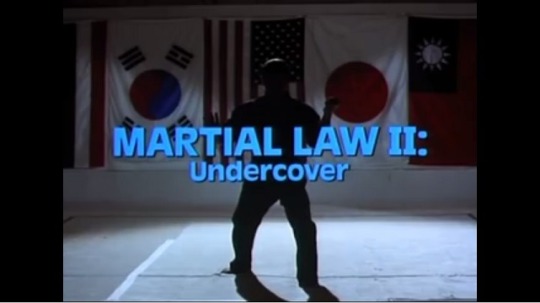




 B-Movie Dragons