Game
Over is a well-made independent
flick in that none of its flaws are the result of its budget. I’ll
always recognize
director Peter Sullivan for
having helmed more Christmas movies than anyone else, but it’s fairer
to distinguish him as someone who brings class and competence to any
genre of film, including martial arts action. While
far from the best adrenaline production
of its time,
this is
a solid
example of what can be accomplished at a
lower economic level and
the go-to vehicle for star Andre “Chyna” McCoy.
The
story: An out-of-work and persecuted parolee (McCoy) enters a
mysterious fighting circuit in hopes that the $100,000 prize will be
enough to rebuild his life.
Chyna
McCoy’s been near the top of the top of a cast list before, but
this is his first starring role. I
see room for improvement where his acting and charisma is concerned,
but his look and martial moves are
memorable. At
any rate, his costars and the screenplay help
keep the film
interesting enough to forgive any related
slip-ups. I’ve seen this
template of movie
done better, but the perspective of McCoy’s character gives it an
urgent freshness that I wasn’t expecting. Paul Green plays a
properly deplorable parole
officer who keeps the pressure on the protagonist, and
while this ongoing angle of racism and police corruption definitely
makes for some uncomfortable scenes, the story would’ve been
generic without it.
The
action content’s almost entirely made up of fight scenes, and while
their quality fluctuates, I give ‘em an overall passing mark. The
film was made with the involvement of the Zero Gravity Stunt Team –
the same group that gave us Lateef Crowder – and scenes featuring
them and other high-flying tricksters tend to be the best. Edwin
Villa plays a tailor who attacks our hero with pins and uses his tie
as a whip. McCoy is a
capoeira practitioner and capable of some
flashy stuff, but he
mostly keeps things simple
with down-to-earth
brawling and the occasional
submission technique. His showdown with Blade II’s
(2002) Daz Crawford is built up throughout the film and ends
up being a major
disappointment…but the movie saves itself with a completely
unexpected second finale with co-lead La Trice Harper.
Other
shortcomings include some questionable editing, a couple weird
dream/flashback sequences, the use
of women as trophies, and
a twist ending that could alienate as many viewers as it surprises.
While these aspects
definitely strain
the film for
likability, I think it weathers them nonetheless. Between its
worthy action content and steady direction, this is
a good watch for anyone
seeking a no-frills karate thriller. I hope that Chyna McCoy gets at
least one more
starring vehicle – one with a bigger budget.
THE
COPYRIGHT HOLDER HAS MADE THIS TITLE AVAILABLE FOR FREE. YOU CAN FIND
IT HERE.
Game
Over (2005)
Directed
by
Peter Sullivan (The
Sandman)
Written
by
Max Miller (screenplay), Kasim Saul (story)
Starring
Andre “Chyna” McCoy (T.K.O.),
La Trice Harper (Matthew
26:17),
Daz Crawford, Paul Green
(Blackout)
Cool
costars:
Edwin Villa (Shira:
The Vampire Samurai),
Larnell Stovall (The
Circuit 2),
and
Kerry Wong – co-founder of the Zero Gravity Stunt Team – all play
various opponents. So does the late Orlando Ortega, who
deserves a brief highlight. Ortega was a Nicaraguan-born
taekwondo
practitioner who,
shortly before his death, had taken up the reins of film production
by writing, producing, and starring in his own comedy short. He was
shot to death in May 2007,
at
age 31, in West Hollywood. The
identity and motive of his killer remain a mystery.
Content
warning:
Violence
against women, sexist dialogue, racist dialogue, police corruption
& brutality,
group
violence
Copyright Blackgoldsun
Entertainment, Maverick
Entertainment
Before director
Isaac Florentine limited himself to vehicles for Scott Adkins, he
made movies with every action hero he could, and before the turn of
the century, Dolph Lundgren was his biggest draw yet. Lundgren, fresh
from a disappointing experience on Sweepers
(1998), was pleased to work with someone seasoned
in the action genre. The
production was looking
promising, but then got kinda
weird. Due to serious script
revamping, what might’ve been a
solid war film turned into a
bewildering
sci-fi adventure. Bridge of Dragons is
an entertaining romp but it’s
difficult to love,
thanks in part to
poor utilization of its
cast and characters.
The
story: On a mission to
capture
a princess (Valerie Chow) for the
warmongering General
Ruechang (Cary-Hiroyuki
Tagawa), the
mercenary Warchild (Lundgren)
uncovers a plot by his master to take over the kingdom.
The
most noteworthy aspects of the film are its setting and hodge-podge
aesthetic. Imagine: a
feudalistic society, uniforms
and weaponry spanning the last 70 years, martial arts, horse-drawn
carriages, Eastern chanting on the soundtrack, and
Cary Tagawa seemingly
wearing a Michael Jackson
outfit.
This is a world that feels
very much thrown-together – an environment crafted by an
indiscriminate prop department – but somehow,
it
still
engages
me.
Art director Valentina
Mladenova has a knack for turning trash into functional
onscreen societies, and while
the film isn’t her most striking work, it’s something I haven’t
seen the likes
of before. Disappointingly, the story
that plays out within this place
is bland.
I’m disappointed by how little the screenplay does with its
characters: I’d have loved exploring
the shifting relationship
between Warchild
and the man who raised and
commands him,
or incorporating a
tricky
dynamic
between Princess Halo and the men who want to control her
while still needing to defer
to her out of protocol. As
is, it’s a tired screenplay
filled with boring characters, only occasionally elevated when the
odd performer brightens the
show thru
force of personality – see
Jo Kendall as Halo’s nurse.
Of
course, any dramatic or
aesthetic triumph at this point in Florentine’s films was pure
gravy. His
acclaim was in making the most action-packed pictures you could find,
and that’s what he does here. The movie’s crammed
with adrenaline scenes, from shootouts to explosions and hand-to-hand
fights. But once again, I’m not satisfied. I was anxious to see
Dolph Lundgren wrangled by
the same director (Florentine) and action choreographer (Akihiro
Noguchi) who’d just
done
the Gary Daniels vehicle Cold Harvest
(1999), but their
results are kinda weak. Lundgren’s one of those actors who’re
generally identified as karate stars but doesn’t really build on
their
reputation, and while I wasn’t expecting him to go
full-on kick crazy, I was
expecting more fighting than this. The high point comes early when
Valerie Chow’s stunt double leads some
stick fights on raised poles, and the final duel between Lundgren and
Tagawa is worth a mention, but there’s sparse little karate between
these events. Lundgren
suffers from a lack of credible opponents, sure, but he just seems
readier to shoot a foe than fight
him otherwise – major
disappointment for
a movie by the guy who’d eventually set the standard for martial
arts flicks.
Part
of this karate dearth has to
do with the poor utilization of Princess Halo, who’s established as
a good fighter early on but spends the rest of the film in repeated
need of rescue. This
would peeve me even if the
movie didn’t need
more fights.
Stripping the character of practically all her autonomy after
establishing her so fiercely
is disingenuous: the filmmakers want to have
her be a passive trophy but at the same time also win points for
having her be a strong female co-lead –
somehow. It’s
boring, sexist, and impoverishes the movie all the more.
Bridge of Dragons
is an overall entertaining trip, but
it’s only worth a rental.
Florentine’s early style, with dialogue as overblown as his sound
effects,
will make some viewers wonder whether this is too much like Power
Rangers for their liking.
Combined with the other
shortcomings, this matches the film’s strengths tit-for-tat, but
it’s just not worth the shelf room unless you’re a particularly
big fan of any of the actors.
Trivia:
The film’s curious
title made sense in the original script. The story
was to end with the protagonists trapped in the middle of a bridge
with two armies bearing down on them from either side. The characters
are killed but die heroically, fighting “like dragons.”
Written
by
Carlton Holder (Extreme
Heist),
Greg Latter (uncredited), Clint Lien (uncredited)
Starring
Dolph Lundgren, Valerie Chow (Lover
of the Last Empress),
Cary Hiroyuki-Tagawa (Mortal
Kombat),
Gary Hudson (Martial
Outlaw)
Cool
costars:
Perpetual
onscreen tough guys Scott Schwartz (Ocean’s
Eleven)
and Bashar Rahal (Direct
Contact)
have appropriate roles, as does
Lundgren’s
personal karate
trainer Brian Fitkin. English sketch actor Jo Kendall (Emmerdale)
is pretty
enjoyable in
pure acting role.
Content
warning:
Sexual assault, domestic violence, violence towards women, group
violence, war-related
violence
At
the end of the 80s, a Lebanese-Canadian martial arts competitor sold
his jewelry business and entered the world of karate flicks. His name
is Jalal Merhi, and through money and persistence, he became a staple
name of the U.S. video scene. Nicknamed “Beirut’s Steven Seagal”
(despite his accent making him comparable to Jean-Claude Van Damme),
what set him apart from virtually everyone else on the U.S. martial
arts scene was his desire to showcase Chinese martial arts over their
more common Japanese and Korean counterparts. He tried this first
with Fearless Tiger (1991), a
tournament flick that didn’t see an
American release until three
years after completion, but had greater luck with the more unique Tiger Claws. Merhi’s
recipe for this endeavor?
– lots of kung
fu, established stars, and a capable
director. The result is a
thoroughly watchable adventure that grew on me over time. It’s an
examination of fanaticism in martial arts, and arguably the best film
Merhi would ever star in.
The
movie opens in New York City with a woman (Cynthia Rothrock) hounded
on the street by a suspicious man (Nick Dibley). He corners her with
evil intent, but she fights back and utterly decimates him in a
brawl, knocking him out before he’s arrested. It turns out she’s
Detective Linda Masterson, supercop, and the guy who attacked her was
a suspect in a crime spree. She’s disgusted that her wolf-whistling
partner (Fern Figueiredo) wasn’t anywhere to be found when the
fight happened, but more so that she’s wasting her time “dressing
up like a whore and working on these two-bit cases.” Shortly
thereafter, we meet our other hero: Det. Tarek Richard (Jalal Merhi),
who’s carrying out an undercover drug deal that, somehow, is also
the purview of rival detectives Roberts (Robert Nolan) and Vince
(Kedar Brown). It’s unclear who’s actually out of line, but
Tarek’s suspended when his counterparts initiate a fight/shootout
and the dealer is blown up in his car.
The
case they’re both headed for – Linda by intent and Tarek by
accident – is that of the Death Dealer, a serial killer targeting
martial artists. The victims’ claw-like head wounds lead Linda to
believe that the killer’s also a martial artist and that he can be
unconvered by identifying his fighting style. This impresses her
superior, Sergeant Reeves (John Webster), who assigns her to the case
over a sexist cohort but also demands she work with the
still-suspended Tarek. Linda’s not pleased but has no choice,
especially when Tarek promptly identifies the style as “fu jow . .
. some people call it tiger claw.”
Let’s
pause to examine the story’s unusual take on martial arts
awareness. Usually in these features, a martial artist is teamed up
with someone who has no such experience and thinks “chop socky”
is nonsense. That approach is subverted, here: Linda’s already a
master martial artist but still needs the insight of a “specialist”
like Tarek when it comes to exotic styles. Again, this is part of
Jalal Merhi’s unique formula: not only was he featuring kung fu in
his movies when few others were, but doing so at a time when these
styles weren’t even widely practiced outside of films. It’s less
of a deal now that Hong Kong flicks are widely distributed and it’s
easy to find modern kung fu fight scenes, but at the time, Merhi
capitalized on a market opening and used the opportunity to build up
the Chinese arts grandly. The movie’s stance is that, while you can
be a well-studied martial artist, there’s always more to learn by
looking to the past. If you don’t, you’ll be at a disadvantage.
This sentiment isn’t explored and thus feels a little like martial
arts propaganda (“Your kung fu is strong, but mine is better!”),
but I think Merhi was merely trying to set a precedent at this point.
Photo source| Jalal Merhi, Kedar Brown, Robert Nolan
Tarek
and Linda search Chinatown for the school where the killer trains.
Specifically, they’re searching for a secret studio that only
trains serious fighters – like Tarek says, “This is not a sport
for any bozo with 50 bucks.” They eventually receive a tip from a
drunken boxing student (Rick Sue) who they rescue from a gang
beating. It’s a cool fight, but doesn’t go very far in
distinguishing our heroes’ differing approaches to martial arts:
Tarek has some flowing movements, but he’s still as hard-edged as
his partner. Ironically, it’s Linda who wields a Chinese rope dart.
Anyway, they’re directed to a local tournament to find Sifu Chow
(Mo Chow) – the only fu jow teacher in the area. Tarek not only
finds him, but also an old friend and tournament competitor, John
Atkinson (playing himself). A huge and mysterious man in the crowd
(Bolo Yeung) looks on ominously as John wins the championship.
Shortly thereafter, he shows up in John’s home and attacks him –
killing him with a tiger strike to the face. Afterwards, we see the
guy before a tiger-themed altar decorated with trophies from the
other beaten martial artists. This is our killer.
Tarek
and Linda follow Chow to an abandoned movie theater which Tarek
immediately identifies as his school. He wants to go in right away,
but Linda demands he stay. When a night of waiting results in nothing
but the aforementioned death of his friend, Tarek impatiently sneaks
into the studio on his own. He’s promptly discovered, but –
immediately crafting his cover – earns a chance at tutelage by
revealing that Chow and he studied under the same master. (Stroke of
luck, huh?) Before leaving, Tarek notices his friend’s killer
painting a mural on the wall, but of course doesn’t know who Chong
is.
TRIVIA:
A subsequent scene features Tarek and Linda arguing whether to go to
an Italian or Chinese restaurant to eat. This mirrors a real-life
event wherein Merhi, Rothrock, Yeung, and some production members
were deciding where to eat after a day of filming. Everyone voted for
Italian, with the exception of Yeung. Merhi, who idolized Yeung,
immediately changed his vote and attempted to sway the group in favor
of Bolo’s choice. He was overruled and the group went to the
Italian locale, where Yeung refused to order anything.
Tarek
returns to the secret studio and earns his spot
by holding his own in against the other students. This is the first
fully-fledged kung fu fight scene, and the difference to previous
brawls is noticeable. The pacing is more restrained and the tiger
claw choreography reminds me of classic Hong Kong fights. You
get the impression that the filmmakers are genuinely trying to make
the fu jow
aspects
stand out, and this continues as Tarek engages
in a necessity for
any
good kung fu
flick – a training scene. He twirls weapons, strikes form, and
toughens his hands by submerging them in a wok of boiling water
filled with chains. Sifu Chow doesn’t do much on-the-ground
teaching, preferring
to beat a drum while his students go
at it, but he does step in
as a rivalry between Tarek and fellow
student James (Ho
Chow) threatens to get out of hand.
In
an unexpected turn, another student (Gary Wong) invites Tarek to a
go-go club, and they take Chong with them. The movie twists
expectations by showing Chong as a normal guy who drinks and laughs
with his comrades, but eventually, the scene’s mainly there so
Tarek can find out how good of a fighter the muralist is when they
have to thwart a mafia attack on the joint. Additionally, Chong keeps
Tarek from killing one of the guys – highlighting the theme of
martial excess that I’ll get into later. In the aftermath, Tarek
still isn’t certain which of the practitioners is the killer, but
Linda thinks it’s the hotheaded James. She confronts him at a
billiard bar, and despite beating up him and half the establishment
in the process, it turns out that he has an alibi. This faux pas
results in Linda and Tarek being removed from the case and being
replaced by the insufferable Roberts and Vince. In the meantime,
Chong kills Sifu Chow and some of the students.
This
scene is an enigmatic as it is essential. The final exchange between
Chong and Chow features Chinese dialogue with no subtitles, so while
their exchange may offers clues to Chong’s motives, I can’t be
certain. We
don’t find out otherwise
why Chong is a serial killer. The head-spinning
sequel throws a ton of new, outrageous information into the
continuity, but where only
this movie is concerned, it’s
ambiguous. The only theory
that’d
tie into
an existing theme is that Chong, having taken his training to the
extreme, has literally been driven crazy
by kung fu. Tarek’s spent the picture making sure we know how
demanding and encompassing fu jow is, having mentioned that his wife
left him when last
he trained – implying that
he, like Chong, has the potential to become a menace if
not kept in check. Tarek’s
also the only character to voice a
theory on Chong’s motives, saying that perhaps he’s
trying to “drum up lost respect for his style.” This may in fact
be a part of the reason,
given how the movie venerates
kung fu. Chong may see his
victims and
their martial arts as temporary and weak and is thus trying to
exemplify
the “true” martial art. This isn’t entirely without real-world
parallel: fierce inter-style
competition goes back centuries, and Chinese styles have often been
ridiculed in modern times
by “hard style” practitioners for being impractical and fancy.
Altogether, this information
comprises pieces to Chong’s puzzle, but the picture still isn’t
clear. Perhaps that’s why the movie reveals the killer relatively
early: it’s not bad writing, but an intended opportunity for
viewers to ponder Chong’s motives.
Tarek
and Linda refuse to drop the case, and they somehow
determine that Chong is their
prime suspect. Their suspicions are confirmed when they enter the
studio, finding the others
dead and Chong in attack
mode. He flees after a quick
duel with Linda, who spends the rest of the night searching for him
with Tarek. They find him at the pier, but not before the bumbling
Roberts and Vince arrive and handcuff
Tarek, suspecting him of the murders. Linda and Chong fight again –
possibly the best one-on-one match of the film – but the finale
pits the still-handcuffed Tarek against Chong in a warehouse. In a
bit of egoism, Jalal Merhi’s character is able to best Chong while
spending the majority of the fight with his hands bound. The
film ends with with Chong apprehended, Tarek and Linda commended, and
the former reinstated while the two share an awkwardly-earned
kiss on Tarek’s boat.
TRIVIA:
The movie draws on real-life characteristics for many of its
characters. For example… Linda is from Scranton, PA and
Chong is from Canton, China – just like their actors. Jalal Merhi
wasn’t divorced, but like Tarek, he was single at the time of
production. John Atkinson was indeed a successful karate fighter and
multi-time grand champion. Mo Chow is a martial arts
instructor who operateshis own studio.
Bill Pickels – Chong’s first victim – is a former cable TV
personality in Canada. Three actors share similar or identical names
with their characters: Mo Chow, John Atkinson, and Bill Pickels.
I
wasn’t a Jalal Merhi fan when I first saw this, and only held onto
the tape for Cynthia Rothrock. I can still see why the guy didn’t
click with me right away. Merhi lacks the charisma that makes even a
questionable actor like Rothrock fun to watch, and despite his
emphasis on kung fu being genuinely unique at the time, it doesn’t
make him stand out to the average viewer. Despite his efforts, Merhi
isn’t comparable to Steven Seagal introducing aikido in the late
80s or Tony Jaa rewriting action choreography with muay thai in the
2000s. Nevertheless, the more of this subgenre you consume, the more
Jalal’s effort does in fact stand out. The Chinese martial arts
help give this movie a unique flavor that you won’t find in other
kick flicks of the same budget. The crisp forms, traditional uniforms
and decent training montages eventually give the movie an air of
importance that I kind of miss in other features. This approach won’t
click with viewers who’d rather limit martial arts exclusively to
fight scenes, but it might be unique enough for those who’ve grown
tired of repetitious kickboxing.
Merhi’s
use of eye-catching names to star alongside him is a sound decision,
but again, you can’t help but chuckle at the scene that features
him defeating Bolo Yeung as Cynthia
Rothrock fishes a buffoonish
detective out of the bay.
Nevertheless, treating his own
character as exemplary
doesn’t mean the others are treated as jokes. This is one of
Yeung’s most interesting non-Hong
Kong roles, and even though
Rothrock hangs back many
times, both she
and Bolo are given ample
opportunity to steal the show in
fight scenes. To tell the
truth, Merhi is
elevated by their presence because
they bring out a lot in him. I’ve seen the guy do flashier moves,
but he’s never looked as tight and collected as he does here. To
date, Merhi is the only Arab martial arts star who’s had a solo
career in North America, and he really puts his best foot forward in
making a first impression here.
Exploring
the martial arts theme yields contradictory results. We’re to
presume that fu jow – and “old” martial arts in general – are
superior to modern forms, because when they come into contact, the
former tends to triumph. Nevertheless, Linda seems to be the
exception: she isn’t versed in fu jow but still defeats a hardcore
practitioner in direct combat. We’re also led to believe that
respect and mastery of the martial arts is limited to the experience
of immigrants and minority characters, but the majority of Chong’s
victims fall under the same labels. There’s also a theme of martial
arts bringing people together – i.e. Linda and Tarek bonding over
their practice of the fighting arts – but this ignores that Tarek’s
wife left him because of his training and that Chong’s obsession
with the martial arts may be the cause of his murderous behavior. I
wish the film were more consistent in what it’s saying.
Nevertheless,
it’s still enjoyable and that’s got much to do with director
Kelly Makin. Merhi had a knack for selecting inexperienced directors
who’d later go on to critical acclaim, and Makin displays his
talent via style in what would otherwise have been a humdrum-looking
picture. Though I’m not sure whether anyone would think this is an
A-grade production, Makin delivers a consistently clean look and
takes time to highlight the soundtrack, indulge in interesting camera
angles, and even film an occasional arty establishing shot. Though
not the best in this regard, he can shoot a fight scene surprisingly
well.
Tiger
Claws is a
fun watch for genre fans and definitely worth
hooking up the old VCR for. The
cast is a supergroup of genuine martial talent and
the filmmakers
know how
to make them shine. There are plenty of things I’d change, but
overall, this is one experiment that pays off. People interested in
coming into these types of movies should definitely consider it, and
established viewers
who’ve yet to see this particular one shouldn’t hesitate much
longer. Check it out!
Written
by J.
Stephen Maunder (writer for almost all of Jalal Merhi’s movies)
Starring
Jalal Merhi, Cynthia Rothrock (China
O’Brien),
Bolo Yeung (Bloodsport),
John Webster
Cool
costars:
Gary Wong, Michael Bernardo (WMAC
Masters),
Rick
Sue (Expect
No Mercy),
David Stevenson (Death
House),
Bill Pickels (Sworn
to Justice),
Mo
Chow (Talons
of the Eagle)
and Ho Chow
(Kung
Fu: The Legend Continues)
are
all legitimate martial artists playing the part. Wing chun legend
Dunn Wah (AKA Sunny Tang) plays a master
but doesn’t have
any fight scenes. IMDb credits gang member William Cheung as the William
Cheung – kung
fu
master and contemporary
of Bruce Lee
– but I don’t think they’re the same person. Similarly,
John
Atkinson is identified as an English TV actor who died in ‘07,
whereas the real performer currently operates a martial arts studio
in Arizona. Robert
Nolan
(Sixty
Minutes to Midnight)
is
a fairly
acclaimed dramatic
actor
while his onscreen partner
Kedar Brown has
been building a career in
voice acting.
Content
warning: Sexist
dialogue, attempted
sexual assault, group
violence, WTC imagery
Copyright
Tiger Claws Productions, Ltd. / MCA Universal Home Video (now
Universal Pictures Home Entertainment)
“Touch that gun, I’ll shove it up your ass and pull the trigger!”
Even
23 years after
its release, Ballistic
is a breath of fresh air. I put off buying it for a long time because
of the
higher-than-average price tag it
goes with these days, but
that was a mistake; it’s
worth every penny.
This isn’t the perfect action movie and
it isn’t
quite unique
enough to be in a class of its own, but it gets
enough of the genre’s necessities
right while also adding
some extra
touches
to make for a genuinely worthy
video entry.
Putting its assets to good use while avoiding any glaring faults,
this is a great vehicle for
first-time star Marjean Holden and
a real hidden gem in the VHS mine.
The
story: When a straight-shooting detective (Holden) is falsely
implicated in a murder, she must prove a conspiracy between the
department and a sleazy arms dealer (Sam Jones).
Marjean
Holden is a fixture of the U.S. action scene, but despite her career
spanning theatrical, video,
and TV
work, she’s been underutilized as
a martial arts star. She’s
best known for her exotic but disappointing role in Mortal
Kombat: Annihilation (1997),
and to date, Ballistic
is the only action picture she stars in. There’s no apparent reason
why she’s seen so little
lead roles, as Holden uses
the opportunity to prove
herself the complete
package. She has an engaging screen presence and more than one note
to her acting. Her martial arts lack the world-class sheen of a
Cynthia Rothrock but she’s yards better than, say, Mimi Lesseos. Or
Michael Dudikoff. In a
perfect world, Ballistic
would be the rough freshman effort that helps lead to a polished solo
career. As is, it’s a good
demonstration of how to build up a potential star, especially when
you have plenty of other
assets at hand.
The
production values are what you’d expect from an upper-level DTV
studio like Imperial, and the cast is surprisingly great for this
kind of film. Sam Jones is an appropriately smug villain, and Charles
Napier brings some dramatic
clout to the ensemble. Cult hero Richard Roundtree plays Holden’s
onscreen father, and while I’ve grown
to regard Roundtree as
someone who gets top billing and then only appears in a handful of
scenes, he’s a genuine character here and is made full use of as an
action veteran. And amid
a fair number of recognizable
enforcers and onscreen combatants, the great star-to-be
Michael Jai White shows off his moves as he does in few films that
he’s not
actually starring
in. Everyone plays to their
strengths, whether that be martial moves or dramatic prowess. While
nobody was about to win awards for this film, no one’s phoning it
in, either.
The
things
that set this movie apart
are Holden’s
relationships to some of the other supporting figures –
specifically Richard Roundtree and her onscreen boyfriend Joel Beeson
(The Dragon Ring). You
can guess that martial artist Beeson will make his way into the
greater story, but it’s not until the film’s second half when
Roundtree’s character is released from prison and joins in the plot
that both assume prominence almost equal to Holden. In a lesser
movie, this might give the impression of
the filmmakers not having
confidence
in their star’s potential to headline, but surprisingly good
writing conveys the importance of family in this scheme.
Thematically, Holden’s
family – defined by their entertaining,
well-established
interrelationships – proves itself stronger than the shifty
criminal enterprise. It’s probably
not what the 18-36 male demographic was demanding, but the film’s
all the better for it.
The
fight content is a mixed bag, but
even here there are definite high points. Again, Michael Jai White is
fantastic, even if he can’t always find opponents to match his
acrobatic skills. Joel Beeson is a pretty decent kickboxer; in any
other incarnation of this film, he’d be the lead. And while Marjean
Holden may technically be the least skilled performer to have more
than one fight, she proves versatile in a weapons-based match and has
a fun climactic brawl against
Corinna Everson – the bodybuilder from Double Impact
who you’ll subsequently
agree was severely
underutilized in her fight with Jean-Claude Van Damme.
All
of this plays out under the direction of Kim Bass. Bass is one of the
very few women who’ve directed a martial arts film in the U.S., and
while her aesthetic approach is
virtually indistinguishable to my eye,
she’s got a sense
for action and deserves much credit for everything she gets out of
her main characters. I can’t
think of many directors who’d produce the same familial kinship in
a picture while also filming skillful karate encounters, and
in light of that, it’s a
shame that Bass has yet to direct another martial arts feature. On
the other hand, that just makes Ballistic
stand out all the more. I like this movie a lot, and
the fact that there are few others like it makes it a little
precious. There’s a good chance others will like it, too, so give
it a look if you happen to find it on TV or in a thrift shop.
Ballistic
(1995) Directed
by Kim
Bass (Kill
Speed) Written
by
Don Lamoreaux (creative consultant for Day
of Days) Starring
Marjean Holden, Joel Beeson, Richard Roundtree (Shaft trilogy),
Sam Jones (Flash
Gordon) Cool
costars: Charles
Napier (The
Silence of the Lambs),
Corinna Everson, James Lew (Balance
of Power),
Julie St. Claire (A.J.’s
Time Travelers),
Michael Jai White (Blood
and Bone),
Vincent Klyn (Cyborg),
Robert Miano (Broken
Blood),
Nils Allen Stewart (Mercenary),
Georges Bejue (Cage
II) Content
warning: Sexist
dialogue Copyright
Imperial Entertainment Corp.
While
re-watching some of my movies in search of something to review, I
realized how strikingly similar 1994’s Deadly Target and
1996’s White Tiger appear
to be. Both are pretty good
vehicles from Gary Daniels’ solo career, and seemingly
by coincidence, they
have
the same plot. This
realization and
the provisional quality of the films makes
me want to try
something new
and turn this
would-be review into
a competitive
comparison between the two.
Should be fun, right?
Know
now that this article’s
almost exclusively for the Gary Daniels fans out there. Few
casual viewers will have seen both features, but hey, we’re all
about niches here at B-Movie Dragons.
First,
some background. Deadly Target
is a PM Entertainment production,
and while not the first starring
picture for Gary Daniels,
it’s his first solo vehicle
that’s actually good. Indeed,
it wasn’t until PM gave him
this nudge that the
prettyboy kickboxer from London became Gary friggin’
Daniels. Just
a couple
years
afterwards,
he was working on a Hong Kong feature when the production went
broke and was bought out by
the Canada-based Keystone Pictures company.
Keystone scrapped the existing footage and did away with the
storyline, committing themselves to a completely different movie
called White Tiger,
which inexplicably
ended up being
very similar to Daniels’ aforementioned
feature. There’s no evidence that this was actually their
intention, but there’s no denying the parallels.
Now,
let’s look at which version of this adventure did it better.
The
Story
In
both features,
a law enforcement agent seeks to capture a rogue
member of the
Chinese-American mafia who’s killed the
hero’s partner en
route to distributing
an addictive narcotic on the
West Coast. In both cases,
the hero is
aided by a love interest and
the final showdown takes
place on a docked ship.
The
overriding
difference between the two is
how seriously the story takes itself. As tends to be the case with PM
productions, Deadly
Target is lighthearted with
a noticeable comedic streak. It’s a popcorn flick despite never
having seen the inside of a theater. Contrarily, White Tiger is far too
serious
to have much fun with itself. It goes for drama over
laughs, and even when there is some humor, it’s dry or
ironic. Merely
considering this, I prefer the former. While I can see some viewers
being bored
by Deadly Target’s
90s-style cheesiness,
it’s the same cheese which
gives the story texture and an
organic quality that White
Tiger lacks.
That
said, White Tiger
invests you more in its
characters. While not the most skillfully-written action feature, it
knows what it’s going for
and does a good
job of directing viewers’
emotions. Deadly
Target’s
characters are established as
soon as they appear onscreen, but White Tiger’s
tend to not show
their cards right away.
There’s development here, and it’s not just limited to the leads.
The movie wants you to think
about characters’ motivations,
and it’s ambitious enough to try and surprise the
audience at intervals with
out-of-nowhere twists.
Wisely,
it doesn’t overplay its hand: though
it liberally sprinkles the
thriller aspects, it
never forgets that we’re
expecting an action movie and
makes sure to avoid pretentiousness.
To that end, it wins me over. Deadly Target may
be more fun, but White
Tiger gives
me more to write about. It’s
a pretty good movie with
which to introduce newcomers
to Gary Daniels, whereas Deadly Target
is mainly for
established B-movie audiences.
Point: White Tiger
The
Hero
Gary
Daniels wasn’t the greatest actor at this point in his career and
his starring roles sort of blend together. Such is the case when you
compare these
movies: he’s Detective Charles Prince in Deadly
Target
and Agent Mike Ryan in White
Tiger,
and they
seem
like merely
different
takes on the same character. The
major
difference
between them
is that
Charles seems to have more fun with his life-or-death mission,
taking the
time
to crack
jokes and express
interest in other things while Mike pursues his target with uniform
intensity. You
can see practically
Charles
in an early scene of White
Tiger
while the
hero’s vacationing
with his partner’s family, and Mike seems to pop up in Deadly
Target
whenever he’s faced with the
lead villain.
When
it comes to their motivations, Mike is a little easier to empathize
with.
Charles mentions that the villain killed his (first)
partner,
but with Mike, you not only see this happen but also experience
his
investment in his partner’s family. This favors White Tiger,
and it doesn’t help that Charles seems to have some sort of
unspoken homophobia going on…but despite that,
I give the point to Deadly
Target.
For
all his shallowness, Charles
is simply
more likable. Gary
Daniels turns in a better dramatic performance for Mike,
but he’s just not interesting enough to make his relentless
seriousness
worthwhile. Charles is an example of Daniels having fun with a role,
and in
this case,
it wins him the
category.
Point: Deadly Target
The
Villain
A
hero is only as impressive
as their
adversary, and in both cases, Gary Daniels draws a good card for a
bad guy: Byron Mann as Chang in Deadly
Target
and Cary Hiroyuki-Tagawa as
Victor Wong in White Tiger.
Mann and Tagawa are both acclaimed performers
who, despite having predominantly acted in other genres, are
generally known for playing martial artists – Mann in Street
Fighter: The Movie
and Tagawa in Mortal
Kombat.
Both
are versatile actors who swing between low-budget and Hollywood-grade
productions with
ease,
bringing class to both while
keeping
their dignity intact. For
both movies,
they elevate the production
and help
legitimize Gary Daniels with their presence.
That
said, I’m more impressed by Cary in this instance. Part of it’s
just that his character’s
written
with greater nuance, but he also
just
has the stronger
presence. It helps that this role goes against type for him,
so
that he’s not depicting
an
upright sentinel
for
a change.
He starts off like
that,
but within minutes you get the impression that Victor Wong would be
more at home in The
Silence of the Lambs
than Showdown in
Little Tokyo.
By
the time the movie reaches its climax, Victor has
become a self-destructive freak,
single-handedly justifying the film’s drug & fire motif.
Comparatively,
Mann doesn’t have much going for him other than that he’s
obviously
having
fun. Byron
manifests
the tone of the screenplay perfectly,
but his character sometimes
goes absent long enough for me to almost forget he’s the bad guy.
Given
his youth, Mann may seem like the more obvious choice for
an underworld renegade who’s
upsetting the established order,
but Tagawa stands
out thanks to Victor’s greater depth.
(Also, he has
a fight scene with Gary Daniels, which Mann doesn’t.)
Point: White Tiger
The
Love Interest
Please
forgive the condescension this
label implies, but in both movies, the most prominent
female character
is largely defined by her relationship with
the hero. Nevertheless, Susan Byun’s Diana Tang and Julia Nickson’s
Jade are uniquely
different
characters that
lend differing
tones to their features. Diana is
a warm-hearted person who, despite working
in
a casino owned by a mob boss, leads
a pretty sheltered
life.
Jade spends much of her
movie being an enigma, clearly knowing
more than she’s letting on.
Diana wants to get intimate with Charles
because she feels genuinely attracted to him,
whereas Jade is a femme fatale who
nudges Mike along and has sex with him only
to
further a
personal
agenda. Also,
Jade
is
infinitely more in touch with her Hong Kong heritage while Diana is
utterly Americanized and initially repulsed when Charles prepares her
a “Chinese delicacy” with squid.
As
for
who
earns the point,
it comes down to
how they fare
in the face of danger,
and
there’s
really no question.
Diana introduces
herself
by clubbing
an attacker in the head to
rescue Charles and
later
goes on to have two unexpected
fight scenes. Susan Byun becomes a temporary action hero despite
her character’s conventions,
but
Julia Nickson ironically
fares
worse. White Tiger
spends much time building Jade up as an experienced
assassin, but when the need
for her to make a move arises,
she’s instantly
overwhelmed and becomes a damsel
without
really
having
accomplished
anything.
For
both of these characters, they end up doing the exact opposite of
what you’d expect, but only Diana benefits from it. It’s
a cheap
move on the part of White
Tiger’s
writers to ultimately demean their character this way, and in this
instance, it costs them.
Point: Deadly Target
The
Supporting Cast
Which
set of supporting characters you end up preferring is largely
dependent on
what tone you favor,
as all the performers do a good job reflecting the mood of
their picture. Again, there
are many parallel roles that
are merely played differently.
Portraying
the hero’s partner is Ken McLeod in Deadly
Target and Matt Craven
in White Tiger:
martial arts-practicing straight man and
tragic best buddy. Both
police captains
are
played by award-winning TV actors:
colic-y Max Gail (Barney
Miller) and the reserved
Philip Granger (Neon
Rider). The most visible
mafia lord is played by the expressive Aki Aleong in
the first film and
the graceful Dana Lee in the other. Both feature henchman
extraordinaire Ron Yuan as the villain’s lieutenant, but he’s
only a
fully-fledged character in Deadly
Target. Last
but not least are
the roles good ol’ George
Cheung plays:
he’s a
mafia figure with no lines in the first picture,
and
one of the more interesting co-stars in the second.
If
there was nothing else to
consider, I’d happily
decree this category a draw, but the
deciding
factor ends
up being the amplitude of
supporting fighters in Deadly Target.
It’s a cool
lineup: Leo Lee, Al Leong, James Lew, Randall Shiro Ideishi, and
Koichi Sakamoto all have at least one highlighted altercation, and
the late Master Bill Ryusaki plays
one of the more
active henchmen. Lieutenant
Lydia Look – along
with her stunt double, Olympian taekwondoka Dana Hee – has a couple
of surprisingly good fights against
Susan Byun. By comparison, White Tiger
doesn’t bother highlighting many of
its supporting kickers, and that seals it for me.
Point: Deadly Target
The
Production
In
addition to the filmmakers’
talent, the quality of a
movie’s production is a
matter of time and budget, and it’s easy to tell which of
these films had more. As
I’ve mentioned, Deadly
Target is a PM
Entertainment film, and while PM was
great at maximizing its
resources and cranking out exciting
B-movies, it’s obvious
that these are,
in fact, B-movies. Deadly
Target’s no exception:
the locations are
unremarkably urban,
the cinematography is staid, the camerawork isn’t dynamic, and
even the film quality is a little grainy. Director Charla Driver –
one of the few women to direct a PM production and one of the few
women to direct a U.S. martial arts feature, period
– is every bit as good as her cohorts at
putting together a compact and entertaining action package, but
there’s no opportunity for it to rise above that status.
White
Tiger,
on the other hand, may easily be mistaken for a Hollywood production.
Keystone
Pictures would actually produce a couple of those shortly after this
one, which in retrospect seems like a warm-up exercise for director
Richard Martin. The movie showcases some exotic
locations, has
a lot of good-looking sets,
and actually has
the time to do fun stuff with its camera. The musical stings are
almost comically overdone at times, but the soundtrack still stands
out where its adversary’s is forgettable.
The
movie
generates
mixed results when
trying to be artsy
but still has
the finesse to
qualify
as a neo-noir. Whereas both features
are by-the-numbers in their own way, White
Tiger is
simply more lavish and
thereby
pulls
ahead.
Point: White Tiger
The
Action
In a way, this is the most
important category. Action pieces and fight scenes are the backbone
of any martial arts feature, and with a star as capable as Gary
“Danger Man” Daniels in the lead, both productions knew they had
the potential to make a minor action classic. To help get them there,
both selected fantastic coordinators to get the job done: Deadly
Target had Jeff Pruitt and White Tiger had the late, great
Marc Akerstream.
Pruitt was an exotic regular of
the TV and DTV realms from 1991 to 2003. As the first American member
of the Japan-based Alpha Stunts team, his cohorts and he brought a
dynamic, stunt-heavy style of action to the small screen. Though best
known for working on Mighty Morphin Power Rangers, Jeff
regularly got career-defining performances out of the performers he
directed, particularly DTV golden boy Jeff Wincott. Deadly Target
was the first (and thus far only) time Pruitt collaborated with Gary
Daniels, and the Hong Kong veteran works well with the style of his
handler. No slouch either is Akerstream, whose career highlight may
have been working with Jackie Chan by coordinating the vehicle that
gained JC fame in America: Rumble in the Bronx. Though he
tended to work in low-budget fare, he coordinated several times in
Hollywood blockbusters and did a ton of work for TV. Tragically, an
accident on the set of The Crow: Stairway to Heaven ended his
life in 1998.
White Tiger may actually
be Marc’s magnum opus as an action filmmaker, as he delivers some
strong pieces without being relegated by a higher-placed coordinator.
Though this is primarily a martial arts movie, it mixes things up
with some vehicle scenes and shootouts. Deadly Target does
this as well, but White Tiger has a flair in that regard that
the former can’t top, especially when it comes to the
well-choreographed scenes with the biker assassins. Still, Gary
Daniels’ fight scenes are the highlights of the picture, and what
highlights they are! The brawls dig deep into Daniels’ real-life
abilities, featuring not only a plethora of spinning kicks but also
aikido throws and intricate kung fu exchanges. A showdown with Ron
Yuan is pretty cool, and the final match with Cary Hiroyuki-Tagawa is
a very decent brawl.
However, the increased production
standards ultimately work against White Tiger via
over-editing. While not horrible, the fight scenes are filled with
cuts and slow motion that tries to fool you into thinking that the
brawls are even better than they already are. Gary Daniels isn’t
some inexperienced Ken doll with shortcomings that need disguising,
so the editing tricks are facetious. Deadly Target’s fights
have no such problems, with their long takes and limited slow motion.
Though Jeff Pruitt’s heavy usage of throws and flips may seem
excessive to some, the fact is that his film’s simply less
restrained in showcasing physicality. While I understand that White
Tiger’s action may simply be a matter of stylistic consistency, Deadly Target’s greater willingness to show a fight junkie
like me everything its performers have to offer puts it over its
competition.
Point: Deadly Target
The
Winner: Deadly Target
Deadly Target
(1994) Directed by
Charla Driver (assistant director for Ice Cream Man) Written
by
James Adelstein, Michael January (To
Be the Best) Starring
Gary Daniels, Susan Byun (Sgt.
Kabukiman N.Y.P.D.),
Ken McLeod (College
Kickboxers),
Byron Mann Cool
costars:
Ron Yuan, Aki Aleong (Farewell
to the King),
Lydia Look (Battle
of the Damned),
Philip Tan (Martial
Law),
Master Bill Ryusaki (Ulterior
Motives),
George Cheung (First
Blood II),
Al Leong (Rapid
Fire),
Leo Lee (The
Perfect Weapon),
James Lew (Balance
of Power),
Randall Shiro Ideishi (Black
Scorpion),
Koichi Sakamoto (Bounty
Tracker),
Butch Togisala (Firepower) Content
warning:
Violence against women, kidnapping, police brutality Copyright
PM Entertainment Group / Echo Bridge Home Entertainment
White
Tiger
(1996) Directed
by
Richard Martin (Air
Bud: Golden Receiver) Written
by
Bey Logan (original story), Gordon Melbourne (Bulletproof
Heart),
Roy Sallows, Don Woodman, Raul Inglis (uncredited) Starring
Gary Daniels, Cary Hiroyuki-Tagawa, Julia Nickson (Noble
House),
Matt Craven (Crimson
Tide) Cool
costars:
Ron
Yuan, George Cheung, Dana Lee (Dr.
Ken) Content
warning:
Violence against women, torture, sexual assault Copyright
Keystone Pictures / Crown Media
Sequels
aren’t as common in martial arts cinema as other genres (at least not
for U.S. fare), and ones within the direct-to-video realm are
similarly rare. While China
O’Brien II was
shot simultaneously with its predecessor and therefore a
guaranteed
release,
the original’s success assured that a sequel would indeed be in
demand. Sadly, this is an
instance
where embarrassing stereotypes about sequels indeed
apply.
While
the original China
O’Brien
was a simple but endearing adventure that established
Cynthia Rothrock in America’s martial arts movie scene, China
O’Brien II
rings hollwer.
The circumstances behind
its creation
ensure that its production values and action content are as strong as
its predecessor’s, but an
uneven story and an unambitious
screenplay go a long way in making this the inferior flick.
The
film opens at night with a low-key soundtrack and
a
convoy of cars making its
way through a forested area. Things pick up soon, as the
convoy
divulges
a slew of police officers who’re
hunting
the story’s villain. Escaped convict C.Z. Baskin (Harlow Marks) –
ex-Special Forces operative and drug smuggler – shoots several
officers before turning up at a hideout with his sizeable
gang
of Vietnam veterans.
He lays out his goals in
a straightforward way:
he wants
to kill the judge, prosector, and detective responsible for sending
him to prison, along with a former teammate who betrayed and stole $5
million from him. Barely five minutes into the movie and we already
have enough information to determine that the hero-villain dynamics
have flipped: whereas
the first film featured our heroes attempting to topple a villain
who’d
entrenched himself in the system, this one casts the heroes as the
establishment and the villains as outsiders. We’ll
see soon
enough that
such a reversal actually renders our protagonists more vulnerable
than before.
Baskin
succeeds in having
his personnel eliminate
their
first three targets in short order,
treating
us to
a convoluted scene
where the
judge is murdered while participating in a magic act. The final
victim, Frank Atkins (Frank Magner), is living
under
the Witness Protection Program in the same town where Lori “China”
O’Brien (Rothrock) is receiving a commendation for ridding the place
of organized crime. Also present
are her returning cohorts Matt Conroy (Richard Norton) and Dakota
(Keith Cooke), and we see that their collective
problems
have become significantly less drastic
in
recent times:
while Dakota beats up a couple of men harassing a woman (one of
them’s future Mortal
Kombat
star Chris Casamassa), China and Matt drive off to arrest a bumbling
mountain man called Chester (J.R. Glover) who made a mess of a local
bar. The
trio seems to have everything under control.
This
impression continues even as the plot begins to move along and
several of Baskin’s men arrive
to kidnap Frank and his wife Annie (Tricia Quai) during
the July 4th
celebration.
Despite
an ominous soundtrack, our
heroes
thoroughly kick the crud out of these guys. The would-be kidnappers
flee, and China gets the cagey Frank to tell her about the
situation…though
he leaves out the bit about the stolen money.
An unproductive call from
his
FBI keeper
gets
Frank into an uproar, but China shuts him down and forbids him from
leaving town. Frank
doesn’t like this. Unlike
its predecessor, this
film has almost nothing to say on gender roles or feminism, but
there’s a glorious moment where the impotent
Frank whines
“I bet you like beatin’ up on men, don’t you?!” It’s a
not-so-subtle reminder that China is a subverter
of norms and
that men of questionable character can’t come to terms with
this.
Dakota
is dating Frank’s stepdaughter Jill (Tiffany Soter), which is a
little uncomfortable when you remember that Dakota is old enough to
be in college but
Jill
appears to go to school with students in
their
mid-teens. He
picks her up from the
campus
on
his bike and
brings her home, where Baskin and his men are lying in wait. Dakota
puts up a fight, but he’s kidnapped along with Jill and Annie.
Ironically,
Baskin’s
attempt to thus
press
Frank to surrender himself and the money almost goes wrong: Frank is
in the process of skipping town when China happens upon him and finds
out what’s going on.
(Frank’s
shame at being shown up by a woman is complete when he threatens her
with a gun and she takes him down from
the other side of a door.)
She
calls in Matt and her deputy Russell (Michael Anthony), and they
hatch a plan to retrieve the hostages with Frank’s (forced?)
cooperation.
The next day, it’s put into effect: Frank meets with Baskin at a
rock-crushing plant while
China & Co. Sneak up
, and following a massive fight scene that parallels the first film’s
sawmill brawl, all the good guys escape. Baskin, who gets quickly
taken out by China early in the fight, vows revenge.
This
fight scene, in
which Dakota doesn’t actively participate,
is a demonstration of how he’s
become estranged from
the other lead protagonists. While
neither
his screen time nor his contribution to the action content has been
reduced,
he shares very
few
scenes with China or Matt and has no one-on-one
time
with
them at all.
What’s more, he’s become almost facetious to the story.
While
the original movie featured his quest for revenge as a major plot
point
and gave him moments wherein
he
at least helped
China out of a jam, here he’s little more than a flashy side
character.
The importance of his kidnapping is diminished by China already
being prepared
to put herself on the line for Jill and Annie, and probably the most
significant thing he does throughout
the picture is
rescue Jill from molestation
by one of Baskin’s men (Douglas Caputo). I’ve heard that Keith
Cooke was very discerning
about
only accepting
roles that highlighted
his onscreen presence; if this is true, then
Dakota
being
indepdent of China and Matt probably appealed to Cooke,
but the result is that the film could’ve largely been made without
his character. The things he does and the things that happen to him
don’t affect the plot much, and that’s disappointing.
Baskin
effectively isolates
the town by cutting phone lines, scrambling radio airwaves, and
setting up roadblocks.
The next day, his crew rolls in to flush out China and her allies,
and the rest of the movie consists mainly of China, Matt, and Dakota
taking out opponents throughout
town.
It’s a cool collection of fight scenes, including ones with a trio
of specialty fighters (Billy Blanks, a whip-wielding Indiana Jones
wannabe, and Toshihiro Obata wearing a pair of Freddy Krueger claws),
but the
whole affair is one-sided with our
heroes
rarely losing the upper hand.
Things are a little more perilous for the characters who aren’t
martial artists: Russell is shot to death trying to get help, China’s
dispatcher Lucille (Cindy Clark) is killed when the police station is
shot up, ol’ Chester is killed just shortly after being sprung from
jail,
and even Frank is gunned down by Baskin as his family and he try
to escape with the money. Baskin grabs the suitcase of
dough,
ignoring the women, and is subsequently killed by Annie after
she grabs Frank’s rifle.
It’s surprising,
a little disappointing, but also apt that the antagonist is taken
down by a character who even the audience is meant
to consider beneath notice. C.Z.
Baskin is a more threatening and able villain than Edwin
Sommers was, but in the end, they’re both eliminated by a former
victim of their greed.
TRIVIA:
Filming had already wrapped
when director Robert Clouse was told that the runtime had to be
increased. Some additional action scenes were shot, including the one
featuring Billy Blanks, who was cast at short notice.
The
film ends on a downer, with China and Matt leaving Frank’s funeral
and mourning the loss of Lucille and Russell. Dakota’s there, but
he doesn’t leave with his friends.
Looking
back at the whole picture, I get the impression that the filmmakers
were intending for this to be a grittier
and more perilous movie than the original – you get hints at a
darker tone throughout via the soundtrack – but they
failed
to achieve the effect by reserving
all of the more
depressing stuff
for
the final
15
minutes. Sure, the
movie collectively
lacks the original’s upbeat tone, but it’d
be
comparable to shooting The
Empire Strikes Back
without the heroes facing
any setbacks prior to Luke Skywalker losing
his hand.
It just feels uneven.
China
O’Brien II
is a typically
inferior sequel in many ways, but its production circumstances make
the situation a little weirder. The films were shot at the same time
with much of the same crew and supporting cast, so their look and
design are
identical. That’s what makes it so disorienting that China
O’Brien
should be such an engaging romp while its follow-up is a distant
exhibition. I don’t know nearly enough about the production to say
more, but it goes to show just how delicate of a process it is to
create
a cult classic. It’s difficult to capture lightning twice, even
when the bottles are standing right next to each
other.
Nevertheless,
as
technically
the more mature film of the two, the sequel manages to make at least
one
narrative point about
change and adaptation. The most obvious example
of this
is China’s relationship
with
firearms, which was laid down in the original film and even
reinforced,
here. China never uses a gun, even
opting
to use a hunting bow when in need of a long-range weapon, but she
reluctantly
approves of
her allies using them. Russell uses a machine gun during the brawl at
the plant and there’s a meaningful shot of China entrusting a gun
to Frank, and
even Matt takes control of a rifle at
one point.
(There’s
also
a
recycled shot of Dakota riding his motorcycle with an M-16 strapped
to his back.)
The good guys kill people with these weapons – a signifier
for
lack
of control and a major no-no in the past, but now an apparent
necessity. There’s much to be said about taking a realistic look at
self-defense and firearms, but in the context of the film, this
underscores the effectiveness of the villains: they’re apparently
so dangerous that they drive our heroes to desperation and put a dent
in China’s ideals. In the aftermath, Sheriff O’Brien probably
reflects
on her worldview and how she intends
to protect
her town. It’s impossible to imagine her deputizing schoolchildren
anymore.
The
relationship Matt and China share with Dakota also
comes under the header of change.
The former two are
now
a
couple, but Dakota is noticeably estranged. They
still share
friendly gestures and
show concern for each other,
but there are hints that the trio may be in the process of breaking
up. Dakota’s status as a deputy is strictly voluntary, and after
seeing him spend more time with Jill than his cohorts and not joining
them after the funeral, I’m left with the impression that their
dynamic is coming apart. Dakota doesn’t hint at his plans and I
don’t want to make unfounded predictions, but as China admits that
she’ll miss her fallen friends, perhaps the
unspoken message is that she’ll also
miss
Dakota, now that he’s beyond
her inner circle.
One aspect that I
wish had been taken greater advantage of is the rest of the town’s
involvement in defending itself. The movie starts off with the place
feeling as organic as before, but as the film progresses, we see less
and less of the citizens. By the time the big finale occurs, the
streets are empty. The film’s trailer promises us that “This
time, [China] will need to have the whole town cooking,” but the
most we see of this is an out-of-the-blue scene where a couple of
Baskin’s thugs are thwarted by two chefs armed with cleavers.
Perhaps that bit was inserted to pad out the runtime, but seriously –
where have all of the extras gone? I can see China advising the
townspeople to stay in their homes off-screen, but the impression
this makes is that, despite their successful rallying of the
community in the past, China and her friends are eventually on their
own when it comes to facing danger.
Despite
its drawbacks, I still recommend China
O’Brien II
– not to just anybody, but probably to general martial arts fans
and definitely to Cynthia Rothrock devotees. The fight scenes are
top-notch, and there are enough entertaining moments to make it worth
your while. The
movie has plenty of problems, but it avoids the most common sin of
sequels by not merely rehashing the last flick. This
one’s yet to be released digitally or on DVD, and while it may not
be worth buying a VCR for, it’s definitely worth digging an old
model out of the basement.
China
O’Brien II
(1990) Directed
by
Robert Clouse Written
by
Robert Clouse, Craig Clyde (The
Wild Stallion),
James Hennessy (Wind
Dancer).
Sandra Weintraub receives a “based on a story by” credit, but
it’s unclear whether this just refers
to
her work on the previous film. Starring
Cynthia Rothrock, Richard Norton, Keith Cooke, and Frank Magner –
all of
who
appeared in the original China
O’Brien. Cool
costars:
Chris Casamassa, Billy Blanks (The
King of the Kickboxers),
Toshihiro Obata (Rage
and Honor).
Donre Sampson plays one of the more
noticeable
henchmen, and while not particularly distinguished, he did appear in
the super cool Revenge
of the Ninja
and therefore merits a mention. Title
refers to:
Cynthia Rothrock’s character. Content
warning:
Violence against women, group violence, kidnapping Copyright Pan-Pacific
Productions, Inc. / Imperial
Entertainment Corp.
While
every other martial arts fan was watching the long-awaited Boyka:
Undisputed IVa
couple weeks ago, I was
getting my hands on a
more low-profile release called Death Fighter. I
regret that decision, now.
While looking
up
lower-profile movies
has served me well in the past, it led
to a disappointment
this time. After having its
release pushed back repeatedly for
several
years, this film finally reveals that it has little more
going for it than
a
supergroup of karate stars and a few surprises. While
there are some things that I like and admire about this one,
I have
to admit that it’s just too plain to hang with its more substantial
competition.
The
story: A renegade FBI agent (Matt Mullins) teams up with an
ex-military mercenary (Don Wilson) to take down a dangerous kingpin
(Gigi Velicitat) in the Thai jungle.
Ensemble
casting is so common now that it’d almost be a bigger surprise to
feature less than four
prominent names in an action movie, but Death Fighter
certainly secured an iconic
draw. In addition to XMA
champ Mullins and kickboxing
hall-of-famer Wilson, the
cast packs two more legends
in Cynthia Rothrock as one of the evil lieutenants and the late Joe
Lewis as Mullins’ doomed partner. Throw in rising genre staple
Jawed El Berni and you can
see why I had such high hopes
for this. However, the utilization of its stars is the main
reason I’m unhappy with the film. Only the acrobatic El Berni
delivers approximate to his reputation; everyone else is in trouble.
Matt
Mullins: I’ve been waiting for this
guy to step up and become the
next Scott Adkins ever
since I first saw
him in Adventures
of Johnny Tao. With Death Fighter being
technically his first vehicle in 12 years, I thought it’d
be the stepping stone he
needed to get people at large
to notice him…but now, I
have doubts about his
potential. Matt shows off his
martial
skills just fine, but jeez, are
both he and his character
ever bland! Mullins comes off
as a Ken doll, and
is absolutely unremarkable beyond
his fight scenes.
Adkins is no master thespian
but at least he can create a memorable character, whereas Mullins
barely creates an impression. Were
it not for Matt’s
physicality, anybody could’ve
played this role.
Don
Wilson: The opposite of his younger costar, Wilson is charismatic but
totally unprepared for the movie’s style of action. Choreographer
Patrick Tang favors a flashy, acrobatic style of fight scene, but
Wilson isn’t about to change up his usual grounded game for
anybody. Though Don’s brawls feature significantly less slow motion
than his regular fare, they’re noticeably slower and less creative
than anybody else’s – giving the impression that everyone had to
go at half-speed with the old man.
Joe
Lewis: Speaking of old men, the late
karate god is in decisively poor shape. I know
Joe was in failing
health at this time in his life and thus excuse
much
about his utilization,
but he still seems
poorly-placed in an
action-packed film like
this. He briefly beats up a henchman
and engages in a shootout before being killed off only
a few minutes into the movie. Whereas
his previous role in Kill ‘Em All
seemed like an
appropriate sendoff to the
grandmaster’s film career,
this almost seems like an unwanted obligation.
Cynthia
Rothrock: Having previously
stated
that she’d like to do at
least one more Hong Kong film in her life, I’d hoped that the
similar
style of this picture might
be the opening Cynthia needed to remind the world that she’s an
action legend. Not so. Rothrock seems awkwardly cast in her
supporting role, playing second fiddle to a performer less
charismatic than she (Velicitat),
and like Wilson, her two fights leave a lot to be desired. Her
dream match against Don is
particularly disappointing, featuring some
cruddy
camerawork.
Nevertheless,
the picture has some noteworthy redeeming traits. Despite
my complaints about some of the fighters’ individual performances,
I’m still generally pleased by
the action
content. Though he doesn’t
properly
distinguish himself from other performers who utilize the tricking
style, Matt Mullins is well-matched against Jawed El Berni and the
various Thai stuntmen, making
for occasionally nice
showdowns. However, the film’s trump cards aren’t any of its
advertised performers, but rather two hitherto-unknown costars who
just about blow their cohorts out of the water. Chiranan
Manochaem is introduced as a dramatic performer and potential love
interest to Matt Mullins, but explodes onto
the adrenaline scenes
with
some impressive
fights,
making her arguably the best-utilized performer of the bunch. Less of
a character but definitely the best onscreen fighter is Prasit
Suanphaka, playing
Don Wilson’s near-stoic sidekick. I’ll
be really
disappointed
if
this guy gets lost among the masses of stunt
guys
in Thailand, because he’s one of the most versatile and unhinged
performers
I’ve lately seen leading
a fight scene. With
a brawling style that’s a fair mix of Tony Jaa and Jackie Chan,
he’s
one guy who should definitely been in more movies.
Other
positive things I noticed include the
refreshingly
layered participation
of women in
the action scenes.
I recently wrote an essay on the depiction
of women in martial arts films, and it
seems as though the filmmakers were thinking along similar lines
regarding exceptionalism.
Chiranan Manochaem soundly dismantles any demure expectations you
develop about her character
leading up to her first fight (demonstrating
that
women can be action participants and
supporting stars at the same time),
and Cynthia Rothrock’s otherwise disappointing casting as an
enforcer helps level the field between the sexes and makes the sight
of women fighting men less extraordinary than filmmakers often
perpetuate. A
subplot involving human trafficking isn’t handled with as much
gravitas as I’d hoped (it takes a backseat to the personal revenge
angle), but it isn’t played for titillation. Not
only that, but
– for the first time I’ve ever
seen
in a U.S. production – the kidnapped women are rescued by another
woman. These
are small
touches, but the effect they have on the presentation is
noteworthy.
If
there
were
only such
aspects
to
consider and
the handful of weird B-grade
moments (e.g. a kid thinks it’s funny when a murder victim’s
blood pours onto
his head), the film might
yet manage to shine a little.
Disappointingly, the
technical presentation keeps
viewers
from properly engaging with
the story.
While the movie can get its plot
from A to B, choppy editing frequently
gives a strained feel to conversations, fight scenes, and
montages.
The presence of some naturally pretty scenery merely
draws
attention to the lack of standout cinematography. Also, the movie’s
tone can shift so drastically at times that it can
be like watching
two different films: it
favors a refreshingly optimistic outlook wherein characters develop
genuine bonds and manage
overcome personal problems, but it can quickly turn around and become
quite grim, like the rather gratuitous throat-slitting scene.
This film wasn’t rated by the MPAA, but
I
can
see
it getting one of those ironic R ratings based
on
just a
couple
of
scenes.
(For
the record, it’s gotten
a 14^ rating in Canada.)
Outright lack of quality isn’t Death Fighter’s failing point so much as mediocrity. While a
movie like this would be a decent watch in most circumstances, the
amount of talent involved makes it all the more disappointing when
you see how little the filmmakers did with their resources. It makes
me fear for the career of Matt Mullins: Rothrock and Wilson
subsequently showed themselves prepared to shape up in The Martial
Arts Kid (produced after this one but released earlier), and the
sheer amount of movies coming out of Thailand assures me that I’ll
probably see Manochaem and Suanphaka again, but Mullins probably had
a lot riding on this for his prospective solo career. He’ll always
be able to find stuntwork and supporting roles, but if this is all he
can do when the spotlight’s on him, I have a feeling that it won’t
grace him many times more. However, responsibility for the picture’s
quality ultimately falls on the filmmakers: to the extent that
director Toby Russell wasn’t hampered by producers, he’s
demonstrated that he needs more practice in producing a standout
karate film and, for the time being, should stick to documentaries.
Death
Fighter (AKA White Tiger)
(2017) Directed
by Toby
Russell (Cinema of
Vengeance) Written
by
Lawrence Riggins (Replicant) Starring
Matt Mullins, Don Wilson, Chiranan
Manochaem,
Gigi Velicitat (The
Mark) Cool
costars: Prasit
Suanphaka,
Cynthia Rothrock, Jawed El Berni (Ninja
II: Shadow of a Tear),
Joe Lewis Title
refers to: The
official
title could refer to virtually any of the above-mentioned performers,
whereas the working title refers
to Matt Mullins.
(Don
Wilson: “Sometimes,
it takes a stubborn tiger like you to get a reluctant lion like me
to fight. And you’re white.”) Content warning:
Kidnapping, implied torture, violence against women, extreme
violence Copyright
Vision Films, Inc.
“You
fight well, little man. You have good spirit.”
Taekwondo
champ Julian Lee has been appearing in action movies since 1990, but
his earliest work readily available in North America is 1992’s My
Samurai. This one fell into my lap by accident (my boyfriend
happened to have an unopened copy on his shelf), and overall, I’m
glad I saw it. What threatens to be a boring indie exercise turns
into an engaging adventure with a lot of fight scenes. It doesn’t
fully realize its potential, but the raw fun makes for a feature
worth digging your VCR out for.
The story: When a young
boy (John Kallo) witnesses an underworld crime, his babysitter (Lynne
Hart) and he are targeted for assassination and must rely on the
protection of a martial arts instructor (Lee).
The movie
starts off umpromisingly. It’s really hurting for good actors, with
lead villain Mako and absentee father Terry O’Quinn having
relatively few scenes despite their important roles. I totally buy
Julian Lee as the martial arts teacher he is, but drama seems alien
to him; he makes Philip Rhee look like an Oscar nominee. Young John
Kallo is, somehow, in even greater trouble. They stumble through the
movie’s opening third, gumming their lines and failing to impress.
Then, to my surprise and delight, the screenplay wakes up. At first
it’s just little things that you notice – realistic touches about
what three people on the run have to contend with, like how to find
new clothes and needing to sleep in a cramped space – but
eventually, it’s like the film remembers that it can do whatever it
pleases and has its three stars fighting a glam-inspired martial arts
gang and buddying up with a minister played by friggin’ Bubba
Smith. The final 15 minutes or so lose some of that gusto when the
filmmakers try to shoehorn in a whole scenario about Kallo and his
dad, but overall, this is a pretty energized movie that’s unlikely
to bore its target audience.
There are some disappointing
missteps throughout, beyond the aforementioned pacing issues. Lynne
Hart – one of only two prominent female performers in here –
shows a lot of promise but is somewhat wasted by playing a character
whose sole arc in this otherwise bombastic film is about her love
life. There seems to be some untold backstory regarding the villain,
with the filmmakers trying to draw a parallel between two sets of
fathers and sons, but this is left until the film’s final minutes
and is thus rendered confusing and pointless. Julian Lee has an
embarrassing philosophical scene wherein he claims he never got rich
teaching the martial arts because he didn’t -want-
to be rich; if all martial arts instructors who’ve struggled
and sacrificed
in pursuit
of their passion watched
this scene at once,
their combined laughter might cause earthquakes. Lastly, take note of
the movie’s inappropriate title. Didn’t the studio realize that
neither Julian Lee nor the character he plays are Japanese?
There’s
no shortage of fight scenes, here – about a dozen individual brawls
– and I’m happy to say that they balance out some of the film’s
flaws. The action doesn’t start out promisingly, with some strikes
clearly not making contact and a combatant dying by falling out of a
five-foot window, but it picks up dutifully. Julian Lee provides his
choreographers all the physical talent they need, and they exploit it
by keeping the matches grounded and intimate – lots of
close-quarters street fighting. There’s some flashiness (the glam
gang contains several acrobatic tricksters), and this makes for a
satisfying adrenaline package. Disappointingly, Lee’s onscreen
nemesis – fellow martial arts master Christoph Clark – is
portrayed as so powerful as to negate any potentially cool matches
between them. Clark beats the heck out of Lee, forcing the final
showdown to conclude anticlimactically.
My
Samurai has the right attitude to be a kickboxing flick of the No
Retreat, No Surrender variety, but not quite the concentration to
maintain its enthusiasm. Nevertheless, the mixture of unusual touches
and inspired moments make it worth owning for mildly patient fight
fans.
My
Samurai (1992) Directed by Fred H. Dresch (The
Kudzu Christmas) Written by
Richard Strahle Starring
Julian Lee (Dragon and
the Hawk),
John Kallo, Lynne Hart (Perry
Mason: The Case of the Telltale Talk Show Host),
Mako (Conan the
Barbarian) Cool
costars:
Bubba Smith (Police
Academy
series), Terry O’Quinn (Lost),
Christoph Clark (Tiger
Street).
Mark
Steven Grove (Legacy
of the Tengu)
plays a member of the glam gang Title
refers to:
Julian Lee’s character, presumably. Potential
triggers:
Violence against women, violence towards children, implied
torture Copyright
Starmax
Film Partnership
“We both want to forget what we do at the
end of the day”
Crooked (AKA Soft Target) is a
film from late in Don Wilson’s prime career – that is, from before his hiatus
around the turn of the decade. Overall, it goes to show that it wasn’t a bad
time for him to take a break, not necessarily because he no longer had the
stuff but because the DTV action circuit seemed to have left him behind. The
movie is weak sauce, for despite its strong supporting cast, it’s lacking in
style and substance. I’ll say it now: this one’s for completionists, only.
The story: Two police detectives – Tyler
(Wilson) and Yordan (Olivier Gruner) – are assigned to protect a witness to an
underworld murder (Diana Kauffman), but their efforts are hampered by internal
corruption.
The film’s primary selling point is its
cast, which also includes Gary Busy, Martin Kove, and Fred Williamson. However,
don’t get your hopes up: while Wilson and Gruner make the most of their team-up,
Williamson and Kove have a combined screentime of maybe five minutes and Busey
doesn’t even get in on the action. Personally, I was expecting this – Martin
Kove has particularly been irritating me for a long time with his reluctance to
do fight scenes – but it could be very disappointing to someone who thinks
they’ve come across a B-movie supergroup. That’s not to take away from the
memorable performances delivered by lead villain Michael Cavalieri and Martin
Morales as a flamboyant pimp, and Gary Busy manages to be memorable, but it’s not
what viewers wanted to see.
Speaking of things unwanted, I’m sorry to
say that the movie is ugly in more ways than one. Production-wise, the movie toes
the line of an indie feature. The way it’s been shot makes me think it had a
very rushed schedule: endless nighttime scenes, shaky camerawork, inharmonious
editing, and a lot of ADR lines. All of this amplifies the sleazy tone of the
story, which really turned me off. Few of the characters are endearing, with
Yordan in particular doing all he can for the viewer not to like him. Violence
against female characters and sexist dialogue is recurrent. As usual, Don
Wison’s character is a paragon of morality, but he’s on in his own in that
regard, amidst all of these other slimy critters. Basically, this isn’t the
kind of film you watch to put you into a good mood.
The same is generally true for the action
content, though it has its redeeming qualities and ends up being the one
passable aspect of the film. There are four shootouts and five full-length fistfights,
and while the former are overlookable, the latter can be decent. Don Wilson and
Olivier Gruner don’t fight each other and that’s pretty disappointing
(especially when the film teases it), but they do fight alongside each other and
that’s pretty cool. A direct comparison favors Gruner: even though both
performers are former pro kickboxers and have been listed among the authentic
“tough guys” of martial arts movies, Wilson plays his fights very safe with
relatively slow choreography and a lot of cuts, whereas Gruner performs a more
dynamic and rougher-looking style of brawl that more accurately conveys his
real-life strength and ability.
Crooked isn’t a film for casual martial arts fans. It *might* pass for a
slow night on cable, but that’s only if you really want to see the two lead
stars and are tolerant about shortcomings.
Crooked(AKA Soft Target) (2006) Directed by Art Camacho (Assassin x) Written by William C. Martell (Virtual Combat) Starring Don Wilson (Out for Blood), Olivier Gruner (Nemesis), Diana Kauffman (The Mailman), Gary Busy (Lethal Weapon) Cool costars: Michael Matsuda (X-Treme Fighter), Jason Yorrick (Transmorphers: Fall of Man), Eric
Perrodin (Street Crimes), Joe Perez (Silicon Towers), McKay Stewart (Vampire Assassin), Glen Levy (Confessions of a Pit Fighter), and Sam
Hargrave (Unlucky Stars) are
real-life martial artists and play various fighters throughout the film. If I
were in a better mood, I’d include Fred Williamson and Martin Kove on here
without a qualifier, but I’m too irritated with them right now. Title refers to: (SPOILER) The
actual title is a reference to Gary Busey’s character, who’s a crooked cop. Its
alternate title presumably refers to Diana Kauffman’s character, who’s an
at-risk target of the villain. Potential triggers: Violence towards
women, sexist dialogue Copyright Soft Target, Inc.
“Well,
I’m sorry to hear about that. Because now, I will snatch every motherfuckin’
birthday.”
On Friday, I finally received my DVD of A Good Man after putting off buying
it for two years. This will probably be the last Steven Seagal movie I purchase
for the foreseeable future, because the man’s politics, conspiracy theories,
and scandals have become intolerable and I no longer want to put money in his
pocket. I’ll still review the films of his that I own as I please, and to that
end, I’m reviewing this one. I initially wrote about A Good Man when it came out in 2014, but my perspective has changed
enough since then to revisit the movie. No analysis here; just plain old
reviewing.
The story: While tracking a dangerous arms
merchant in Romania, ex-Special Ops agent Alexander (Seagal) is caught up in
the perils of a family threatened by a local gangster.
In the “behind the scenes” featurette, the
filmmakers go on about their intention to make this more of a “classic”
Seagal movie, with more in common with his past work than the DTV stuff of the last 12 years. Their statements remind me of those made by Don FauntLeRoy
and Christopher “mink” Morrison while hyping their own Seagal vehicles, and considering
that, I could have told A Good Man’s creators that the effort was in vain. It’s impossible to
turn back the hands of time, and A Good
Man is never going to be mistaken for Seagal’s Warner Bros. adventures.
The story isn’t like anything he’d have done back then, and the film doesn’t
play out like his best work, either. (This isn’t necessarily a bad thing, as I’ve enjoyed
the unpredictable nature of Steven’s non-theatrical work.) This one has some interesting touches,
but it’s not the miraculous return to form we might have hoped for.
One thing that I enjoy is how
Seagal shares the action scenes with a prominent costar. He’d done this before
with Byron Mann, Steve Austin, and Bren Foster, and now, Victor Webster takes up
the role of the workhorse. I hadn’t seen the Mutant
X star before, but I became a fan over the course of the film. He’s the
total package, possibly the best actor in the film, and in some ways, he plays the real hero of the story. The most
important thing that he contributes, though, is a smattering of solid fight
scenes. There are nine full-length ones, and Webster leads five while Seagal takes
four. Some viewers who pine for Seagal’s glory days may not satisfied by the simple insertion of a nimbler sidekick, but I think it’s
great – not just for the general upgrade of fisticuffs but also for the variety
it brings them. Webster has a noticeably different fighting style than
Seagal and thereby brings an alternative tone to the brawls. The Buddhist
Bonecrusher mixes up his game a little by regularly drawing a short sword (“Oni
no hocho – the devil’s butcher knife”), but too many shots still feature a
stunt double. Doubling in non-combat scenes seems rare and Seagal overall is
more involved in second unit shots, but still, the fights could be better.
Beyond its action scenes, the movie is
pretty decent, if conventional. The way that Alexander pursues the arms dealer
– Mr. Chen (Tzi Ma) – is fairly inspired, and the way the movie handles intrigue is one of its best surprises. Less
pleasant is how the screenplay blatantly kills time with two unnecessary police characters
(Ana Perjoiu and Ovidiu Niculescu). There are a lot of European gangsters,
scenes in strip clubs, some kidnapping – all things you can see in plenty of
other Seagal features, so it feels a little more akin to previous films than I’d
have wished for.
Dramatically, the movie is a thing of extremes,
and one of the few films for which Seagal can claim to be one of the best
performers. He can do these tough guy roles in his sleep, and Victor Webster
and Tzi Ma provide solid anchoring performances alongside him. Everyone else,
though, is in serious trouble. I respect actors who have the courage to perform
in a second language, but holy heck, was this script ever not written for them!
Some performers obviously deliver their lines phonetically, but even those who
have a greater grasp of English have a tough time making their dialogue sound
natural. Typical U.S. expressions sound contrived when coming from people who already
have difficulty pronouncing basic English words, and given that the film already
features a good deal of subtitled Romanian dialogue, I would have preferred a
little more of that over what’s there.
In the DVD featurette, at least one of the
filmmakers alludes to the film as a morality tale, but even if it fits that
label, it’s got a pretty mean spirit. I hate it when writers use arbitrary
cruelty as cinematic shorthand for “this is gritty and realistic,” and A Good Man is full of such instances.
The threat posed to Victor Webster’s onscreen sisters (Iulia Verdes and Sofia
Nicolaescu) by the gangsters is a driving factor of the story, but this could
have been conveyed without the former being called “bitch” at every other
opportunity or the latter being sold to a pedophilic businessman (Massimo
Dobrovic) for a little while. These are unnecessary, unimaginative touches that
merely strain the film’s likeability.
A
Good Man remains one of the better-written,
better-produced, and better-treated exploits from Seagal since 2002, and in
that regard, my opinion of the film hasn’t changed much since I first saw it.
However, my opinion’s lessened in regard to the action and my appreciation of
how the characters are handled. This is a movie for established fans, and it’s
a decent one, but it’s not worth the money of a rental for people who either
don’t like the star or are looking for a more creative slice of martial arts.
A Good Man (2014) Directed by Keoni Waxman (The Keeper) Written by Keoini Waxman, Jason
Rainwater (Chick Street Fighter) Starring Steven Seagal, Victor
Webster, Iulia Verdes (The Last Incubus),
Tzi Ma (Rush Hour 1 & 3) Cool costars: Martial arts master
and security specialist Ron Balicki (The
Prodigy) plays one of Mr. Chen’s two main bodyguards. The other is played
by Elias Ferkin, who’s previously appeared in two other Seagal films – Shadow Man and Born to Raise Hell. Title refers to: Alexander, described as “a good man who does bad things to bad people.” Potential triggers: Extreme
violence, child abuse, child murder, violence against women,
sexist dialogue, kidnapping Copyright Lions Gate Entertainment,
Inc.


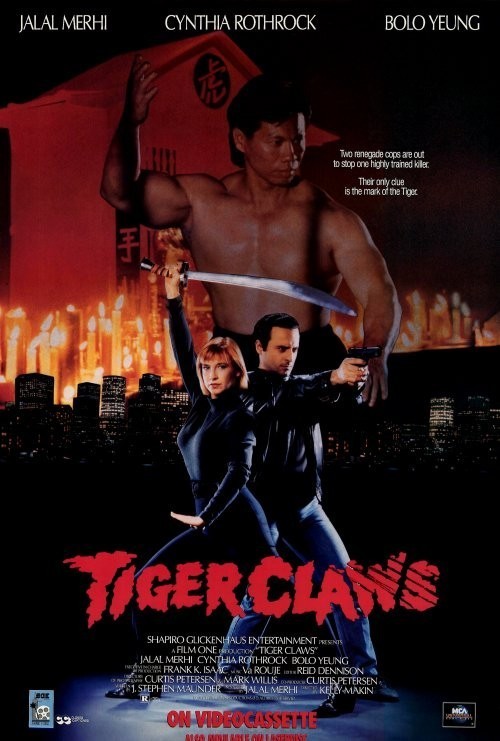


 B-Movie Dragons